
Get info about this deal

  • This field is for validation purposes and should be left unchanged.
  • This field is hidden when viewing the form

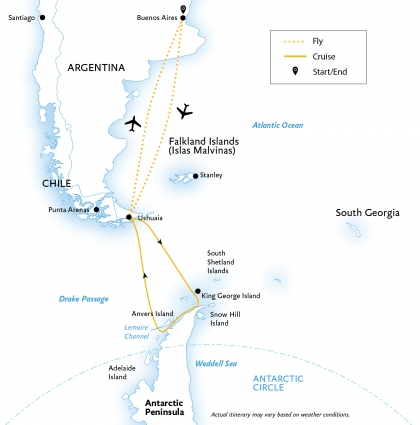
Itinerary Map

Trip Summary

Dates: 

Jan 22, 2027 -
Feb 3, 2027

Duration: 

13 Days

Ship:

Adventure
options:
1-time Kayaking Snowshoeing
Starts and ends in Buenos Aires
Starting at: $ 11,575.00
Oceanview D4

Oceanview D4

$11.575

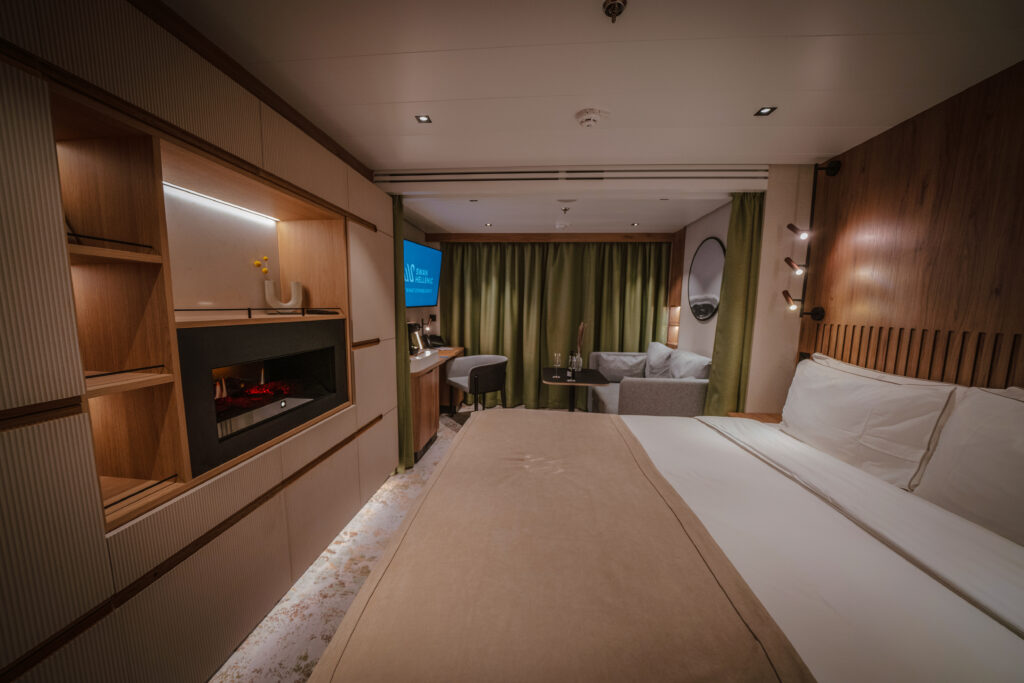
Oceanview staterooms features 2 single beds, bedroom and living room and a luxurious ensuite bathroom.

Oceanview M4

Oceanview M4

$12.150

Located at the centre of the ship, this Oceanview cabins features 2 single beds, bedroom and living room and a luxurious ensuite bathroom.

Balcony D5

Balcony D5

$12.725

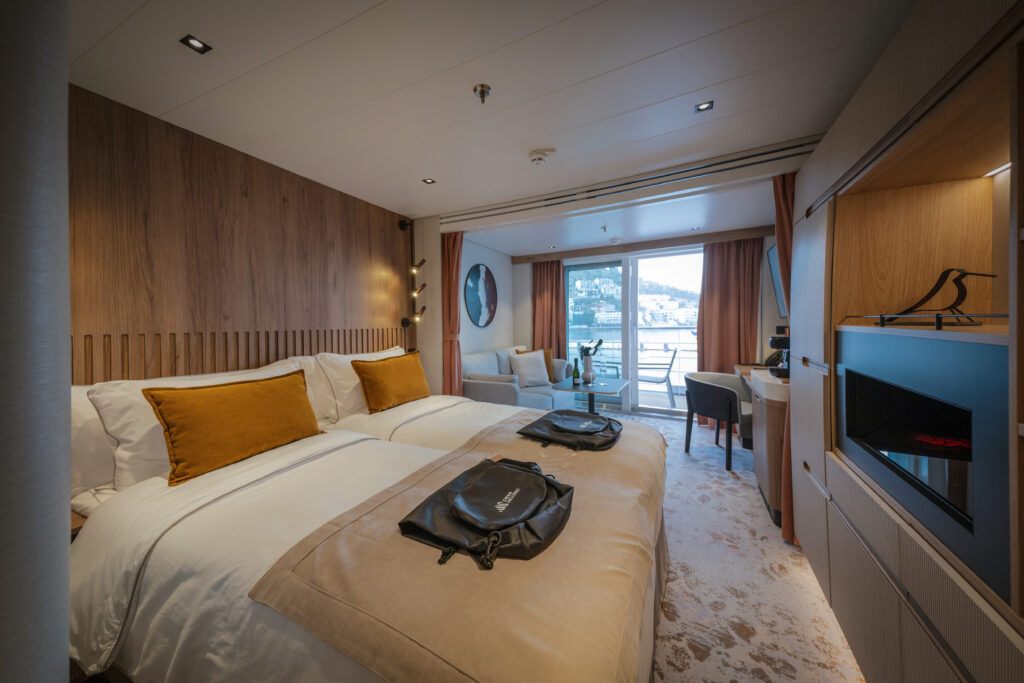
Located at the forward and aft of the ship, these balcony staterooms feature 2 single beds or double bed bedroom with living room area, a luxurious bathroom and your own private 6m2 balcony

Balcony M5

Balcony M5

$13.325

Located at the centre of the ship, these balcony staterooms feature 2 single beds or double bed bedroom with living room area, a luxurious bathroom and your own private 6m2 balcony

Balcony D6

Balcony D6

$13.900

Located on deck six, these balcony staterooms feature 2 single beds or double bed bedroom with living room area, a luxurious bathroom and your own private 6m2 balcony

Suite

Suite

$20.250

Our Suites features a superking bed and separate living room with and a soothing flame-effect fireplace a luxurious ensuite bathroom and a 12 sq.m. private balcony.

Premium Suite

Premium Suite

$23.150

Our grandest suites features a superking bed and separate living room with and a soothing flame-effect fireplace a luxurious ensuite bathroom, spacious walk in wardrobe and a 12 sq.m private balcony.

About the Expedition to Antarctica: Weddell Sea Cruise (13 days) – SH Minerva, Jan 2027 itinerary
You touch down in Longyearbyen, the administrative center of Spitsbergen, the largest island of the Svalbard archipelago. Enjoy strolling around this former mining town, whose parish church and Svalbard Museum make for fascinating attractions. Though the countryside appears stark, more than a hundred species of plant have been recorded in it. In the early evening the ship sails out of Isfjorden, where you might spot the first minke whale of your voyage.
We start the day by quietly cruising the side fjords of the spectacular Hornsund area in southern Spitsbergen, enjoying the scenery of towering mountain peaks. The mountain of Hornsundtind rises to 1,431 meters (4,695 feet), while the peak of Bautaen testifies to why early Dutch explorers gave this island the name Spitsbergen, meaning “pointed mountains.” There are 14 magnificent glaciers in the area, and we have a fair chance of encountering seals and polar bears. The nearby cliffs of Sofiakammen are also home to thousands of pairs of nesting kittiwakes and little auks, and in the evening, we might see thousands of harp seals rutting on ice floes at Sørkapp. Long hike – If conditions permit, we land at Treskelodden, then walk from Treskelen to Adriabukta. From there we walk west to Hyrneodden and north to the glacier in Wibewika (about 16 km / 10 miles), where we will be picked up. The other guests will have their program in Brepollen (morning) and Luciakammen or Sofiakammen (afternoon). We might also do this program in reverse.
After navigating the drift ice of Storfjorden, where we sometimes see harp seals, we land in northwest Edgeøya at the northern bank of Rosenberdalriver. Here on the raised beach, we have the opportunity of walking to Rosenbergdalen, which is teeming with grazing reindeer. Afterward we plan to walk by a cliff with nesting black guillemots on our way to Stretehamna, where we often find a herd of walruses on the beach near an octagonal trapper’s cabin built in 1905. We can also see the remains of a 19th-century Pomor house as well as the bones of walruses hunted in previous centuries. Long hike – If conditions permit, we land at Blankoddden, near a large kittiwake colony in a beautiful canyon, then walk north along the coast to Kapp Lee (about 20 km / 12.4 miles) or to the south side of Rosenbergdalen (about 17 km / 10.6 miles), where we will be picked up. We might also do this program in reverse. If this long hike is not possible, we might offer an alternative hike on day 4.
Sailing into the waterway of Freemansundet, we plan to land at the tundra lowland of Sundneset, on the island of Barentsøya. Here we will visit the hut of a German scientific expedition (Würzbugerhütte) from sixty years ago, then take a brisk walk across the tundra in search of Spitsbergen reindeer and barnacle geese. After that, we plan to go on a Zodiac cruise near Freeman Glacier and visit a kittiwake colony in a canyon close by. In case of heavy ice in Freemandundet, however, we will instead sail to Negribreen, one of the most extensive glacier fronts on the east side of Spitsbergen. Here we can take a Zodiac cruise and land on Walrus Island, which became ice-free at the end of last century. Long hike – If conditions permit, we land in Barentsøya, near small lakes with wildfowl and waders, then walk east along the coast of Barentsøya to Freemanbreen. After about 10 km (6.2 miles), we will pass a colony of kittiwakes. After another 10 km walk, we will be picked up at the west side of Freemanbreen. This is a good area to spot polar bears. We might also do this program in reverse.
Today we sail to the east side of west Spitsbergen (west side of Storfjorden). Here we plan to walk to breeding places for ivory gulls in Agardhfjellet, which stands about 300 meters (980 feet) high. The valley leading to the outcrops that house the nests is littered with fossils of belemnites and ammonites.
Today we aim to land at the mountain of Stellingfjellet, near the largest colony of Brünnich’s guillemots in Spitsbergen. Later in the day, we will make landings at the rarely visited coast of south Spitsbergen, at the bay of Isbukta.
We continue our voyage in Bell Sund, one of the largest fjord systems in Svalbard. The ocean currents make this area slightly warmer than other areas in the archipelago, which shows in the relatively lush vegetation. Here there are excellent opportunities to enjoy both history and wildlife. A possibility is Ahlstrandhalvøya, at the mouth of Van Keulenfjorden, where piles of beluga skeletons can be found. These remains of 19th-century whale slaughter are a haunting reminder of the consequences of rampant exploitation. Fortunately, belugas were not hunted into extinction, and you have a good chance of coming across a pod. Alternately, while cruising the side fjords of Bellsund, we can explore tundra where reindeer like to feed as well as rock slopes where little auks are breeding. Long hike – If conditions permit, we land at Recherchelagune and walk along the eastern shore of Recherchefjord, by Laegerneset (17th century whaling station). Our goal is to reach Ahlstrandhalvøya, and from there to Ingebrigtsenbukta. If need be, our Zodiacs can help us at the mouth of the river. We might also do this hike in reverse or land at Ingeborgfjellet, then walk along the coast to the west side of van Muydenbukta, along a shore with many whale skeletons.
Every adventure, no matter how grand, must eventually come to an end. You disembark in Longyearbyen, taking home memories that will accompany you wherever your next adventure lies.
The township of Punta Arenas was founded in the 1500s and is the gateway to the Strait of Magellan. It was originally established as a prison colony and later the biggest commercial and supplying centre of all vessels travelling between the Pacific and Atlantic Ocean. The town has since made a name for itself as the central base for exploring Patagonia and Antarctica. At first glance, Punta Arenas may not seem like much of a destination, but if you have time to walk around, you’ll discover many unique and interesting things to see in this southern town. One thing you may notice is the colonial-style architecture, including Palacio Sara Braun, built in the late 1800s. At the centre of Punta Arenas’ old town is Plaza Muñoz Gamero, the park-like square surrounded by tall trees and a lush vegetation. In the middle of the plaza is a statue dedicated to Ferdinand Magellan, discoverer of the Strait of Magellan and the first European to cross the Pacific Ocean. We recommend a walk along the waterfront promenade, from which you will see the island of Tierra del Fuego and the Strait of Magellan in the distance. You will also be able to see the Maritime Monument, representing the first settlers in the area, many shipwrecks abandoned from old trading days, and you may also be lucky enough to see the cormorants taking off over the sea.
Sail along the legendary Beagle Channel and enjoy splendid scenery of fjords and channels flanked by majestic mountains. Keep watch for the many seabirds and marine wildlife including dolphins, sea lions and whales preparing to migrate to Antarctica to fatten up on plentiful krill. In the evening, we exit Nassau Bay, sail past Cape Horn and prepare to enter Drake Passage.
As we commence the Drake Passage crossing, we make the most of our time getting comfortable with the motions of the sea. Our expedition team prepare you for our first landing with important wildlife guidelines and biosecurity procedures and start our lecture program to help you learn more about Antarctica’s history, wildlife and environment. Our wildlife experiences begin as we enjoy watching and photographing the many seabirds, including majestic albatrosses and giant petrels following our vessel. On sea days, you may can enjoy the facilities on board the vessel including the gym, wellness centre or the relaxing in one of the observation lounges. Nearing the South Shetland Islands and the tip of the Antarctic Peninsula on the afternoon of day four, the excitement is palpable with everyone converging on one of the observation decks watching for our first iceberg. The ocean takes on a whole new perspective once we are below the Antarctic Convergence and are surrounded by the surreal presence of floating ice sculptures. The memory of your first big iceberg sighting is likely to remain with you for a lifetime. Time and weather permitting, we may attempt our first landing in Antarctica by late afternoon.
It is almost impossible to describe the feeling of arriving in Antarctica. Spotting your first iceberg and taking a deep breath of some of the most fresh, crisp air on earth is an experience that will stay with you forever. Once we arrive, the western side of the Antarctic Peninsula and the South Shetland Islands are ours to explore, and we have a host of choices available to us. Because we are so far south, we will experience approximately 18-24 hours of daylight and the days can be as busy as you wish. Your experienced expedition team, who have made countless journeys to this area, will use their expertise to design your voyage from day to day, choosing the best options based on the prevailing weather, ice conditions and wildlife opportunities. We generally make landings or Zodiac excursions twice a day. You will want to rug up before joining Zodiac cruises along spectacular ice cliffs or among grounded icebergs, keeping watch for whales, seals and porpoising penguins. Zodiacs will also transport you from the ship to land, where you can visit penguin rookeries, discover historic huts and explore some of our favourite spots along the peninsula. While ashore we aim to stretch our legs, wandering along pebbly beaches or perhaps up snow-covered ridgelines to vantage points with mountains towering overhead and ice-speckled oceans below. If you have chosen an optional activity, you will have the option to do participate in the activity whenever conditions allow, and of course keen polar plungers will have the chance to fully immerse themselves in polar waters – conditions permitting! The polar plunge can take place at any time during the voyage, so listen out for the announcement from the expedition team and get ready for the most exhilarating dip of your life! In addition to Zodiac cruises and shore excursions, we may ship cruise some of the narrow, dramatic straits separating offshore islands from the mainland, or linger in scenic bays to watch whales travelling or feeding. This is a great time to enjoy the observation lounge or make your way to the bridge (open at the captain’s discretion) for uninterrupted views of Antarctica in all its splendour. Listen out for the creak and deep rumble of glaciers as they carve into sea. Take a quiet moment to experience the wonder of the pristine paradise of the splendid white continent.
Enjoy a final morning landing in the South Shetland Islands before we re-enter the Drake Passage for our return journey to South America. With lectures and film presentations to complete our Antarctic experience, there is still plenty of time to enjoy the magic of the Southern Ocean and the life that calls it home. There is time for reflection and discussion about what we have seen and experienced. We hope you become ambassadors for Antarctica telling your family, friends and colleagues about your journey to this magical place, advocating for its conservation and preservation so that they might one day visit the region to experience what you have been lucky to see and do here.
During the early morning, we cruise up the Beagle Channel, before quietly slipping into dock in Ushuaia, where we will be free to disembark around 8.00 am. Farewell your expedition team and fellow passengers as we all continue our onward journeys, hopefully with a newfound sense of the immense power of nature.
Overlooking the Straits of Magellan, the city sits astride one of the world’s most historic trade routes. Today, Punta Arenas reflects a great blend of cultural backgrounds, from English sheep ranchers to Portuguese sailors. It remains an utterly fascinating testament to Chile’s rich history. Modern day Punta Arenas is home to many popular restaurants, and bars, offering a mix of local and international fare (meals at your own expense today).
This morning we will be transferred to Punta Arenas airport for our charter flight to King George Island, Antarctica (weather permitting). The flight will take approximately one hour and forty-five minutes. On arrival into King George Island our expedition team is on hand to greet you and to prepare you for your Zodiac transfer to the vessel. You will have time to settle into your cabin before our important safety briefings. Note: King George Island is located at the northern part of the Antarctic Peninsula in the South Shetland Islands and is one of the most remote places on Earth. A clear sky with perfect visibility is required for safe take-off and landing. A contingency plan will be applied to your itinerary should your flights not proceed today. Your safety is our utmost priority. We apologise in advance for any delays caused due to this unpredictable situation. Please refer to our terms and conditions for a more detailed explanation.
It’s almost impossible to describe the feeling of arriving in Antarctica. Spotting your first iceberg and taking a deep breath of some of the most fresh, crisp air on earth is an experience that will stay with you forever. Once we arrive, the western side of the Antarctic Peninsula and the South Shetland Islands are ours to explore, and we have a host of choices available to us. Because we are so far south, we will experience approximately 18-24 hours of daylight and the days can be as busy as you wish. Your experienced expedition team, who have made countless journeys to this area, will use their expertise to design your voyage from day to day, choosing the best options based on the prevailing weather, ice conditions and wildlife opportunities. We generally make landings or Zodiac excursions twice a day. You will want to rug up before joining Zodiac cruises along spectacular ice cliffs or among grounded icebergs, keeping watch for whales, seals and porpoising penguins. Zodiacs will also transport you from the ship to land, where you can visit penguin rookeries, discover historic huts and explore some of our favourite spots along the peninsula. While ashore we aim to stretch our legs, wandering along pebbly beaches or perhaps up snow-covered ridgelines to vantage points with mountains towering overhead and ice-speckled oceans below. If you have chosen an optional activity, you will have the option to do that whenever conditions allow, and of course keen polar plungers will have the chance to fully immerse themselves in polar waters – conditions permitting! In addition to Zodiac cruises and shore excursions, we may ship cruise some of the narrow, dramatic straits separating offshore islands from the mainland, or linger in scenic bays to watch whales travelling or feeding. This is a great time to enjoy the observation lounge or make your way to the bridge for uninterrupted views of Antarctica in all its splendour. Keep an ear out for the creak and deep rumble of glaciers as they carve their way from summit to sea. Take a quiet moment to experience the wonder of this incredible white continent.
Enjoy a final morning landing in the South Shetland Islands before we re-enter the Drake Passage for our return journey to South America. With lectures and film presentations to complete our Antarctic experience, there is still plenty of time to enjoy the magic of the Southern Ocean and the life that calls it home. There is time for reflection and discussion about what we have seen and experienced. We hope you become ambassadors for Antarctica telling your family, friends and colleagues about your journey to this magical place, advocating for its conservation and preservation so that they might one day visit the region to experience what you have been lucky to see and do here. As we approach the tip of South America, our Captain may sail close to legendary Cape Horn, weather and time permitting.
As we approach the tip of South America, our Captain may sail close to legendary Cape Horn, weather and time permitting. Sail through fjords and channels flanked by majestic mountains discovered by European explorers over 500 years ago. Keep a look out for seabirds and marine wildlife including dolphins, sea lions, and whales preparing to migrate to Antarctica to fatten up on plentiful krill.
During the early morning, we are quietly slipping into dock in Punta Arenas, where we begin disembarking at around 8.00 am. Farewell your expedition team and fellow travellers as we all continue our onward journeys, hopefully with a newfound sense of the immense power of nature.    
Your voyage begins where the world drops off. Ushuaia, Argentina, reputed to be the southernmost city on the planet, is located on the far southern tip of South America. Starting in the afternoon, you embark from this small resort town on Tierra del Fuego, nicknamed “The End of the World,” and sail the mountain-fringed Beagle Channel for the remainder of the evening.
Over the next two days on the Drake Passage, you enjoy some of the same experiences encountered by the great polar explorers who first charted these regions: cool salt breezes, rolling seas, maybe even a fin whale spouting up sea spray. After passing the Antarctic Convergence – Antarctica’s natural boundary, formed when north-flowing cold waters collide with warmer sub-Antarctic seas – you are in the circum-Antarctic upwelling zone. Not only does the marine life change, the avian life changes too. Wandering albatrosses, grey-headed albatrosses, black-browed albatrosses, light-mantled sooty albatrosses, cape pigeons, southern fulmars, Wilson’s storm petrels, blue petrels, and Antarctic petrels are a few of the birds you might see.
You arrive at the Antarctic Peninsula near the Antarctic Circle in the afternoon. If sea ice allows it, you can then continue through Pendleton Strait and attempt a landing at the rarely visited southern tip of Renaud Island. Here you have the opportunity to see the first Adélie penguins of the trip as well as enjoy spectacular views of the icebergs in this surreal, snow-swept environment. In the afternoon we sail to the Fish Islands and encounter one of the southernmost Adélie penguin and blue-eyed shag colonies in the Antarctic Peninsula. Spending the night in the area of Crystal Sound the scenery will leave you staying up until the small hours, there is a chance to see Orca, Humpback and Minke Whale in this area.
Detaille Island – You may make a landing at an abandoned British research station here, taking in the island’s lofty position and imposing glaciers scenery. We then sail through The Gullet, one of the most impressive narrow channels in Antarctic, with towering mountains either side, birds following the ship and playful penguins and seals frolicking in the water as we sail through this very special part of the journey. If ice conditions allow we will also carry out a landing or cruise in the afternoon.
Discovered and charted by the famous explorer Charcot, Pourquoi Pas offers a pleasant landing on a rocky beach against the backdrop of the mighty Moider Glacier. A gentle walk from the landing site provides an impressive view, while Antarctic furs seals relaxing behind the beach are a nice addition to the wildlife we’ve encountered on this voyage. After lunch we head toward Horseshoe Island, named for its distinctive shape. An abandoned research station provides an insight into the early days of scientific research, and original artifacts show how different life was in those pioneering days. The hut is set among some of the most beautiful scenery in Antarctica, with views over the mountains and snow of Pourquoi Pas Island as well as Horseshoe Island’s mountain range. This is a photographic landing in many senses. Two old wooden boats even remain at the landing site as if waiting for their final launch.
Provided ice and weather conditions allow, you next head toward Antarctica’s ice shelves (the George IV and Wilkins). Here we hope to show you the scale of these vast cliffs and expanses of ice that will dwarf us and our ship. A range of Antarctic wildlife like humpback whales, fur seals, Adélie penguins, and maybe even one or more Ross’ seals may appear.
Jenny Island will give another aspect to your Antarctic experience, offering raised beaches, hanging glaciers, and moss carpets. The island is also popular with wildlife: Terns, skuas, elephant seals, leopard seals, and Adélie penguins are all regular visitors. A landing at Leonie Island will take your breath away. There is also the possibility to take a hike to the peak of the island, giving you a dramatic panorama of Marguerite Bay and Adelaide Island.
Lagoon island is the most northern island of the Leonie Islands group, also discovered and charted by Jean-Baptiste Charcot. This low laying island will provide a stark contrast to the previous days with its gently sloped beaches and flat areas to explore. The wildlife here will varies depending on snow cover. If there is little snow the ground is almost desert-like in appearance. The Mikkelsen Islands offer a spectacular Zodiac cruise where we hope to encounter up to five Antarctic seal species. We may also see some beautiful birdlife, such as giant petrels and Adélie penguins.
Your return voyage is far from lonely. While crossing the Drake, you’re again greeted by the vast array of seabirds remembered from the passage south. But they seem a little more familiar to you now, and you to them.
Every adventure, no matter how grand, must eventually come to an end. It’s now time to disembark in Ushuaia, but with memories that will accompany you wherever your next adventure lies.
Although its nickname the “End of the World” – derived from its location along the southernmost tip of South America among the Tierra del Fuego archipelago – Ushuaia is far from the end of any adventure. Where the Andes meet the Beagle Channel and the snow-capped Martial Mountains sit behind a sprawling city of colorful buildings, lies a lively town ready and waiting to take you on the thrill ride of a lifetime.
Navigating the intrepid Drake Passage is made for the boldest of explorers. Petrels and albatrosses that glide across the skies guide the way. To witness its awesome power makes the journey to Antarctica all the more triumphant. The Drake Passage leads you from the southernmost region of the Americas to the Antarctic Peninsula, the northern point of The White Continent. This waterway where cold southern ocean meets warm northern sea water creates powerful currents that test your mettle. But the rewards for the journeyer that braves these waters do not compare. The meeting of warm and cold waters creates an environment that attracts extraordinary wildlife. Drake Passage offers the chance to witness the likes of humpback whales and hourglass dolphins that accompany the voyage. The soundtrack of the 48-hour journey through the Drake Passage includes the crash of the ocean against the ship and the cry of petrels, skuas, and gulls. While the waterway is famous for its challenging navigation, you may still get another side of the Drake Passage. On some occasions, the channel is calm and tranquil, making for a pleasant voyage into Antarctica. That’s one of the more splendid characteristics of the Drake Passage – you never know what you will get. As you emerge from the Drake Passage, the mammoth, icy peaks of the South Shetland Islands loom ahead, greeting you on your victorious landing. You have completed the rite of passage to explore the seventh continent.
Part of the greater Antarctica region, the South Shetland Islands contain plenty of wildlife, scenic landscapes, hiking opportunities and magnificent viewpoints that inspire a sense of discovering another world. A possible landing on Elephant Island, named for the shape of its cliffside and the elephant seals that call it home, puts you on the same path as the famous Shackleton Expedition. Deception Island, another possible landing and named for its very nature, is in fact a volcanic caldera where you can find heated springs amid the striking black sands. Other stops could include Half Moon Island, Yankee Harbour, Point Wild and Barrientos Island, where you can find plenty of Gentoo penguin rookeries.
Nicknamed The White Continent for its vast expanse of icebergs, snow and glaciers, Antarctica is often the final frontier for experienced explorers to conquer. As you navigate Antarctic waters, you may set foot on sites like Beak Island, Brown Bluff, Cierva Cove, Hidden Bay and many more. Each landing throughout the continent offers its own unique landscape, from expansive tundra to rugged mountain peaks, all beckoning you to follow the paths that few explorers have trekked before.
King George Island, South Shetland Islands Your charter flight lands in or departs from Eduardo Frei Montalva Station on King George Island, the Chilean air base for Antarctica expeditions with flight options over the Drake Passage. Lying within the Fildes Peninsula, where Chile laid claim to Antarctic territory, the base is an important research station. Made up of over 40 buildings that include a school, bank, hospital and post office, it resembles more a small village than a base. As a haven for an incredible amount of wildlife, including chinstrap and Gentoo penguins, and elephant, leopard and Weddell seals, it’s a prime locale for scientific research.
King George Island, South Shetland Islands Your charter flight lands in or departs from Eduardo Frei Montalva Station on King George Island, the Chilean air base for Antarctica expeditions with flight options over the Drake Passage. Lying within the Fildes Peninsula, where Chile laid claim to Antarctic territory, the base is an important research station. Made up of over 40 buildings that include a school, bank, hospital and post office, it resembles more a small village than a base. King George Island has come to be known as the unofficial capital of Antarctica with its various research stations located on the island. As a haven for an incredible amount of wildlife, including chinstrap and Gentoo penguins, and elephant, leopard and Weddell seals, it’s a prime locale for scientific research.
Part of the greater Antarctica region, the South Shetland Islands contain plenty of wildlife, scenic landscapes, hiking opportunities and magnificent viewpoints that inspire a sense of discovering another world. A possible landing on Elephant Island, named for the shape of its cliffside and the elephant seals that call it home, puts you on the same path as the famous Shackleton Expedition. Deception Island, another possible landing and named for its very nature, is in fact a volcanic caldera where you can find heated springs amid the striking black sands. Other stops could include Half Moon Island, Yankee Harbour, Point Wild and Barrientos Island, where you can find plenty of Gentoo penguin rookeries.
Nicknamed The White Continent for its vast expanse of icebergs, snow and glaciers, Antarctica is often the final frontier for experienced explorers to conquer. As you navigate Antarctic waters, you may set foot on sites like Beak Island, Brown Bluff, Cierva Cove, Hidden Bay and many more. Each landing throughout the continent offers its own unique landscape, from expansive tundra to rugged mountain peaks, all beckoning you to follow the paths that few explorers have trekked before.
Navigating the intrepid Drake Passage is made for the boldest of explorers. Petrels and albatrosses that glide across the skies guide the way. To witness its awesome power makes the journey to Antarctica all the more triumphant. The Drake Passage leads you from the southernmost region of the Americas to the Antarctic Peninsula, the northern point of The White Continent. This waterway where cold southern ocean meets warm northern sea water creates powerful currents that test your mettle. But the rewards for the journeyer that braves these waters do not compare. The meeting of warm and cold waters creates an environment that attracts extraordinary wildlife. Drake Passage offers the chance to witness the likes of humpback whales and hourglass dolphins that accompany the voyage. The soundtrack of the 48-hour journey through the Drake Passage includes the crash of the ocean against the ship and the cry of petrels, skuas, and gulls. While the waterway is famous for its challenging navigation, you may still get another side of the Drake Passage. On some occasions, the channel is calm and tranquil, making for a pleasant voyage into Antarctica. That’s one of the more splendid characteristics of the Drake Passage – you never know what you will get. As you emerge from the Drake Passage, the mammoth, icy peaks of the South Shetland Islands loom ahead, greeting you on your victorious landing. You have completed the rite of passage to explore the seventh continent.
Although its nickname the “End of the World” – derived from its location along the southernmost tip of South America among the Tierra del Fuego archipelago – Ushuaia is far from the end of any adventure. Where the Andes meet the Beagle Channel and the snow-capped Martial Mountains sit behind a sprawling city of colorful buildings, lies a lively town ready and waiting to take you on the thrill ride of a lifetime.
Your voyage begins where the world drops off. Ushuaia, Argentina, reputed to be the southernmost city on the planet, is located on the far southern tip of South America. Starting in the afternoon, you embark from this small resort town on Tierra del Fuego, nicknamed “The End of the World,” and sail the mountain-fringed Beagle Channel for the remainder of the evening. Enroute to South Georgia, you now cross the Antarctic Convergence. The temperature cools considerably within the space of a few hours, and nutritious water rises to the surface of the sea due to colliding water columns. This phenomenon attracts a multitude of seabirds near the ship, including several species of albatross, shearwaters, petrels, prions, and skuas.
Entering the South Georgia Maritime Zone, one of the largest protected waters in the world, we sail past the Shag Rocks. These impressive rocks lay 240km (150 miles) west of South Georgia and are home to several thousand South Georgia shags. The area around the rocks is known for its abundance of larger marine mammals, which feed on this comparatively shallow area of the South Georgia Ridge. After reaching South Georgia, you will have the chance to visit some of the following sites: Prion Island, Fortuna Bay, Salisbury Plain, St. Andrews Bay, Gold Harbour & Grytviken.    
Like Shackleton in December 1914 on the Imperial Trans-Antarctic Expedition, also known as the Endurance Expedition, we leave South Georgia and aim for the South Sandwich Islands and the Weddell Sea. There may be sea ice on this route, and at the edge of the ice some south polar skuas and snow petrels could join the other seabirds trailing the vessel south.
While we are unable to land here, we may be able to make a Zodiac cruise among the amazing scenery of this active volcanic area. Passing between Thule and Cook Islands will be one of the trip’s many highlights and will make an everlasting impression. There is a good chance we’ll encounter humpback and minke whales in this area. On and around the islands, we also have the chance to spot brown skuas, chinstrap or Adélie penguins, and several species of albatross: grey-headed, black-browed, and wandering.
We next sail toward the Antarctic continent in the direction of Queen Maud Land and Neuschwabenland (New Swabia) on the northeast side of the Weddell Sea.
 
Our first destination in Antarctica is New Swabia, between 20°E and 10°W in Queen Maud Land. This area was explored by Germany during the third German Antarctic Expedition of 1938 – 1939, led by Alfred Ritscher. The purpose was to find an area in Antarctica for a German whaling station and scout a possible location for a naval base. In an attempt to claim the region, Nazi flags were placed on the sea ice along the coast locations. Survey flights also airdropped aluminum arrows with swastikas.
 
Sailing deep into the Weddell Sea, chances are we can spot crabeater, leopard, or Weddell seals. If we are lucky, we might even see emperor penguins. Humpback, orca, and minke whales are also present in this area, along with various birdlife. Ice conditions in the Weddell Sea vary seasonally. We will encounter a vast nautical wilderness of sea, and while heading to high latitudes (far south) will enjoy the raw beauty and power that makes Antarctica so special. It will become apparent why it took so long to discover the Great White Continent and how tough it must have been for Shackleton’s expedition. We’ll make a circular route toward the Brunt Ice Shelf and along the Luitpold Coast, discovered and named during the second German Antarctic expedition (1911 – 1912) of Wilhelm Filchner. If conditions allow, we will have opportunities for a Zodiac cruise and possibly an ice floe landing. We now head west toward the Filchner–Ronne Ice Shelf before changing course north, following the coast along the eastern side of the Antarctic Peninsula and Larsen Ice Shelf. This brings us close to the spot where Shackleton’s vessel Endurance was trapped in pack ice during his Imperial Trans-Antarctic Expedition (1914-17), drifting toward the Antarctic Peninsula before ultimately sinking. In an exciting conclusion to this story, the wreck was discovered on March 5, 2022, the 100th anniversary of Shackleton’s burial, after 107 years below the Weddell Sea waves. While we can’t get close to the discovery site due to pack ice, we will be in the area where the ship was trapped and abandoned. There are colonies of 6,500 emperor penguins nearby, so we hope to see one or more in this area. As we reach the northern section of the Antarctic Peninsula, we enter the area of Erebus and Terror Gulf. Far-wandering emperor penguins often perch on Snow Hill Island’s numerous ice floes, possibly offering you another opportunity to spot these emblematic creatures. If conditions allow, we may attempt a landing on James Ross Island.
This morning we hope to land at one of the most scenic locations in the northern Antarctic Continent, with a large Adélie penguin rookery, gentoo penguins, and nesting snow petrels also to be found. Sheer canyon walls, fallen boulders, and beautiful volcanic creations capped with ice make Brown Bluff a truly unforgettable location. Across the Antarctic Sound is Kinnes Cove, where you can see the nearby Madder Cliffs with their subtle red coloration as well as possible gentoo penguins.
 
This is the starting point from which Shackleton left to find help for his stranded crew. Using only a small lifeboat, the James Caird, he and five of his men sailed to South Georgia, then walked 36 hours to Stromness. It’s hard not to marvel at how they accomplished that herculean feat. Twenty-two members of his Imperial Trans-Antarctic Expedition, also known as the Endurance Expedition, were stranded on Elephant Island after their vessel Endurance sank in the Weddell Sea. It took four and a half months to complete the legendary rescue. Conditions on Elephant Island are severe. The coastline is mostly made up of vertical rock and ice cliffs highly exposed to the elements. If possible, you will take the Zodiacs to Point Wild, where the marooned members of Shackleton’s expedition miraculously managed to survive.
Your return voyage is far from lonely. While crossing the Drake, you’re again greeted by the vast array of seabirds remembered from the passage south. But they seem a little more familiar to you now, and you to them.
Every adventure, no matter how grand, must eventually come to an end. It’s now time to disembark in Ushuaia, but with memories that will accompany you wherever your next adventure lies.
 
Board your ship in the afternoon and sail along the Beagle Channel towards South Georgia.
As you sail toward South Georgia, the historians and our naturalists offer a series of presentations. ere is time to socialize in the ship’s lounge, while keeping an eye out for the region’s birdlife.
The island of South Georgia is a diverse landscape of majestic mountains, massive glaciers, grassy uplands, and deep fjords. Visit the former whaling outpost of Grytviken, where you may pay your respects at the simple grave of Ernest Shackleton. Depending on conditions, possible stops can include St. Andrew’s Bay where you could be overwhelmed by the sight of 150,000 king penguins and Cooper Island to see the nesting home of thousands of black-browed albatrosses and a large colony of macaroni penguins. If the weather is favorable, visits are also planned at Fortuna Bay, Salisbury Plains, Prion Island, and Elsehul Bay.
As the ship heads to Antarctica, the program of presentations continues. Use this time to enhance your understanding of the region and its history.
Sailing south, we hope to stop at Elephant Island. It was here that the crew of Shackleton’s Endurance found refuge while he and five handpicked men carried on to South Georgia. While stormy conditions rarely allow a shore landing, you will see the island from the ship.
Cruise between the South Shetland Islands and the western coast of the Antarctic Peninsula and sail along ice-filled fjords and among spectacular icebergs. Each day disembark by Zodiac and explore the landscape together with expert polar guides. No journey is the same and flexibility is the key to success in Antarctica. The Expedition Team plans the voyage route to take advantage of the ever-changing opportunities provided by nature. You will explore several sites in the Gerlache Strait that offer the best possible overview of the varied Antarctic environment.
Upon reaching King George Island, disembark at Fildes Bay. A 2-km (1.25-miles) walk takes you through Chile’s Frei Station and Russia’s Bellingshausen Station to the aircraft. Bid farewell to Antarctica as you board the flight back to Punta Arenas. Upon arrival, transfer to your hotel for the night. (Note: Meals in Punta Arenas are at your leisure and not included in the program).
After breakfast, transfer to the Punta Arenas airport for your onward flight.
You may arrive in Buenos Aires at any time during Day 1 of your itinerary. Upon arriving in this splendid city, known for its soaring architecture and rich European heritage, you will independently transfer to the group hotel (pre-night hotel included).
After breakfast at the hotel, the group will transfer to the airport and board our private charter flight to Ushuaia, Argentina. Upon arrival, you will have a little time to explore this quaint port town before heading to the pier. Embarkation will occur in the late afternoon, after which your vessel will sail down the historic Beagle Channel. This famous channel transects the Tierra del Fuego archipelago in the extreme south of South America. Expect an air of anticipation as you depart—the next time you’ll see land you’ll be in the world’s most southern continent!
Crossing the Drake Passage, there is so much excitement in the air as you get ever closer to the white continent. Guests eagerly soak up the friendly atmosphere on board as our numerous Polar experts prepare you for your adventures with presentations on everything Antarctic, from wildlife to history. Eventually, cross the Antarctic Convergence where you will notice a distinct drop in temperature as you enter the waters of the Antarctic Ocean. Along the way, witness many spectacular sights from icebergs to an array of seabirds and even several whale species some of which are known on occasion to fully breach from the sea.
At Half Moon Island you will visit a breeding colony of chinstrap penguins that share their territory with fur seals and blue-eyed shags. The team also hopes to see the gentle humpback whale dining on krill in its feeding grounds and possibly have an opportunity to spot orcas and Minke whales as the trip goes. The expedition staff plan on walking ashore on the continent of Antarctica at Paradise Harbour or Neko Harbour. Although it will not be your first glimpse of the Antarctic, a walk ashore on the Continent will evoke emotions to carry with you for the rest of your life. The scenery here is amazing. In particular the oddly shaped icebergs looking like sculptures, as well as the colossal ‘tabular’ icebergs that break away from the continent’s ice shelf. Expect to feel transformed as you experience twilight from the very bottom of the planet.
By now, your knowledge of Adélie, chinstrap and gentoo penguins will be matched by your ability to differentiate between a leopard, fur or Weddell seal. Terms like bergy bits and pancake ice will seem normal, yet there are still many tales to be told. As you head north, Zodiac excursions will fill your days, and your Expedition Team will continue offering presentations while giving you time to reflect on everything you’ve experienced.
In the waterways of the Antarctic Peninsula, the goal is to make as much time as possible to explore by inflatable Zodiac boats and marvel up close at nature’s glory. The first goal will be to sail south of the Antarctic Circle and into Matha Strait or Marguerite Bay. Given favorable ice conditions, the captain will push our exploration even further southward, looking for historic and wildlife sites. From the most southerly point (south of the Antarctic Circle), we will make our way north along the Antarctic Peninsula, cruising through the narrow waterways and channels of the Antarctic Peninsula. Spectacular waterways such as Crystal Sound, the Lemaire Channel, the Neumeyer Channel and the Gerlache Strait will all feature in the itinerary. Landing sites might include Neko Harbour, Wilhelmina Bay, Petermann Island and the Yalours, where you will observe Weddell, crabeater and elephant seals, skuas and other seabirds as well as an abundance of penguins including some very large colonies of the comical Adelie penguin.
We will continue our lecture series and wildlife spotting as we sail back to Ushuaia and reflect on beautiful Antarctica and its fragile future.
You will arrive in Ushuaia in the morning, after breakfast. After disembarking, you will get a little taste of Patagonia, touring Tierra del Fuego National Park before transferring to the airport for the return group charter flight to Buenos Aires.
You may arrive in Buenos Aires at any time during Day 1 of your itinerary. Upon arriving in this splendid city, known for its soaring architecture and rich European heritage, you will independently transfer to the group hotel (pre-night hotel included).
After breakfast at the hotel, the group will transfer to the airport and board our private charter flight to Ushuaia, Argentina. Upon arrival, you will have a little time to explore this quaint port town before heading to the pier. Embarkation will occur in the late afternoon, after which your vessel will sail down the historic Beagle Channel. This famous channel transects the Tierra del Fuego archipelago in the extreme south of South America. Expect an air of anticipation as you depart—the next time you’ll see land you’ll be in the world’s most southern continent!
Among the wildlife spotting opportunities as we sail south are the albatrosses, prions, and petrels that frequently follow the ship. Our Expedition Team will be out on deck as well, looking for the whales and dolphins that may also be seen in the area. Our experts will begin the presentations with informative and entertaining talks on the wildlife, history, and geology of The Islas Malvinas and Southern Ocean. Helpful briefings on environmental regulations and expedition safety will also be held in the comfortable lounge.
The westernmost settled outposts in the Islas Malvinas are remote farms that have been family-owned for six and seven generations. The sheep graze alongside albatross colonies and rockhopper, king, and Magellanic penguin rookeries while striated caracaras patrol overhead and upland geese graze at the water’s edge. A visit to one of these homesteads often includes an invitation for cakes and a cup of tea.
Chosen for its sheltered harbor and access to abundant fresh water and peat for fuel, Stanley is easy to discover on foot as most shops and services are centered on the port. The museum, the post-office featuring first day covers, plenty of shops with locally made wool items and Stanley’s lively pubs will all be available. It is possible to experience the wildlife of the Islas Malvinas from the town including sea lions and Peale’s and Commerson’s dolphins in the harbor or bird life in nearby Gypsy Cove.
There will be plenty of wildlife spotting as we make our way east across the Antarctic Convergence and officially enter Antarctic waters. Shipboard presentations will continue featuring the exciting history and abundant wildlife of South Georgia.
Its unique position inside the Antarctic Convergence yet outside the limit of the yearly sea ice makes this 3,755 square kilometer island home to tens of millions of breeding penguins, seals and seabirds. Magnificent mountain scenery, glaciers galore, a rugged coastline punctuated with castellate and tabular icebergs, a rich historical tapestry, and an astounding array of wildlife are all available to us as we travel down South Georgia’s leeward coast. Landing sites feature huge elephant seals, aggressive fur seals, macaroni penguins, albatross, petrels, skuas, and gulls. King penguins from fuzzy little chicks to fattened adults can be seen in the hundreds of thousands. We will visit historic Grytviken whaling station, home of the whaling museum, Norwegian seaman’s church, the active British Antarctic Survey station plus the tiny graveyard where the great Antarctic explorer Sir Ernest Shackleton is buried.
Heading farther south, we continue our informative presentations and wildlife watch as the icebergs become more and more plentiful.
Our Expedition Leader and Captain will create a flexible itinerary based on weather, ice, and opportunity. The route will stress the most scenic bays and channels of the Peninsula with stops at penguin rookeries, seal wallows, bird colonies and whale feeding areas as well as sites of historic and scientific interest. The trip may include picturesque Neko Harbor, sheltered Paradise Harbor, the Humpback Whale favored Wilhelmina Bay, the the wildlife-filled Errera Channel, the majestic Neumayer Channel, or the striking Antarctic Sound with its tabular icebergs. We may stop at an active scientific base such as Poland’s Arctowksi or Argentina’s Esperanza as well as an historic base such as U.K.’s Port Lockroy or the Nordenskjöld expedition remains at Hope Bay. Adelie, Chinstrap and Gentoo Penguins abound, and Weddell, Crabeater and Elephant Seals are often found hauled out to rest along with predatory Leopard Seals and the irritable Antarctic Fur Seal. Minke and Humpback Whales are frequent visitors in the late season and Orca sightings are also common.
We will continue our lecture series and wildlife spotting as we sail back to Ushuaia and reflect on beautiful Antarctica and its fragile future.
You will arrive in Ushuaia in the morning, after breakfast. After disembarking, you will get a little taste of Patagonia, touring Tierra del Fuego National Park before transferring to the airport for the return group charter flight to Buenos Aires.
After a welcoming toast and introduction of captain and crew, the ship departs for one of the remotest corners of planet Earth. During the night we cross the Strait of Magellan and enter the labyrinth of channels that define the southern extreme of Patagonian. The twinkling lights of Punta Arenas gradually fade into the distance as we enter the Whiteside Canal between Darwin Island and Isla Grande de Tierra del Fuego.
Overnight we sail around the western end of Tierra del Fuego via the very narrow Gabrial Channel, Magdalena Channel and Cockburn Channel. After rounding the remote Brecknock Peninsula, the Australis cruise tacks eastward and enters the Beagle Channel again. By morning we are entering Pia Fjord and boarding the Zodiacs for a Pia Glacier tour. After disembarking we take a short hike to gain a panoramic view of the spectacular glacier, which extends from the mountaintops down to the sea or a longer much more difficult walk up a lateral moraine of the old Pia Glacier. No one knows for certain how the hulking mass of snow and ice got its feminine moniker, but one theory says it was named for Princess Maria Pia of Savoy (1847-1911), daughter of the Italian king. Back onboard the ship, we continue east along the Beagle Channel through an area called Glacier Alley. Living up to its name, the passage features a number of impressive tidewater glaciers flowing down from the Darwin Mountains and Darwin Ice Sheet on the north shore. Most of them named after European countries — Holland, Italy, Germany, Spain and France.
During the morning we cruise across Nassau Bay into the remote archipelago that includes Cape Horn National Park. Weather and sea conditions permitting, we shall go ashore on the windswept island that harbors legendary Cape Horn (Cabo de Hornos). Discovered in 1616 by a Dutch maritime expedition — and named after the town of Hoorn in West Friesland — Cape Horn is a sheer 425-meter (1,394-foot) high rocky promontory overlooking the turbulent waters of the Drake Passage. For many years it was the only navigation route between the Pacific and Atlantic, and was often referred to as the “End of the Earth.” The park was declared a World Biosphere Reserve by UNESCO in 2005. The Chilean navy maintains a permanent lighthouse on the island, staffed by a lightkeeper and his family, as well as the tiny Stella Maris Chapel and modern Cape Horn Monument. In the afternoon we navigate the narrow Murray Channel between Navarino and Hoste islands and drop anchor at historic Wulaia Bay, one of the few places in the archipelago where the human history is just as compelling as the natural environment. Originally the site of one of the region’s largest Yámana aboriginal settlements, the bay was described by Charles Darwin and sketched by Captain FitzRoy in the 1830s during their voyages on the HMS Beagle. This area is also renowned for its mesmerizing beauty and dramatic geography. After a visit to the Australis-sponsored museum in the old radio station — which is especially strong on the Yámana people and European missionaries in the area — passengers have a choice of three hikes (of increasing degrees of difficulty) that ascend the heavily wooden mountain behind the bay. On all of these you will be strolling through an enchanted Magellan forest of lengas, coigües, canelos, ferns, and other endemic fauna to reach a panoramic viewpoint overlooking the bay. Before leaving Wulaia Bay, drop something into the wooden mail barrel inside the museum – letters or postcards meant to be hand delivered by future travelers – an ancient mariner tradition revived by Australis
We will navigate the Brecknock, Ocasión, Cockburn and Magdalena Channels to finally enter the De Agostini bosom, from where we will appreciate the glaciers that descend from the heart of the Darwin Mountain Range, some of them reaching the sea.In the afternoon, we will disembark in Zodiac boats for an easy hike by the coast surrounding the cold Patagonian rainforest until we reach the front of the Águila Glacier.
In the morning, we will sail through the Parry Fjord and the surrounding glaciers. We will disembark in Zodiacs and head to the end of the fjord to appreciate the theater of glaciers, an area where one may see leopard seals. Navigation will continue through the Admiralty Sine, until reaching the vicinity of the Marinelli Glacier in Ainsworth Bay, in the middle of the Darwin Range and within the Alberto De Agostini National Park. We will learn how life resurfaces after ice has been removed. We will hike to discover a beaver dam and the wonderful sub-Antarctic Magellanic forest that surrounds it.
We will disembark at Magdalena Island first thing in the morning, weather conditions permitted. On the island we will be able to see a vast colony of Magellanic penguins. After this excursion, we will return to Punta Arenas.
This expedition cruise starts in colourful Valparaíso. One of the best ways to see this town is by riding its funiculars to sweeping views. Explore the port to get a feel for Chile’s seafaring side. We also recommend a visit to the Historic Quarter before embarking on MS Roald Amundsen. Why not make the most out of your stay in Chile and add a 5-day Pre-program to Atacama Desert, one of the driest deserts in the world?
As we make our way along the Pacific coast of Chile, the Expedition Team will start the lecture programme to prepare you for the experiences ahead. Make sure to also spend some time on deck to look out for wildlife.
Castro, set among windswept hills and green vegetation, is known for its colorful `palafitos´, wooden houses mounted on stilts along the water’s edge, as well as the UNESCO World Heritage Site Iglesia San Francisco.
We sail south through the fabled waters of Patagonia and to one of the world’s most remote and beautiful places: the province of Ultima Esperanza, meaning ‘Last Hope.’ We voyage through iconic Andean seascapes for views of a glorious expanse of undisturbed nature.
The village of Puerto Edén in Bernardo O’Higgins National Park will enchant you. It is known for its geographical isolation, situated at the end of a deep fjord and surrounded by mountains. Its population of 250 includes the 15 remaining members of the Kawéskar people.
Puerto Natales is the gateway to the Torres del Paine National Park, world famous for the impressive ’Torres del Paine‘ (Towers of Paine) rock formation. Explore the park on our optional excursion to discover a landscape of stunning variety, from the vast open steppe to rugged mountain terrain topped by looming peaks that host a wide variety of wildlife. Watch for llamas, pumas, and foxes in addition to more than 100 species of birds, such as the Andean condor.
Deep fjords and tall mountains plunging into the icy water characterize this wild area that seems almost untouched by humans. Glacial ice has scoured its way between the mountains, creating the lovely isolated islands and hidden bays that form this unique fjord landscape.
In the morning, we will sail through the scenic Beagle Channel before we continue into open waters, and if conditions allow, we will make an attempt to land on Cape Horn – the southernmost tip of South America. Next, we sail the legendary Drake Passage while our lecture series prepares you for Antarctica’s fantastic wildlife and history. You’ll also learn how to make your visit as safe and as sustainable as possible and you’ll join Citizen Science programs to help collect data for current scientific research.
Antarctica never fails to inspire awe and wonder, with white horizons above oceans full of icebergs and whales. Perhaps even more awe-inspiring will be your first encounter with the huge colonies of Expedition Team will lead ice-cruising and landings at every opportunity to come ashore and explore the impressive Antarctic scenery. From deck, there are great chances to spot whales. Of course, this is true wilderness, so nature is in charge, but our experienced Captain will work with the elements to create the best possible itinerary for your adventure. We will attempt landings at several sites in the South Shetlands and on the Antarctic Peninsula and aim to bring you to the incredible diversity of landscapes and rich wildlife on display in this pristine wilderness. Wherever we explore, the sights and sounds and of Antarctica are sure to stay with you for a lifetime!
MS Roald Amundsen takes us safely back across the Drake Passage as we continue our lecture series and recap our experiences of Antarctica. Using the state-of-the-art microscopes in the ship’s Science Center, you can analyze samples taken during the expedition cruise to see another kind of ‘wildlife’ at the cellular level.
Sadly, every expedition must come to an end. When we reach Punta Arenas, on the edge of the Strait of Magellan, it is time to say goodbye. Your journey home continues with your flight to Santiago de Chile, where you have a chance to extend your stay and enjoy an optional Post-program to Easter Island, listed as a UNESCO World Heritage Site and one of the most remote islands in the Pacific.
Your journey begins at the pier in Ushuaia, Argentina, with embarkation between 7 and 8 PM. Board your ship and sail along the Beagle Channel towards Puerto Williams, Chile, the southernmost town in the world, where the ship will clear formalities to approach Cape Horn.
After an overnight crossing of Nassau Bay, you awake in full view of legendary Cape Horn! Weather permitting, board a Zodiac and be one of the few privileged adventurers to step foot on this famous and rarely visited island. Sail and explore the area in depth before setting course north towards the Islas Malvinas.
As you sail through the South Atlantic en route to the Islas Malvinas, attend an engaging program of informative presentations. In the company of expert guides, watch for bird and marine life from the lounge or from the outside decks. You may spot magnificent seabirds, such as albatrosses and petrels, as well as different species of whales.
Ruggedly beautiful and remote, places such as New Island, Weddell Island or West Point are located at the extreme west of the Islas Malvinas archipelago. See dramatic cliffs contrast with sheltered sandy bays and natural harbors. These areas host a large concentration of wildlife with lots of diversity. Some of the best wildlife experiences are just a short distance from the settlements.
Named after HMS Carcass, which visited in the late 18th century, the terrain is varied with rocky ridges, steep cliffs, open plains, white sand beaches and coves. Saunders is the second largest offshore island and has very varied terrain, from rocky hills to sweeping shorelines. It is an important natural habitat for birds and offers exceptional wildlife viewing opportunities. All five breeding species of penguin can be spotted here along with black-browed albatross and many other birds
You cruise down the Islas Malvinas Sound, sightseeing its rugged and untouched landscapes. We immerse ourselves in the past and recent history of the islands. You visit settlements and meet the locals, getting to know the culture of farming families. As we stop at sites that were active battlefields during the 1982 conflict, our historians introduce us to regional geopolitics
Join our expedition team on guided walking tours in town or to Gipsy Cove. Or take the option to explore on your own and absorb the atmosphere, grabbing lunch at the local pub, visiting the maritime museum, the church, hunting for souvenirs or walking down Ross Road, paying tribute at the war memorials at the waterfront.* *Note: Small-group day tours and half-day tours can be purchased on board the ship to visit Volunteer Point (by 4×4 vehicle or helicopter), battlefield tours (by 4×4 vehicle), and others. Options will be presented on board.
Transfer to the airport at Mt. Pleasant will be provided from the ship according to the scheduled flight
Welcome to Tromsø, the capital of northern Norway, known as the “Gateway to the Arctic”. Embark in the afternoon. Consider arriving early to explore Tromsø.
Explore one of the most northern points in Europe. A popular spot to watch the midnight sun during the summer months, as the sun never sets between the middle of May to late August, this cape is the location where the Atlantic and Arctic oceans meet. Explore the barren landscape, quaint fishing villages, and stop by the Northern Cape Plateau standing 307 m above the sea.
Enjoy a day at sea, taking in the stunning scenery of the Arctic. Keep a sharp eye while on deck to try and spot marine wildlife.
Spend the early morning at the short, yet dramatic Trollfjord. Try to spot the mythical creatures along the cliffs. Head ashore in Svolvaer to explore the Lofoten Islands by coach. Stop in Henningsvær for time to see local art or explore the quaint fishing village. After, visit Nusfjord, one of Norway’s oldest and best-preserved fishing villages for lunch at a local restaurant, before visiting the Tørrfiskmuseum to learn about traditional work of the islands. End the day in the town of Å.
Visit Svartisen, Lovund and Vikingen, for beautiful glaciers and a globe sculpture which marks Vikingen as a point directly on the Arctic Circle.
The rugged coastline of central Norway features some of the world’s most beautiful scenery. Head to the quaint and picturesque Vega Island, a UNESCO site. Wander the fishing villages, go on a guided nature hike, and appreciate the slow pace of life. In the afternoon, hike up to the famous hole in the mountain, with fantastic views of the region. Keep an eye out for Norway’s mythical trolls.
Continue on to Trondheim. Choose between hiking in Bymarka Nature Reserve before visiting the Sverresborg Folk Museum, or enjoying a city tour including the Folk Museum and the elaborate Nidaros Cathedral, built between 1070 and 1300. Enjoy a free afternoon to explore the area on your own.
Spend the morning exploring the town of Eresfjord or join an optional hike for amazing views. In the afternoon, board the Rauma Railway taking you into the dramatic scenes of the Romsdalen mountains.
Sail deep into one of Norway’s most beautiful, and most visited fjords, Geirangerfjord. Enjoy a coach tour to Dalsnibba, soaking in the views at this UNESCO World Heritage site. For the more adventurous, opt for a 10km mountain hike exploring the area and taking in amazing views of the fjord from above. If possible, the Expedition ship will cruise around this scenic area.
Spend the morning exploring the beautiful Art Nouveau district of Ålesund, or take the 418 steps up to Fjellstua for the views of the city, islands and bay. Opt to visit the Ålesund Museum and learn about the culture and history of the town, including the fire which destroyed the city in 1904. If you are feeling more active, try one of the local hikes for unbeatable views.
Continue southwards to the remote Shetland Islands. Opt to visit Jarlshof or join the Puffin Bus to focus on puffins and seabird photography at Sumbrugh Head (weather dependent). Enjoy additional time to explore Lerwick.
Visit historic and mystical sites by coach on this remote island. Explore the Standing Stones of Stenness, the intriguing Ring of Brodgar, and the village of Skara Brae.
Cruise overnight to Edinburgh’s Port of Leith, then disembark the G Expedition in the morning. It’s highly recommended to book extra time to visit Edinburgh.
You touch down in Longyearbyen, the administrative center of Spitsbergen, the largest island of the Svalbard archipelago. Enjoy strolling around this former mining town, whose parish church and Svalbard Museum make for fascinating attractions. Though the countryside appears stark, more than a hundred species of plant have been recorded in it. In the early evening the ship sails out of Isfjorden, where you might spot the first minke whale of your voyage.
Sailing to Raudfjorden, on the north coast of Spitsbergen, you take in an expansive fjord spilling with glaciers – and maybe even visited by ringed and bearded seals. The cliffs and shoreline of this fjord also support thriving seabird colonies, rich vegetation, and the possibility of polar bears.
You may eventually see the jagged edge of the east Greenland sea ice flashing into sight ahead, depending on the conditions. Keep watch for whales and migrating seabirds here.
As you approach Greenland, you may sail through the sea ice into Foster Bay and land at Myggebugten. Beyond the old hunters’ hut (where Norwegian trappers hunted for polar bear and Arctic fox in the first half of the 20th century), there is a sprawling tundra populated by musk oxen, with geese floating the small lakes. From here you sail through Kaiser Franz Josef Fjord, surrounded by towering mountains and bright interior icebergs. An alternate route is Sofia Sound, a narrower waterway.
You arrive at Teufelschloss (Devil’s Castle), a mountain with layered geology. On the other side of the fjord is Blomsterbugt and the intended landing site. In the afternoon you head into Antarctic Sound, where you find the islands of Ruth, Maria, and Ella. Maria is the most likely spot for a landing.
In the morning you enter Segelsällskapets Fjord, with the streaked slopes of the Berzelius Mountains bordering the north side. You land on the south shore, where ancient sedimentary formations lie right at your feet. A hike takes you near a small lake with good chances to see musk oxen, Arctic hares, and ptarmigans. In the afternoon the ship ventures into Alpefjord, aptly named for the spire-like peaks that thrust up around it. You may then embark on a Zodiac cruise around Gully Glacier, which once blocked access to the interior of these waters. Continuing deep into the fjord, you experience a definitive Greenland adventure.
The first half of the day you spend in Antarctic Havn, an extensive valley where you can spot groups of musk oxen. At this time of year, the sparse vegetation is dressed in the fiery colors of autumn.
Today you reach Scoresbysund, sailing along the glaciated Volquart Boons Kyst. You may also enjoy a Zodiac cruise past one of the glacier fronts, along with a visit to the basalt columns and ice formations of Vikingebugt. The afternoon goal is to visit Danmark Island, where you find the remains of an Inuit settlement abandoned around 200 years ago. The circular stone tent rings indicate the summer houses, while the winter houses can be seen closer to a small cape. The sites are well preserved, with easy identifiable entrances, bear-proof meat caches, and grave sites. In the evening, you continue sailing the berg-crowded fjords to the west.
The goal is a Zodiac cruise near Røde Ø, one of the world’s most cherished iceberg attractions: The austere blue-white of the icebergs sets sharp against the brooding red backdrop of the sediment slopes. The afternoon plan is to sail through the northern parts of Røde Fjord, with the chance to see musk oxen and warm autumnal foliage.
In the morning you encounter colossal icebergs, some over 100 meters (328 feet) high and more than a kilometer (.62 mile) long. Most of them are grounded, as the fjord is only about 400 meters deep (1,312 feet). You then land near Sydkap, with fine views of Hall Bredning and a good shot of seeing Arctic hares.
Today you make a tundra landing on Liverpool Land, in Hurry Inlet. The afternoon stop is Ittoqqortoormiit, the largest settlement in Scoresbysund at about five hundred inhabitants. At the post office you can buy stamps for your postcards, or just stroll around to see the sled dogs and drying skins of seals and musk oxen. In the afternoon you sail south, passing the picturesque landscapes of the Blosseville Coast.
A sea day grants you the opportunity to spot whales and seabirds – and at night, the magical northern lights.
Every adventure, no matter how grand, must eventually come to an end. You disembark in Akureyri, where on request you can transfer (T) by chartered bus (a six-hour drive that you must book in advance) to the Reykjavik city hall, taking home memories that will accompany you wherever your next adventure lies.
You touch down in Longyearbyen, the administrative center of Spitsbergen, the largest island of the Svalbard archipelago. Enjoy strolling around this former mining town, whose parish church and Svalbard Museum make for fascinating attractions. Though the countryside appears stark, more than a hundred species of plant have been recorded in it. In the early evening the ship sails out of Isfjorden, where you might spot the first minke whale of your voyage.
Heading north along the west coast, you arrive by morning in Krossfjorden. Here you might board the Zodiacs for a cruise near the towering blue-white face of the Fourteenth of July Glacier. On the green slopes near the glacier, colorful flowers bloom while flocks of kittiwakes and Brünnich’s guillemots nest on the cliffs. You have a good chance of spotting an Arctic fox scouting for fallen chicks, or a bearded seal paddling through the fjord. In the afternoon you sail to Ny Ålesund, the northernmost settlement on Earth. Once a mining village served by the world’s most northerly railway – you can still see its tracks – Ny Ålesund is now a research center. Close to the community is a breeding ground for barnacle geese, pink-footed geese, and Arctic terns. And if you’re interested in the history of Arctic exploration, visit the anchoring mast used by polar explorers Amundsen and Nobile in their airships, Norge (1926) and Italia (1928).
Depending on the weather, you could sail into Liefdefjorden and cruise within sight of the 5-kilometer-long (3.1 miles) face of the precipitous Monaco Glacier. The waters in front of this glacier are a favorite feeding spot for thousands of kittiwakes, and the base of the ice is a popular polar bear hunting ground. If ice conditions prevent sailing here early in the season, an alternate route along the west coast of Spitsbergen can be implemented.
The northernmost point of your voyage may be north of Nordaustlandet, in the Seven Islands. Here you reach 80° north, just 870 km (540 miles) from the geographic North Pole. Polar bears inhabit this region, so the ship may park for several hours among the pack ice before wheeling around west again. When the edge of this sea ice is tens of miles north of the Seven Islands (mostly in August), you can spend a second day in this area. Alternatively (mostly in July) you may turn to Sorgfjord, where you have the chance to find a herd of walruses not far from the graves of 17th-century whalers. A nature walk here can bring you close to families of ptarmigans, and the opposite side of the fjord is also a beautiful area for an excursio
Today you sail into Hinlopen Strait, home to bearded and ringed seals as well as polar bears. At the entrance there is even the possibility to spot blue whales. As with Liefdefjorden, you can take an alternate west Spitsbergen route if ice prevents entry into Hinlopen. After cruising among the ice floes of Lomfjordshalvøya in the Zodiacs, you then view the bird cliffs of Alkefjellet with their thousands of Brünnich’s guillemots. On the east side of Hinlopen Strait, you may attempt a landing where reindeer, pink-footed geese, and walruses are likely sights. Near Torrelneset you can also visit the polar desert of Nordaustlandet, next to the world’s third-largest ice cap. Here you may encounter walruses during a coastline hike over the area’s raised beaches.
The plan is to make landings in Freemansundet, though polar bears sometimes make this impossible. Potential stops on Barentsøya include Sundneset (for an old trapper’s hut), Kapp Waldburg (for its kittiwake colony), and Rindedalen (for a walk across the tundra). You might also cruise south to Diskobukta, though Kapp Lee is more likely your destination. On Kapp Lee is a walrus haul-out, Pomor ruins, and the chance for hikes along Edgeøya.
You start the day by cruising the side fjords of the Hornsund area of southern Spitsbergen, taking in the spire-like peaks: Hornsundtind rises 1,431 meters (4,695 feet), and Bautaen is a perfect illustration of why early Dutch explorers named this island Spitsbergen, meaning “pointed mountains.” There are 14 sizable glaciers in this area as well as opportunities for spotting seals, beluga whales, and polar bears.
Today you find yourself in Bell Sund, one of the largest fjord systems in Svalbard. The ocean currents make this area slightly warmer than other areas in the archipelago, which shows in the relatively lush vegetation. Here there are excellent opportunities to enjoy both history and wildlife. A possibility is Ahlstrandhalvøya, at the mouth of Van Keulenfjorden, where piles of beluga skeletons can be found. These remains of 19th-century whale slaughter are a haunting reminder of the consequences of rampant exploitation. Fortunately, belugas were not hunted into extinction, and you have a good chance of coming across a pod. Alternately, while cruising the side fjords of Bellsund, you can explore tundra where reindeer like to feed as well as rock slopes where little auks are breeding.
Every adventure, no matter how grand, must eventually come to an end. You disembark in Longyearbyen, taking home memories that will accompany you wherever your next adventure lies.
You touch down in Longyearbyen, the administrative center of Spitsbergen, the largest island of the Svalbard archipelago. Enjoy strolling around this former mining town, whose parish church and Svalbard Museum make for fascinating attractions. Though the countryside appears stark, more than a hundred species of plant have been recorded in it. In the early evening the ship sails out of Isfjorden, where you might spot the first minke whale of your voyage.
Sailing to Raudfjorden, on the north coast of Spitsbergen, you take in an expansive fjord spilling with glaciers – and maybe even visited by ringed and bearded seals. The cliffs and shoreline of this fjord also support thriving seabird colonies, rich vegetation, and the possibility of polar bears.
Depending on the weather, you could sail into Liefdefjorden and cruise within sight of the 5-kilometer-long (3.1 miles) face of the precipitous Monaco Glacier. The waters in front of this glacier are a favorite feeding spot for thousands of kittiwakes, and the base of the ice is a popular polar bear hunting ground. If ice conditions prevent sailing here early in the season, an alternate route along the west coast of Spitsbergen can be implemented.
Today you sail into Hinlopen Strait, home to bearded seals, ringed seals, and polar bears. At the entrance there is even the possibility to spot blue whales. After cruising among the ice floes of Lomfjordshalvøya in the Zodiacs, you can view the bird cliffs of Alkefjellet with their thousands of Brünnich’s guillemots. On the east side of Hinlopen Strait, you may attempt a landing on Nordaustlandet. Here reindeer, pink-footed geese, and walruses are likely sights. You can take an alternate route if ice prevents entry into Hinlopen.
The northernmost point of your voyage may be north of Nordaustlandet, in the Seven Islands. Here you reach 80° north, just 870 km (540 miles) from the geographic North Pole. Polar bears inhabit this region, so the ship may park for several hours among the pack ice before wheeling around west again.
While retracing your route west, keep watch for polar bears and elusive Greenland (bowhead) whales. About 40 nautical miles west of Spitsbergen, you sail the edge of the continental shelf. Here fin whales forage during the summer in the upwelling zones (where cold, nutrient-rich water wells up from below the sea’s surface) that run along the Spitsbergen banks. At the mouth of Kongsfjorden, you have a good chance of sighting minke whales.
Walruses sometimes haul out in Forlandsundet, your next stop. Alternatively, you might sail into St. Johns Fjord or south to the mouth of Isfjorden, landing at Alkhornet. Seabirds nest on these cliffs, Arctic foxes search below for fallen eggs and chicks, and reindeer graze the sparse vegetation. You arrive in Longyearbyen later at night.
Every adventure, no matter how grand, must eventually come to an end. You disembark in Longyearbyen, taking home memories that will accompany you wherever your next adventure lies.
Named after the vessel on which famous naturalist Charles Darwin sailed through the area, the rugged Beagle Channel will greet you from the plane window on the approach to Ushuaia. It’s here, in this scenic seaside village that your journey to South Georgia and the Antarctic begins. After settling into your hotel, enjoy one of the city’s many restaurants serving local seafood and Argentine cuisine or stretch the legs with a hike to the Martial Glacier taking in views of the surrounding valleys and mountains. From the wharf in Ushuaia you will board the Ocean Endeavour before setting sail to enjoy the pastel colours and fleeting wildlife of an afternoon and dusk on the Beagle Channel.
Sailing east, your time at sea can be spent learning from your on-board team of experts and guides through talks, workshops or casual conversation. Or take to the Ocean Endeavour’s esplanade deck for panoramic views of the southern skies and the rare albatross that frequent them. These wanderers of the ocean will guide us toward our next destination while lecturers in ornithology, geology, glaciology and biology will prepare you to understand this remote and unique wilderness.
On day six of our expedition, hanging glaciers and the echoing howls of adolescent fur seals will emerge from the morning fog of South Georgia. It’s on these very shores that famed Antarctic explorer Sir Ernest Shackelton landed his crew of the James Caird in search of help for his party stranded on Elephant Island. We will spend the next several days retracing some of Shackleton’s steps, visiting his grave at the ex-whaling station of Grytviken and wandering among hundreds of thousands of king penguins in dramatic South Georgian light. Across the island, dark volcanic beaches are backgrounded by hanging glaciers and penguin species nest among tussock grass along hikes to alpine lakes. For keen birders, one might even spot the South Georgia pipit – the world’s most southerly endemic passerine.
After a thorough exploration of this remote and rugged land, we will farewell South Georgia and turn toward the Antarctic Peninsula. Sailing further south each day, it’s here that the Southern Ocean comes into a whole new realm; where icebergs appear on the horizon at Cape Petrels flank the Ocean Endeavour as we gain sight of the frozen continent on the horizon. During these two days, out onboard education program will continue with a focus on the Antarctic marine life, history and geopolitics of the area
Day 12 will see the Ocean Endeavour sailing among the icebergs and penguin colonies of the world’s last true wilderness – the Antarctic continent. As we approach the peninsula from the north, we’ll begin the immersive Antarctic experience with more zodiac excursions cruising among the brash ice or landing at some of the area’s most celebrated vantage points. To begin the true Antarctic wildlife experience, we will immerse ourselves within the sights and sounds of a gentoo or chinstrap penguin colony – a chance to marvel at these aquatic birds and witness their brief summer activities in this frozen land. Across the following days, the Ocean Endeavour will venture even further south, our captain seeking the most prized of pristine Antarctic wilderness and aiming to access such famous sites as Neko Harbour, Port Lockroy and the Lemaire Channel. Along the way, our experts on the vessel’s bridge will be scanning for seals and the marine leviathans that call these waters home during the austral summer. Here, among the ice, we’ll continue our exploration with snowshoeing, camping, kayaking and even take the chance for a polar plunge – a concise swim in Antarctic waters.
In celebration of all that South Georgia and the Antarctic Peninsula have given us over the previous days, we will farewell the seventh continent from the decks of the Ocean Endeavour with a toast to the Antarctic at sunset.
The last morning of our voyage will begin with a final breakfast on board the Ocean Endeavour before we wave goodbye to the ship and its crew from Ushuaia’s mountain-backgrounded pier. Enjoy a final view of the Beagle Channel on your transfer to the airport or opt to recap your voyage while enjoying the scenic surrounds of and cosy cafes of Ushuaia
Enjoy the “World’s Southernmost City” and explore the city center and nearby Tierra del Fuego National Park. Highlights of Ushuaia include the mountains surrounding the city with the popular “Train at the End of the World” and an award-winning museum. Delight in Argentinean leather markets and succulent lamb dishes that make Patagonia famous as you explore this growing city.
Arriving at the ship in the afternoon, you will be greeted by Expedition Team and ships’ officers at a safety and orientation briefing followed by the Captain’s welcome dinner. After dinner, relax and take in the mountainous scenery on our early evening sail down the Beagle Channel past Magellanic Penguin, Rock Cormorant, and Sea Lion colonies.
Among the wildlife spotting opportunities as we sail south are the Albatrosses, Prions, and Petrels that frequently follow the ship. The Expedition Team will be out on deck as well, looking for the Whales and Dolphins that may also be seen in the area. The team will begin presentations with informative and entertaining lectures on the wildlife, history, and geology of Antarctica. Helpful briefings on environmental regulations and expedition safety will also be held.
Arrival to the White Continent, the land of extremes! The most common first reaction to the white continent is a sense of reverence and awe. The experience is hard to put into words, as few places are as untouched, unique and enduring as Antarctica. The Expedition Leader and Captain will create a flexible itinerary based on weather, ice, and opportunity. The route will stress the most scenic bays and channels of the Peninsula with stops at penguin rookeries, seal wallows, bird colonies and whale feeding areas. Guided hikes with the Expedition Team will have you trekking up a glacier, visiting a research station, or consorting with penguin colonies. Chinstrap, Gentoo and Adélie penguins are found here, along with Fur, Weddell, Crabeater and Leopard Seals. Curious whales, such as Minkes and Humpbacks, are often attracted to Zodiacs as well, giving you a chance to get within reaching distance of these majestic animals. Each day and each landing will present a new collection of creatures to entertain you and keep your camera shutter busy. The trip may include picturesque Neko Harbor, sheltered Paradise Harbor, the Humpback Whale favored Wilhelmina Bay, the striking Lemaire Channel, the wildlife-filled Penola Channel, or the majestic Neumayer Channel. A visit may be possible to an active scientific base such as Ukraine’s Vernadsky as well as an historic base such as U.K.’s Port Lockroy or Wordie House.
The lecture series and wildlife spotting will continue on the return trip to Ushuaia and while the team will reflect on beautiful Antarctica and its fragile future.
Morning disembarkation allows you catch a flight to Buenos Aires or stay in Ushuaia for more sights and adventure.
Arriving at the ship in the afternoon, you will be greeted by Expedition Team and ships’ officers at a safety and orientation briefing followed by the Captain’s welcome dinner. After dinner, relax and take in the mountainous scenery on our early evening sail down the Beagle Channel past Magellanic Penguin, Rock Cormorant, and Sea Lion colonies.
Among the wildlife spotting opportunities as we sail south are the Albatrosses, Prions, and Petrels that frequently follow the ship. The Expedition Team will be out on deck as well, looking for the Whales and Dolphins that may also be seen in the area. The team will begin presentations with informative and entertaining lectures on the wildlife, history, and geology of Antarctica. Helpful briefings on environmental regulations and expedition safety will also be held.
Arrival to the White Continent, the land of extremes! The most common first reaction to the white continent is a sense of reverence and awe. The experience is hard to put into words, as few places are as untouched, unique and enduring as Antarctica. The Expedition Leader and Captain will create a flexible itinerary based on weather, ice, and opportunity. The route will stress the most scenic bays and channels of the Peninsula with stops at penguin rookeries, seal wallows, bird colonies and whale feeding areas. Guided hikes with the Expedition Team will have you trekking up a glacier, visiting a research station, or consorting with penguin colonies. Chinstrap, Gentoo and Adélie penguins are found here, along with Fur, Weddell, Crabeater and Leopard Seals. Curious whales, such as Minkes and Humpbacks, are often attracted to Zodiacs as well, giving you a chance to get within reaching distance of these majestic animals. Each day and each landing will present a new collection of creatures to entertain you and keep your camera shutter busy. The trip may include picturesque Neko Harbor, sheltered Paradise Harbor, the Humpback Whale favored Wilhelmina Bay, the striking Lemaire Channel, the wildlife-filled Penola Channel, or the majestic Neumayer Channel. A visit may be possible to an active scientific base such as Ukraine’s Vernadsky as well as an historic base such as U.K.’s Port Lockroy or Wordie House.
The lecture series and wildlife spotting will continue on the return trip to Ushuaia and while the team will reflect on beautiful Antarctica and its fragile future.
Morning disembarkation allows you catch a flight to Buenos Aires or stay in Ushuaia for more sights and adventure.
Arriving at the ship in the afternoon, you will be greeted by Expedition Team and ships’ officers at a safety and orientation briefing followed by the Captain’s welcome dinner. After dinner, relax and take in the mountainous scenery on our early evening sail down the Beagle Channel past Magellanic Penguin, Rock Cormorant, and Sea Lion colonies.
Among the wildlife spotting opportunities as we sail south are the Albatrosses, Prions, and Petrels that frequently follow the ship. The Expedition Team will be out on deck as well, looking for the Whales and Dolphins that may also be seen in the area. The team will begin presentations with informative and entertaining lectures on the wildlife, history, and geology of Antarctica. Helpful briefings on environmental regulations and expedition safety will also be held.
Arrival to the White Continent, the land of extremes! The most common first reaction to the white continent is a sense of reverence and awe. The experience is hard to put into words, as few places are as untouched, unique and enduring as Antarctica. The Expedition Leader and Captain will create a flexible itinerary based on weather, ice, and opportunity. The route will stress the most scenic bays and channels of the Peninsula with stops at penguin rookeries, seal wallows, bird colonies and whale feeding areas. Guided hikes with the Expedition Team will have you trekking up a glacier, visiting a research station, or consorting with penguin colonies. Chinstrap, Gentoo and Adélie penguins are found here, along with Fur, Weddell, Crabeater and Leopard Seals. Curious whales, such as Minkes and Humpbacks, are often attracted to Zodiacs as well, giving you a chance to get within reaching distance of these majestic animals. Each day and each landing will present a new collection of creatures to entertain you and keep your camera shutter busy. The trip may include picturesque Neko Harbor, sheltered Paradise Harbor, the Humpback Whale favored Wilhelmina Bay, the striking Lemaire Channel, the wildlife-filled Penola Channel, or the majestic Neumayer Channel. A visit may be possible to an active scientific base such as Ukraine’s Vernadsky as well as an historic base such as U.K.’s Port Lockroy or Wordie House.
The lecture series and wildlife spotting will continue on the return trip to Ushuaia and while the team will reflect on beautiful Antarctica and its fragile future.
Morning disembarkation allows you catch a flight to Buenos Aires or stay in Ushuaia for more sights and adventure.
After a welcoming toast and introduction of captain and crew, the ship departs for one of the remotest corners of planet Earth. During the night we cross the Strait of Magellan and enter the labyrinth of channels that define the southern extreme of Patagonian. The twinkling lights of Punta Arenas gradually fade into the distance as we enter the Whiteside Canal between Darwin Island and Isla Grande de Tierra del Fuego.
By dawn the ship is sailing up Admiralty Sound (Seno Almirantazgo), a spectacular offshoot of the Strait of Magellan that stretches nearly halfway across Tierra del Fuego. The snowcapped peaks of Karukinka Natural Park stretch along the north side of the sound, while the south shore is defined by the deep fjords and broad bays of Alberto de Agostini National Park. We go ashore at Ainsworth Bay, which harbors copious bird life and a colony of southern elephant seals which can sometimes be spotted from the Zodiacs. Two guided excursions are available: one is along the edge of a stream, peat bog and beaver habitat to a waterfall-and-moss-covered rock face tucked deep inside a pristine sub-polar forest; the other is a more strenuous hike along the crest of a glacial moraine. Both afford views of Marinelli Glacier and the Darwin Mountains. Leaving our Ainsworth Bay tour behind, we sail west along the sound to the Tucker Islets. After lunch, we board the Zodiacs again for a close-up view of the Magellan penguins that inhabit the tiny islands. More than 4,000 penguins use Tucker as a place to nest, give birth and nurture their chicks. Many other bird species also frequent the area including king cormorants, oystercatchers, Chilean skuas, kelp geese, dolphin gulls, eagles and even the occasional Andean condor. In September and April — when the penguins live elsewhere — this excursion is replaced by a short walk to a glacier at nearby stunning Brookes Bay.
Overnight we sail around the western end of Tierra del Fuego via the very narrow Gabrial Channel, Magdalena Channel and Cockburn Channel. After rounding the remote Brecknock Peninsula, the Australis cruise tacks eastward and enters the Beagle Channel again. By morning we are entering Pia Fjord and boarding the Zodiacs for a Pia Glacier tour. After disembarking we take a short hike to gain a panoramic view of the spectacular glacier, which extends from the mountaintops down to the sea or a longer much more difficult walk up a lateral moraine of the old Pia Glacier. No one knows for certain how the hulking mass of snow and ice got its feminine moniker, but one theory says it was named for Princess Maria Pia of Savoy (1847-1911), daughter of the Italian king. Back onboard the ship, we continue east along the Beagle Channel through an area called Glacier Alley. Living up to its name, the passage features a number of impressive tidewater glaciers flowing down from the Darwin Mountains and Darwin Ice Sheet on the north shore. Most of them named after European countries — Holland, Italy, Germany, Spain and France.
During the morning we cruise across Nassau Bay into the remote archipelago that includes Cape Horn National Park. Weather and sea conditions permitting, we shall go ashore on the windswept island that harbors legendary Cape Horn (Cabo de Hornos). Discovered in 1616 by a Dutch maritime expedition — and named after the town of Hoorn in West Friesland — Cape Horn is a sheer 425-meter (1,394-foot) high rocky promontory overlooking the turbulent waters of the Drake Passage. For many years it was the only navigation route between the Pacific and Atlantic, and was often referred to as the “End of the Earth.” The park was declared a World Biosphere Reserve by UNESCO in 2005. The Chilean navy maintains a permanent lighthouse on the island, staffed by a lightkeeper and his family, as well as the tiny Stella Maris Chapel and modern Cape Horn Monument. In the afternoon we navigate the narrow Murray Channel between Navarino and Hoste islands and drop anchor at historic Wulaia Bay, one of the few places in the archipelago where the human history is just as compelling as the natural environment. Originally the site of one of the region’s largest Yámana aboriginal settlements, the bay was described by Charles Darwin and sketched by Captain FitzRoy in the 1830s during their voyages on the HMS Beagle. This area is also renowned for its mesmerizing beauty and dramatic geography. After a visit to the Australis-sponsored museum in the old radio station — which is especially strong on the Yámana people and European missionaries in the area — passengers have a choice of three hikes (of increasing degrees of difficulty) that ascend the heavily wooden mountain behind the bay. On all of these you will be strolling through an enchanted Magellan forest of lengas, coigües, canelos, ferns, and other endemic fauna to reach a panoramic viewpoint overlooking the bay. Before leaving Wulaia Bay, drop something into the wooden mail barrel inside the museum – letters or postcards meant to be hand delivered by future travelers – an ancient mariner tradition revived by Australis
The following morning we sail into Argentine waters and dock in Ushuaia, the world’s southernmost city.  Arrival at 08:30 a.m. and 9:30 am according to date of departure.
After a welcoming toast and introduction of captain and crew, the ship departs for one of the most remote corners of planet Earth. During the night we traverse the Beagle Channel and cross from Argentina into Chilean territorial waters. The lights of Ushuaia disappear as we turn into the narrow Murray Channel between Navarino and Hoste islands.
Around the break of dawn, the Australis cruise crosses Nassau Bay and enters the remote archipelago that comprises Cape Horn National Park. Weather and sea conditions permitting, we shall go ashore on the windswept island that harbors legendary Cape Horn (Cabo de Hornos). Discovered in 1616 by a Dutch maritime expedition — and named after the town of Hoorn in West Friesland — Cape Horn is a sheer 425-meter (1,394-foot) high rocky promontory overlooking the turbulent waters of the Drake Passage. For many years it was the only navigation route between the Pacific and Atlantic, and was often referred to as the “End of the Earth.” The park was declared a World Biosphere Reserve by UNESCO in 2005. The Chilean navy maintains a permanent lighthouse on the island, staffed by a lightkeeper and his family, as well as the tiny Stella Maris Chapel and modern Cape Horn Monument (currently awaiting repair after being damaged by fierce winds). Sailing back across Nassau Bay, we anchor at fabled Wulaia Bay, one of the few places in the archipelago where the human history is just as compelling as the natural environment. Originally the site of one of the region’s largest Yámana aboriginal settlements, the bay was described by Charles Darwin and sketched by Captain FitzRoy in the 1830s during their voyages on HMS Beagle. This area is also renowned for its mesmerizing beauty and dramatic geography. After a visit to the Australis-sponsored museum in the old radio station — which is especially strong on the Yámana people and European missionaries in the area — passengers have a choice of three hikes (of increasing degrees of difficulty) that ascend the heavily wooded mountain behind the bay. On all of these you stroll through an enchanted Magellanic forest of lengas, coigües, canelos and ferns to reach panoramic viewpoints overlooking the bay.
Overnight we continue our Patagonia glacier tour around the western end of Tierra del Fuego via the very narrow Gabrial Channel, Magdalena Channel and Cockburn Channel. After rounding the remote Brecknock Peninsula, the Australis cruise tacks eastward and enters the Beagle Channel again. By morning we are entering Pia Fjord and boarding the Zodiacs for a shore excursion to Pia Glacier.After disembarking we take a short hike to gain a panoramic view of the spectacular glacier, which extends from the mountaintops down to the sea or a longer much more difficult walk up a lateral moraine of the old Pia Glacier. No one knows for certain how the hulking mass of snow and ice got its feminine moniker, but one theory says it was named for Princess Maria Pia of Savoy (1847-1911), daughter of the Italian king. Making our way further west along the Beagle Channel, we enter another long fjord and drop anchor near Garibaldi Glacier for another shore excursion. Garibaldi is one of only three glaciers in Patagonia gaining mass rather than staying the same or slowly shrinking. This time we hike through virgin Magellanic forest to a glacial waterfall, a towering wall of ferns and moss, and spectacular viewpoints looking down on the glacier and fjord. The walk is demanding — very steep, negligible trail, rough footing — and not for everyone. For those who choose to stay onboard, our captain will point the bow towards the beautiful sky blue Garibaldi Glacier so everyone can enjoy the panoramic view from the upper decks.
Early in the morning, we will sail through the Cockburn Channel and enter Agostini Sound.  From there it is possible to see the glaciers that descend from the middle of the Darwin Mountain Range — some of them reaching the water. This morning, we will disembark and go for an easy walk around a lagoon, which was formed by the melting of the Águila Glacier.  We will reach a spot right in front of that glacier with stunning views.  In the afternoon, we will approach the Condor Glacier via Zodiac — and hopefully see some of the abundant Andean Condors in the area.
After an overnight cruise through Magdalena Channel and back into the Strait of Magellan, we anchor off Magdalena Island, which lies about halfway between Tierra del Fuego and the Chilean mainland. Crowned by a distinctive lighthouse, the island used to be an essential source of supplies for navigators and explorers and is inhabited by an immense colony of Magellanic penguins. At the break of dawn, weather permitting, we go ashore and hike a path that leads through thousands of penguins to a small museum lodged inside the vintage 1902 lighthouse. Many other bird species are also found on the island. In September and April — when the penguins dwell elsewhere — this excursion is replaced by a ride aboard Zodiacs to Marta Island to observe South American sea lions.  After a short cruise south along the strait, disembarkation at Punta Arenas is scheduled for around 11:30 AM.
Our journey through Chile’s spectacular fjord region commences this afternoon in Ushuaia (Argentina). Excitement is in the air as we enjoy a welcome cocktail and dinner before casting off, bound for the stunning landscapes of Patagonia, rugged coastal Chile and historic city of Valparaiso.
During the night we have sailed in a westerly direction along the Beagle Channel, which separates Argentina from neighbouring Chile. This morning we enter Garibaldi Fjord, where two glaciers rise up towards a stunning mountain backdrop. We take to the Zodiacs for the first time and explore them from a safe distance. In the afternoon, we arrive at Alberto de Agostino National Park.
The most famous of Alberto de Agostino National Park’s glaciers is the impressive tidewater Marinelli Glacier. This huge, crevasse-covered ice field spills from the Darwin Mountain range into Ainsworth Bay. From a distance, the glacier can be heard creaking and groaning, and large icebergs that have calved from its face brood silently in the dark waters.
This morning we make our way ashore by Zodiac boat to explore the promontory of Punta Santa Ana, where the historic ‘Fuerte Bulnes’ (Fort Bulnes) is located. We explore the grounds and visit the small church, barracks, powder magazine and log cabins.
Today we cruise north along the rugged Chilean coastline. Forested mountains, snow-capped peaks, waterfalls and glaciers continue for mile after mile.
For many, today’s excursion to Torres del Paine National Park is one of the highlights of the trip. This iconic location boasts some of the most stunning mountain scenery in the world, with the celebrated ‘towers’ (from which the park gets its name) looming above the surrounding plateau and glacier-fed lake systems. Powerful waterfalls surge through narrow channels between the lakes, and there are some excellent short hikes to lookouts and viewpoints, providing jaw-dropping views of the immense massif.
We will the transit of White Narrows – a channel of water just 80 meters wide. No doubt everyone will be on the outer decks as the Captain skillfully steers us through this challenging passage. The Bernal Glacier is a particular highlight and provides a textbook lesson in glaciology, featuring a large moraine, pushed forward by actions of the moving ice.
Navigating into Eyre fjord, the vast sweep of the Brüggen Glacier comes into view. Often called the ‘Pio XI’, at almost 60 kilometres in length it is the largest glacier in the southern hemisphere outside Antarctica. In the afternoon we sail into the Messier Channel that separates continental South America from Wellington Island.
After several days immersed in the glacial systems, fjords and forests, today we visit the small outpost of Caleta Tortel. Situated on a steep escarpment, the village has no roads but is instead connected via a series of wooden walkways that link houses to town services. Most residences have jetties as boats are virtually the only mode of transport.
We continue our journey north, leaving the fjords and entering the Pacific Ocean. We sometimes encounter migrating whales that use the Humboldt current as an oceanic conveyor belt.
This morning we are in position close to the town of Castro – the provincial capital of the island of Chiloé. The town was founded in 1567 and is the third oldest city in Chile. We make our way ashore and are immediately struck by the colourful houses built on stilts around the harbour. Known as ‘palafitos’, they are simple homes built by local fisherman. The local markets are a highlight and showcase some of the most impressive crafts and textiles in the country. Reboarding the ship in the afternoon we hug the coastline, hoping to see the snow-capped summits of the numerous volcanoes that characterise this region.
Located 35 kilometres off the coast of mainland Chile, the remote outcrop of Mocha Island is an important historic site. Inhabited for centuries by the indigenous Mapuche tribe, Europeans first discovered it in the mid-15th century. The island was frequented by pirates, as well as Sir Francis Drake, and legend has it that more than 100 shipwrecks lie in the surrounding waters. Weather conditions permitting, we head ashore where there are several hiking options. We hope to spot the resident sea lions and may be lucky to encounter whales. The rare Pink-footed shearwater can be also found on the island, nesting in burrows on the forested slopes
As we make our way towards the historic port of Valparaiso, the educational presentations continue and we enjoy an entertaining voyage recap by our Expedition Leader. Join our photography expert in the multimedia room, where you can download and/or back up your precious images. Or spend time outside on the observation decks, in our spacious lounges or on the bridge.
This morning we arrive at Valparaiso. A transfer to downtown Santiago, via Santiago Airport, is provided for all guests, however Valparaiso is well worth a day or two of exploration if your schedule allows.
You will begin your journey in Ushuaia, a small but bustling port town at the tip of South America. This Argentine town is an ideal gateway for you to explore the southern extent of Patagonia while preparing for your adventure ahead. Get active in the mountains or enjoy handcrafted chocolate at a café in town
Embarkation will occur in the late afternoon, after which your vessel will sail down the historic Beagle Channel. Named after the famed ship on which Charles Darwin voyaged, the channel presents great photo opportunities to capture seabirds hovering overhead and seals and sea lions lounging on land. Expect an air of anticipation as you depart—the next time you’ll see land, you’ll be in a wildlife wonderland!
There are many activities to keep you engaged while you’re at sea. Learn to identify seabirds gliding alongside the ship, attend dynamic presentations by your Expedition Team, relax in our polar library or simply spend some time out on deck. You will also be prepped on safety procedures for Zodiac cruises and shore landings, so you can make the most of the adventure that awaits.
Upon your arrival in the Islas Malvinas, your camera will get its first real workout capturing the abundant wildlife and rugged feel of this subAntarctic region. The archipelago contains two main islands—East and West Islas Malvinas—which you will explore during daily Zodiac excursions and landings. The archipelago is home to thriving Magellanic, gentoo and rockhopper penguin colonies, and if you’re lucky, you may even spot king penguins, too! Your team of specialists will be sure to educate you on the local flora and fauna as well. You can expect to see black-browed albatrosses on West Point Island. Originally known as Albatross Island, West Point has been identified as anImportant Bird Area for its several significant bird species, including the endemic Cobb’s wren and Islas Malvinas flightless steamer duck. Despite its grim-sounding moniker, Carcass Island (named after HMS Carcass, which surveyed the island in 1766) rewards with spectacular scenery and wildlife, including gentoo and Magellanic penguins. With no predators, the island’s songbird population has flourished, creating an aural experience unlike any other. Stanley, also known as Port Stanley, is another favored landing site, as the charming town offers a unique British outpost feel. You’ll be free to explore, grab a pint at the local pub or visit numerous churches and museums.
Sailing south to South Georgia, you’ll officially enter Antarctic waters once you cross the Antarctic Convergence, an invisible biological boundary encircling the continent. This meeting of oceans, where the cold Antarctic waters mix and mingle with the warmer waters of the Indian, Pacific and Atlantic Oceans, is what creates the abundance of krill that attracts whales and seals to this part of the world. Your Expedition Team will notify you when you cross this invisible yet important line, and also look out for the seabirds and marine life that frequent the area.
South Georgia was a popular stop for many historic Antarctic expeditions and was once a haven for hunting whales and elephant and fur seals. Today, wildlife populations have rebounded, but you’ll still find remnants of old whaling stations and other abandoned outposts scattered across the island. Although South Georgia’s storied history is an important attraction, it is the abundant wildlife that is sure to captivate. Landing sites on the island are varied, largely determined by the weather conditions of your voyage. Whichever landing sites we visit, they’ll provide you with wildlife encounters that cannot be enjoyed anywhere else on earth. South Georgia is one of the most fertile breeding grounds in the world for sub-Antarctic wildlife, with beaches blanketed with penguins—king and macaroni penguins, in particular. The island is also a paradise for bird lovers, who will marvel at the plentiful petrels, albatross and burrowing seabirds. With each landing you make on South Georgia—often referred to as the Galapagos of the Poles—you’ll discover a new wonder. One day you may see hundreds of thousands of pairs of king penguins waddling on a beach, and the next day you may visit another beach scattered with thousands of fur or elephant seals. The island’s beaches, grasses and mountains all play an important role in the breeding and survival of different species. This fragile, symbiotic relationship is something your Expedition Team will explain while you’re here. A couple of shore landings that best represent what you can expect in South Georgia are Gold Harbor and Cooper Bay. Perhaps the most picturesque site in all of South Georgia, Gold Harbor provides a dizzying amount of wildlife, all in one location. Here, you’ll be enchanted by the view of the overhanging Bertrab Glacier to the east, a massive king penguin colony in the distance, an abundance of southern elephant seals and fur seals, and nesting albatross high above in the tussock grass. Cooper Bay will bring you close to macaroni, gentoo or king penguins, and perhaps even Weddell seals, before you set sail for a scenic cruise through the dramatic Drygalski Fjord, where jagged, sharp peaks rise straight out of the sea. We also hope to visit truly uncharted waters at King Hakkon Bay, a long, narrow inlet in an area that hasn’t yet been fully mapped. This is where the great explorer Sir Ernest Shackleton made landfall in his lifeboat in 1916, searching for rescue for his Endurance crew, who were marooned on Elephant Island. A favorite location of ours is the beach at Salisbury Plain, where assertive fur seals and thousands of curious king penguins are likely to greet us on shore, practically begging you to take their picture. Flanked by glaciers, it makes for a breathtaking backdrop, and photographers will want to capture the surreal spectacle. Not to be outdone, the beaches at Elsehul, Royal Bay, Right Whale Bay and St. Andrew’s Bay are also sure to delight, teeming with playful king penguins and fur and elephant seals. One of the most historic sites you will visit on the island is Shackleton’s resting place. You can visit his grave at the settlement of Grytviken, which is also home to one of the first whaling stations established in sub-Antarctic waters. You’ll have time to visit the museum, gift shop, church and small research station before sailing to Godthul (Norwegian for “good hollow”). Linking past and present, one landing we’ll attempt during the voyage is on the eastern shore of Fortuna Bay. Landing here, surrounded by soaring mountains, you’ll head out on the “Shackleton hike,” a trek that has you hiking along the final miles of Shackleton’s traverse of South Georgia into the Stromness whaling station, where the explorer finally found rescue for his crew. To reach the abandoned station, you’ll stroll along a pebbled beach littered with hundreds of fur seals and king and gentoo penguins.
After two weeks of endless wildlife encounters, your journey home begins. Mingle with your fellow shipmates, sharing stories and photos in the lounge. The noisy, busy world awaits your return, so savor the silence of the sea as long as you can, enjoying your final moments on deck, reflecting on all the amazing creatures you’ve met.
Today you’ll say goodbye to your Expedition Team and fellow travelers, disembarking in the morning to catch your homeward flights.
Embarkation
Attend interesting lectures and relax at sea.
Discover Península Valdés, a nature reserve and UNESCO World Heritage site.
Attend interesting lectures and relax at sea.
Hike along the coastline or kayak in crystal-clear waters.
 Enjoy relaxing days at sea while we head to Antarctica Peninsula.
 
Antarctica Experience endless horizons, glorious icebergs, majestic whales, fearless penguins – and so much more – on our fantastic landings!
We cross Drake Passage on our way to Ushuaia, Argentina.
Disembark and transfer to the airport for the flight to Buenos Aires.
Today we will be met at the airport in Longyearbyen and taken on a sightseeing tour to explore the remote outskirts and ‘Capital’ of Spitsbergen, including a stop at the local museum. After the tour you will be transferred to the port in the late afternoon and board  the Greg Mortimer. The voyage commences, cruising out of the beautiful Isfjorden, escorted by gliding fulmars and perhaps the occasional puffin.
We may cruise northwards along the West Coast of Spitsbergen, perhaps stopping at intriguing places like Kongsfjorden or Magdalenefjorden. Kongsfjorden (Kings Bay) is incredibly scenic, the fjord is headed by two giant glaciers. We spend long periods ashore hiking on the lush tundra amongst the summer flowers and observing the remarkable bird cliffs near the 14th July Glacier, where even a few puffins nest between the cracks in the cliffs. We keep watch for polar bears and Arctic foxes. We feel a sense of history at the 350-year-old remains of a Dutch whaling settlement Smeerenberg on Amsterdamoya. The name Smeerenberg literally means blubber town in Dutch. It is a place of extraordinary legends that are myths: of thousands of men living there during the 1630’s, with a complete town with shops, gambling dens and the like. In reality 400 men and fifteen ships visited Smeerenberg during its peak in the 1630’s for whaling. Smeerenberg was excavated in 1979-81, which proved the latter, sometimes though, modern authors still tell the extraordinary tales of Smeerenberg.
As we work our way along the North Coast we explore rarely visited places such as Woodfjorden and Leifdefjorden in search of the mighty polar bear. From Zodiacs we enjoy magnificent views of sweeping glaciers winding their way into the sea. We may walk on smooth raised beach terraces to a magnificent viewpoint or hike in the mountains on the tundra where pretty colored wildflowers and lichen grows and where reindeer graze. We may visit trapper huts of yesteryear where Russians and Pomars would hunt and survive the cold harsh winters. We will all the while be remaining alert for wandering polar bears and their cubs. We might come face-to-face with the formidable pack ice of the Arctic Ocean, keeping our eyes peeled for bobbing walrus feeding on clams or hauled out on the beach in wallows. We will listen to the cacophony of the impressive population of sea birds and see them feeding.
Along the east coast of Spitsbergen we enter a different world – a polar desert. If ice conditions allow we will pass south through the narrow Hinlopen Strait. The strait is flanked by creamy colored slabs of rock that are rich in fossils, as we discover for ourselves when we go ashore. We may visit Alkefjellet in the Strait, where a series of 300 ft (100 m) high dolerite towers are home to millions of Brunnich’s guillemots – the penguins of the north – that occupy every available nook and cranny. Elsewhere we seek out eider ducks and geese, and hope to spot Arctic fox and the beautiful ivory gulls. As Greg Mortimer passes between Spitsbergen and the smaller islands of Barentsoya and Edgeoya, we cross the main polar bear migration route and the beautiful fertile plains of Sundeneset. The spongy ground is richly covered with bright green mosses, a variety of delicate and colorful flowers, particularly the yellow marsh (bog) saxifrage, various mushrooms, fungi, clear bubbling streams and small tarns. Tiny (micro) flowers such as Mouse Ears grow in Spitsbergen creating fairy like mossy rock gardens. We explore this beautiful terrain on foot, marveling at the contrast between the colorful soft ground and the barren, rocky terrain from further north. Reindeer antlers lie scattered along the ground. We round South Cape, Spitsbergen’s most southerly point, before continuing northwards.
We enter the spectacular Hornsund Fjord where we may take an early morning Zodiac cruise to admire the beautiful ice walls of the Samarin Glacier or take a stroll beneath the towering seabird cliffs at Sofiebogen. In Bellsund Fjord we are always on the lookout for beluga whales. Bellsund Fjord is a fjord that splits into two branches. It was named Bellsund after a nearby bell shaped mountain by William Barentsz in 1596. We may visit the remnants of a Norwegian beluga whaling station from the 1930’s. Across the fjord at Våraolbukta is lush and stunning landscape where reindeer roam, Arctic flowers bloom in abundance and Arctic fox may be seen patrolling the little auk colony, where several thousand birds nest here amongst the boulders, coming and going in huge flocks.
During the early morning we cruise back into Longyearbyen. After bidding farewell to new found friends, we are transferred into town and later to the airport.
Welcome to Longyearbyen, the administrative capital of the Norwegian territory of Svalbard and starting point of our expedition. After arriving via scheduled commercial flight service, you are free to explore this fascinating Arctic settlement. Be sure to see the excellent Svalbard Museum and take advantage of quality shopping and dining opportunities in the town center. Your hotel for the night has been arranged by us and is included in the price of the voyage.
In the afternoon we welcome you aboard the luxury expedition ship M/V Sea Spirit. Explore the ship and get comfortable in your home away from home for the extraordinary adventure to come. Savor the anticipation of your Arctic dreams coming true as we slip our moorings and sail into a true wilderness where wildlife abounds. The scenery as we sail through Isfjorden on our first evening is spectacular and there is already the possibility of marine mammal encounters.
From Isfjorden we proceed forthwith around Svalbard and east to Franz Josef Land across the Barents Sea. Presentations and workshops by our expert staff prepare us for what lies ahead. In these far northern latitudes it is possible to encounter sea ice any time of the year. All along the way we remain vigilant for sightings of ice-dependent marine mammals such as the elusive bowhead whale, various Arctic seal species, and the majestic polar bear.
This is expedition cruising at its most authentic. As such, our route and exploration opportunities in Franz Josef Land are heavily dependent on weather and sea ice. Our experienced captain and expedition leader decide our best route and continually adjust plans as opportunities warrant in this wild and remote corner of the Arctic. Between obligatory initial and final calls at the Russian polar station Nagurskoye in wildlife-rich Cambridge Bay, we are free to explore the many waterways and islands of this unique Arctic wilderness. The archipelago, part of the Russian Arctic National Park since 2012, is a nature sanctuary. Polar bears and other quintessential High Arctic wildlife—such as walruses and some rare whale species—can be spotted anytime, anywhere in and around Franz Josef Land. Scree slopes and cliffs around the islands host enormous nesting colonies of migratory seabirds such as guillemots, dovekies, and ivory gulls. We’ll take advantage of the 24-hour daylight to exploit every opportunity for wildlife viewing. Franz Josef Land is also home to some interesting geological features, such as the mysterious stone spheres on Champ Island. Collectors of geographical extremes may take note that Cape Fligely on Rudolf Island is the northernmost point of land in the Eastern Hemisphere. Franz Josef Land also offers visitors the opportunity to walk in the footsteps of famous polar explorers at well-preserved historical sites. The journals of explorers such as Julius von Payer, Benjamin Leigh Smith, Frederick George Jackson, and Fridtjof Nansen come alive at Cape Norway, Cape Flora, Eira Harbor, and Cape Tegetthoff. Memorials, monuments, crosses and the remains of dwellings are testimony to incredible historical events that are further illuminated by our expert lecturers. Tikhaya Bukhta is currently a Russian Arctic National Park ranger station occupying Soviet-era research buildings and was also a major base for polar expeditions. Nearby the fascinating columnar basalt cliffs of Rubini Rock are home to thousands of nesting seabirds.
Following our week of exploration in Franz Josef Land, we cross back through the bountiful waters of the Barents Sea and then along the coastal islands of the Svalbard Archipelago. From panoramic open decks, enjoy Arctic landscapes and wildlife sightings. On ice floes and on fast ice, several species of seals watch vigilantly for polar bears, which can be spotted anytime, anywhere in and around Svalbard. Bountiful inshore and offshore waters are home to walrus and a wide variety of whales. The crossing also gives our expedition team the opportunity to offer a final presentation or two in the Oceanus Lounge.
After breakfast we say farewell in the town of Longyearbyen, where we started. We provide a transfer to the airport or to the town center if you wish to spend more time here. As you look back on your wonderful experience in Svalbard, you may already be looking forward to your next incredible adventure to the ice!
Check in at 1385 O’Higgins Street (Arturo Prat Port) in Punta Arenas between 13:00 and 17:00 (1-5 PM) on the day of departure. After a welcoming toast and introduction of captain and crew, the ship departs for one of the remotest corners of planet Earth. During the night we cross the Strait of Magellan and enter the labyrinth of channels that define the southern extreme of Patagonian. The twinkling lights of Punta Arenas gradually fade into the distance as we enter the Whiteside Canal between Darwin Island and Isla Grande de Tierra del Fuego.
By dawn, the ship is sailing up Admiralty Sound (Seno Almirantazgo), a spectacular offshoot of the Strait of Magellan that stretches nearly halfway across Tierra del Fuego. The snowcapped peaks of Karukinka Natural Park stretch along the north side of the sound, while the south shore is defined by the deep fjords and broad bays of Alberto de Agostini National Park. We go ashore at Ainsworth Bay, which harbors copious bird life and a colony of southern elephant seals which can sometimes be spotted from the Zodiacs. Two guided excursions are available: one is along the edge of a stream, peat bog and beaver habitat to a waterfall-and-moss-covered rock face tucked deep inside a pristine sub-polar forest; the other is a more strenuous hike along the crest of a glacial moraine. Both afford views of Marinelli Glacier and the Darwin Mountains. Leaving our Ainsworth Bay tour behind, we sail west along the sound to the Tucker Islets. After lunch, we board the Zodiacs again for a close-up view of the Magellan penguins that inhabit the tiny islands. More than 4,000 penguins use Tucker as a place to nest, give birth and nurture their chicks. Many other bird species also frequent the area including king cormorants, oystercatchers, Chilean skuas, kelp geese, dolphin gulls, eagles and even the occasional Andean condor. In September and April — when the penguins live elsewhere — this excursion is replaced by a short walk to a glacier at nearby stunning Brookes Bay.
Overnight we sail around the western end of Tierra del Fuego via the very narrow Gabrial Channel, Magdalena Channel and Cockburn Channel. After rounding the remote Brecknock Peninsula, Stella Australis tacks eastward and enters the Beagle Channel again. By morning we are entering Pia Fjord and boarding the Zodiacs for a Pia Glacier tour. After disembarking, we take a short hike to gain a panoramic view of the spectacular glacier, which extends from the mountaintops down to the sea or a longer much more difficult walk up a lateral moraine of the old Pia Glacier. No one knows for certain how the hulking mass of snow and ice got its feminine moniker, but one theory says it was named for Princess Maria Pia of Savoy (1847-1911), daughter of the Italian king. Back onboard the ship, we continue east along the Beagle Channel through an area called Glacier Alley. Living up to its name, the passage features a number of impressive tidewater glaciers flowing down from the Darwin Mountains and Darwin Ice Sheet on the north shore. Most of them named after European countries — Holland, Italy, Germany, Spain and France.
During the early morning we navigate the narrow Murray Channel between Navarino and Hoste islands and drop anchor at historic Wulaia Bay, one of the few places in the archipelago where the human history is just as compelling as the natural environment. Originally the site of one of the region’s largest Yámana aboriginal settlements, the bay was described by Charles Darwin and sketched by Captain FitzRoy in the 1830s during their voyages on the HMS Beagle. This area is also renowned for its mesmerizing beauty and dramatic geography. After a visit to the Australis-sponsored museum in the old radio station — which is especially strong on the Yámana people and European missionaries in the area — passengers have a choice of three hikes (of increasing degrees of difficulty) that ascend the heavily wooden mountain behind the bay. On all of these you will be strolling through an enchanted Magellan forest of lengas, coigües, canelos, ferns, and other endemic fauna to reach a panoramic viewpoint overlooking the bay. Before leaving Wulaia Bay, drop something into the wooden mail barrel inside the museum – letters or postcards meant to be hand delivered by future travelers – an ancient mariner tradition revived by Australis. In the afternoon we cruise across Nassau Bay into the remote archipelago that includes Cape Horn National Park. Weather and sea conditions permitting, we shall go ashore on the windswept island that harbors legendary Cape Horn (Cabo de Hornos). Discovered in 1616 by a Dutch maritime expedition — and named after the town of Hoorn in West Friesland — Cape Horn is a sheer 425-meter (1,394-foot) high rocky promontory overlooking the turbulent waters of the Drake Passage. For many years it was the only navigation route between the Pacific and Atlantic, and was often referred to as the “End of the Earth.” The park was declared a World Biosphere Reserve by UNESCO in 2005. The Chilean navy maintains a permanent lighthouse on the island, staffed by a lightkeeper and his family, as well as the tiny Stella Maris Chapel and modern Cape Horn Monument.
The following morning we sail into Argentine waters and dock in Ushuaia, the world’s southernmost city. Arrival at 08:30 a.m. and 9:30 am according to date of departure.
Check in at 409 San Martín Ave. in downtown Ushuaia between 10:00 and 17:00 (10 AM-5 PM) on the day of your cruise departure. Board the M/V Ventus Australis at 18:00 (6 PM). After a welcoming toast and introduction of captain and crew, the ship departs for one of the most remote corners of planet Earth. During the night we traverse the Beagle Channel and cross from Argentina into Chilean territorial waters. The lights of Ushuaia disappear as we turn into the narrow Murray Channel between Navarino and Hoste islands.
Around the break of dawn, Stella Australis crosses Nassau Bay and enters the remote archipelago that comprises Cape Horn National Park. Weather and sea conditions permitting, we shall go ashore on the windswept island that harbors legendary Cape Horn (Cabo de Hornos). Discovered in 1616 by a Dutch maritime expedition — and named after the town of Hoorn in West Friesland — Cape Horn is a sheer 425-meter (1,394-foot) high rocky promontory overlooking the turbulent waters of the Drake Passage. For many years it was the only navigation route between the Pacific and Atlantic, and was often referred to as the “End of the Earth.” The park was declared a World Biosphere Reserve by UNESCO in 2005. The Chilean navy maintains a permanent lighthouse on the island, staffed by a lightkeeper and his family, as well as the tiny Stella Maris Chapel and modern Cape Horn Monument (currently awaiting repair after being damaged by fierce winds). Sailing back across Nassau Bay, we anchor at fabled Wulaia Bay, one of the few places in the archipelago where the human history is just as compelling as the natural environment. Originally the site of one of the region’s largest Yámana aboriginal settlements, the bay was described by Charles Darwin and sketched by Captain FitzRoy in the 1830s during their voyages on HMS Beagle. This area is also renowned for its mesmerizing beauty and dramatic geography. After a visit to the Australis-sponsored museum in the old radio station — which is especially strong on the Yámana people and European missionaries in the area — passengers have a choice of three hikes (of increasing degrees of difficulty) that ascend the heavily wooded mountain behind the bay. On all of these you stroll through an enchanted Magellanic forest of lengas, coigües, canelos and ferns to reach panoramic viewpoints overlooking the bay.
Overnight we continue our Patagonia glacier tour around the western end of Tierra del Fuego via the very narrow Gabrial Channel, Magdalena Channel and Cockburn Channel. After rounding the remote Brecknock Peninsula, Ventus Australis tacks eastward and enters the Beagle Channel again. By morning we are entering Pia Fjord and boarding the Zodiacs for a shore excursion to Pia Glacier.After disembarking we take a short hike to gain a panoramic view of the spectacular glacier, which extends from the mountaintops down to the sea or a longer much more difficult walk up a lateral moraine of the old Pia Glacier. No one knows for certain how the hulking mass of snow and ice got its feminine moniker, but one theory says it was named for Princess Maria Pia of Savoy (1847-1911), daughter of the Italian king. Making our way further west along the Beagle Channel, we enter another long fjord and drop anchor near Garibaldi Glacier for another shore excursion. Garibaldi is one of only three glaciers in Patagonia gaining mass rather than staying the same or slowly shrinking. This time we hike through virgin Magellanic forest to a glacial waterfall, a towering wall of ferns and moss, and spectacular viewpoints looking down on the glacier and fjord. The walk is demanding — very steep, negligible trail, rough footing — and not for everyone. For those who choose to stay onboard, our captain will point the bow towards the beautiful sky blue Garibaldi Glacier so everyone can enjoy the panoramic view from the upper decks.
Early in the morning, we will sail through the Cockburn Channel and enter Agostini Sound.  From there it is possible to see the glaciers that descend from the middle of the Darwin Mountain Range — some of them reaching the water. This morning, we will disembark and go for an easy walk around a lagoon, which was formed by the melting of the Águila Glacier.  We will reach a spot right in front of that glacier with stunning views.  In the afternoon, we will approach the Condor Glacier via Zodiac — and hopefully see some of the abundant Andean Condors in the area.
After an overnight cruise through Magdalena Channel and back into the Strait of Magellan, we anchor off Magdalena Island, which lies about halfway between Tierra del Fuego and the Chilean mainland. Crowned by a distinctive lighthouse, the island used to be an essential source of supplies for navigators and explorers and is inhabited by an immense colony of Magellanic penguins. At the break of dawn, weather permitting, we go ashore and hike a path that leads through thousands of penguins to a small museum lodged inside the vintage 1902 lighthouse. Many other bird species are also found on the island. In September and April — when the penguins dwell elsewhere — this excursion is replaced by a ride aboard Zodiacs to Marta Island to observe South American sea lions. After a short cruise south along the strait, disembarkation at Punta Arenas is scheduled for around 11:30 AM. *Camera extension poles are prohibited on Magdalena Island

Arrive in Longyearbyen, the northernmost town in the world. Enjoy time to explore the colorful town before boarding your expedition vessel in the afternoon. After embarkation, the ship sails out through Isfjorden and into the vast wilderness of the Svalbard archipelago.

Spend your days exploring the rugged coastline and remote fjords of Spitsbergen. Activities include Zodiac cruises along glaciers, shore landings for guided hikes, and wildlife spotting—keep your eyes open for polar bears, walruses, Arctic foxes, and reindeer. Depending on ice conditions, you may visit sites like the Lilliehöök Glacier, Kongsfjorden, or the historical whaling station at Smeerenburg.

Return to Longyearbyen for disembarkation. Transfer to the airport or spend extra time exploring the Arctic town before departure.

Embark in Reykjavík and begin your journey across the Denmark Strait. Enjoy introductory lectures and wildlife watching opportunities at sea.

Cross the Denmark Strait, watching for seabirds and whales from deck. Attend expert talks about Greenlandic history, wildlife, and the Inuit culture.

Reach the icy, majestic coast of East Greenland. Explore dramatic fjords like Scoresby Sund, towering icebergs, and colorful Inuit settlements like Ittoqqortoormiit. Activities include Zodiac cruising, tundra hikes, glacier visits, and optional kayaking. Wildlife sightings may include musk oxen, Arctic hares, and seals.

Sail back to Iceland and disembark in Reykjavík. End your Arctic adventure or continue exploring Iceland.

Perched on the far southern tip of Uruguay, Montevideo is a white city, and one of the loveliest capital cities of South America. Come and admire the beautiful historical remains dating from Spanish rule; you’ll find the most interesting within the Cuidad Vieja, formerly fortified, its old town dates from the 18th century. The best preserved are the cathedral and the former governmental palace of the Cabildo, both listed historical monuments. In the crook of a vast blue bay, the city is also blessed with beautiful beaches.
Situated at the foot of sharply-rising mountains, Fortuna Bay is a truly dazzling vision to behold. You’ll marvel at a panorama of cliffs rising up from the icy waters and small streams fed by melting mountain snow meandering through vast green plains. The bay itself bows inward to form a perfect crescent, indented by a torrent. During your excursion, you can follow in the footsteps of Ernest Shackleton or even encounter the 50,000 king penguin couples who call the island their home and whose densely-packed silhouettes form a remarkable silver swath with a sprinkling of brown and bright orange.
The Grytviken stopover is a highlight of South Georgia Island. This former whaling station, now a ghost town, is set against a serene backdrop of ochre-colored earth.  Vestiges of the whaling industry are still very much present, particularly old whale bones and remnants of shipwrecks. Grytviken’s other historical point of interest is the grave of famous adventurer Sir Ernest Shackleton. During the legendary Endurance expedition (1914-1917) Shackleton and his men survived against all odds after having been trapped in pack ice for several months. The series of exploits leading to their rescue will remain forever etched in the annals of Antarctic exploration.
Majestic glaciers with a bluish sheen, waterfalls that reflect the rays of the setting sun, pitch-black volcanic sand beaches: these are just a few of the wonders to be found in Gold Harbor’s landscape. This natural gem is blanketed by bright green tussocks and framed by snow-capped peaks. On this island where summer days are endless, the wildlife stays up with the sun. Fur seals, elephant seals and king penguins move about the island like tiny black dots along the landscape. Those humans who enter this kaleidoscope of colors and sensations do so as privileged and tolerated observers of the austral wildlife. Explore Cooper Bay, near Gold Harbor. It was named after the first lieutenant of the famous sailor, Captain James Cook, and the bay offers a quite unexpected sight, with long basalt canyons forming high cliffs that loom over a turquoise-blue water. In the center of the bay, a magical atmosphere reigns when just a few rays of sunshine pierce the gauzy layer formed by the morning mist. The craggy coastlines are home to colonies of macaroni penguins who pay close attention to the arrival of our tiny crafts.
Situated just above the northern tip of the Antarctic Peninsula, Deception Island is easily recognizable thanks to its distinctive horseshoe shape. The crater of this former volcano caved in 10,000 years ago and the resulting caldera was flooded, creating a natural harbor. Deception Island still bears traces of its past as a longtime hub of the whaling industry. The vestiges of abandoned sheds that line the black sand of its volcanic beaches share space with the island’s spectacular fauna: it is home to the Antarctic Peninsula’s largest colony of chinstrap penguins, as well as numerous elephant seals and fur seals.
Between 1897 and 1899, Belgian explorer Adrien de Gerlache led an Antarctic expedition aboard the Belgica. There, he discovered a quiet, protected bay which he named in honor of the Dutch queen, Wilhelmina of Orange-Nassau. In this enchanting place, towering mountains reflect off still waters, offering up a magnificent and colorful feast for the eyes. Yet another source of wonder: humpback whales, majestic and frequent visitors to the bay, feed in the surrounding waters amidst a stunning seascape of ice floes and icebergs. Port Lockroy is a spectacular natural harbor nestled in the very heart of the Antarctic Peninsula on Goudier Island. Discovered by French explorer Jean-Baptiste Charcot in 1903, the site has served over the years as a stopover for whaling ships, a British military base and later a research station. The port is currently one of the most visited sites in the Antarctic, thanks to its tiny museum which allows visitors to experience the base as it was in the 1950s and to take home a souvenir from its gift shop. While you’re here, don’t miss the chance to send your loved ones a post card from the southernmost post office in the world!
With its spectacular landscapes composed of towering glacial peaks plunging down into the icy waters of the Antarctic, Paradise Bay is true to its name. Discovered and named by whalers in the early 20th century, this protected natural site is currently home to a wide variety of fauna, from Antarctic cormorants and leopard seals to sheathbills and gentoo penguins, who mingle on the long stretch of rocky beaches. With some luck, you’ll even be privy to an unforgettable underwater dance between passing humpback whales. During your excursion, head off to discover the old Argentine base Almirante Brown, which is only occupied for a few weeks each year, during the austral summer. A little corner of paradise in the shadow of a towering glacier, Neko Harbor is without a doubt one of the most beautiful sites on the Antarctic Peninsula. It was discovered by Belgian navigator Adrien de Gerlache during his 1897-1899 expedition. Mountains, ice and wildlife combine to form a truly unique landscape. Animals are as abundant as they are exotic: among others, you’ll encounter seabirds (gulls, Cape petrels, cormorants) and marine mammals (seals, orcas and other whale species). Head out on a Zodiac excursion to get up close to the icebergs, stop over near a penguin colony, watch a leopard seal sunbathe between dives and enjoy an impromptu aerial show from passing Antarctic terns.
If there is one place, one sea, one waterway dreaded by tourists, researchers and hardened seafarers alike, it is undoubtedly the Drake Passage. Situated at the latitude of the infamous Furious Fifties winds, between Cape Horn and the South Shetland Islands, it is the shortest route to Antarctica. Seasoned navigators will tell you that you must earn your visit to the White Continent! As a convergence zone where cold currents rising up from the South Pole meet warmer equatorial water masses, Drake Passage harbors a very diverse marine fauna. Don’t forget to look to the sky to catch a glimpse of elegant albatross and Cape petrels, playfully floating about in the wind around your ship.
Capital of Argentina’s Tierra del Fuego province, Ushuaia lies in a bay opening into the Beagle Channel at the country’s southernmost tip. Its colorful houses are framed against towering mountains, snow-capped in winter and summer alike. Downtown, the End of the World Museum showcases Tierra del Fuego’s natural and indigenous history. A ride on the heritage railway is an exciting excursion into the Tierra del Fuego National Park, while a cruise on Ushuaia Bay is the perfect way to spot sea lions and Magellanic penguins.
Expeditioners will gather at the hotel in Punta Arenas, Chile. Situated on the shore of the Strait of Magellan, one of the world’s historic trade routes, Punta Arenas enjoyed its first great boom during the California Gold Rush, when it served as a haven for great clipper ships. When the Panama Canal opened in 1914, it lost considerable shipping, but that trade was quickly replaced by Chile’s international wool trade. Today, Punta Arenas has a mix of cultures, from English sheep ranchers to Portuguese sailors and remains important for Chile’s connection with Antarctica. A great place to start in Punta Arenas is the Cerro La Cruz promontory, which provides panoramic views of the city with its colourful tin roofs along orderly streets. Among the city’s most interesting attractions are the Museo Salesiano de Mayonino Borgatello, started by an order of Italian missionaries, and the Centro Cultural Braun-Menendèz, housed in the mansion of one of the city’s most prosperous families. The museum provides visitors with an eclectic introduction to the region. The Centro Cultural is equally engaging, offering an intimate glimpse of the life of a prosperous Punta Arenas trading family. For those who enjoy a bit of maritime history, try the Museo Nao Victoria 4.7 mi (7.5 km) north of the city on the way to the airport. This museum’s main attractions are the replicas of three very famous ships, Magellan’s Nao Victoria, the James Caird from Shackleton’s Endurance expedition, and Darwins’, Beagle. Punta Arenas is the third largest city in the entire Patagonian Region and is roughly 880 mi (1400 km) from the coast of Antarctica. In the evening we will gather for an introduction to our expedition and a briefing on the flight to Antarctica for tomorrow.
Our early morning charter flight from Punta Arenas to Antarctica will take approximately two and a half hours. The flight first takes us over the Strait of Magellan then over the Cordillera Darwin with its magnificent glaciers, narrow austral channels and hidden colored lagoons. Before too long we are out over the Drake Passage and then to King George Island in the Antarctic Peninsula. King George Island is the first landfall in the South Shetland Islands so once you can spot land, you will land shortly. Our expedition team will be on hand to greet you when you arrive at King George Island. You will board Zodiacs for a quick ride to the Polar Pioneer. It’s a busy day on board so don’t forget you are in Antarctica now, be sure to take the time to drink in your surroundings as the crew sets course for our first landing.
A host of choices are now open to us and, depending on the ice and weather conditions, the western side of the Antarctic Peninsula is ours to explore. Our experienced leaders, who have made countless journeys to this area, will use their expertise to design our voyage from day to day. This allows us to make best use of the prevailing weather, ice conditions and wildlife opportunities. Because we are so far south, we will experience approximately 18-20 hours of daylight and the days will be as busy as you wish. There is plenty of time for sleep when you get home! We are always keen to explore new territory, so if the opportunity arises, we will! Who knows where we will go? During this voyage, there might be an opportunity for the more intrepid to camp for a night on the ice. This will give you the chance to sample the style of adventure that Scott, Shackleton and other legendary Antarctic explorers experienced. Be comforted – our warm and comfortable ship with its hot showers will be only a short distance away! Once we arrive in the calmer waters of Bransfield and Gerlache Straits, we hope to make landings and/or go kayaking two to three times a day. To get ashore we will use Zodiacs (inflatable rubber boats). You will have been briefed on the workings of these sturdy craft and their use, during our Drake Passage crossing. Sometimes we will cruise along spectacular ice cliffs, or make contact with whales, penguins and seals. In these situations we will appreciate the distinct advantage of being on a small vessel, which gives everyone the opportunity to experience these very special close encounters with wildlife. Our Western chefs serve hearty meals in our cosy dining rooms. Accompanied by good conversation, they will become a focal point of our shipboard life. A sample of the many exciting places that we would like to visit follows: Livingston Island A unique landing place on the Peninsula – tiny toes of land that are literally alive with wildlife. Here we will find two species of penguins breeding; chinstraps and gentoos. It is not uncommon to find wallows of elephant seals that are 60 beasts strong. Giant petrels nest on the ridgeline. The vegetation consists of mosses, lichens and the only grass species that grows in Antarctica. All this is set against a stunning backdrop, underneath long black scree slopes at the foot of the mountains and glaciers of Livingston Island. Half Moon Island A wildlife rich island tucked into a neat bay at the eastern end of Livingston Island. On a clear day the glaciers and mountains of Livingston Island dominate the scene. There is a large chinstrap penguin rookery tucked in between basaltic turrets colored by yellow and orange lichens. Gulls nest on these turrets and there are often fur seals and elephant seals hauled out on the pebble beaches. At one extremity of the island there is a large colony of nesting blue-eyed shags. At the other end lies a small Argentine station that is sometimes occupied by scientists conducting research on the penguin colony and surrounding waterways. Deception Island Visiting Deception Island is like making a journey to the moon. We sail through the narrow opening of Neptune’s Bellows to enter the flooded volcanic crater. Inside is an unworldly scene, virtually devoid of life. Glaciers flow down from the edge of the crater, littered by black volcanic ash. We can explore the lifeless remains of a derelict whaling station and a vacant British base, or climb to the rim of the crater. Steam often rises from the shore indicating that the water is actually warm enough for a swim, for those who dare. Outside the crater, if conditions allow, we might land at Bailey Head to explore the enormous chinstrap penguin rookery that featured in David Attenborough’s Life in the Freezer series. Paradise Harbor A protected bay surrounded by magnificent peaks and spectacular glaciers, the rocky cliffs of this unforgettable piece of heaven provide perfect nesting sites for blue-eyed shags, terns and gulls. The serenity of Paradise Harbor envelops us once the sound of the dropping anchor fades from our ears. This is a haven for whales and we keep our eyes open for humpbacks, orcas and minkes, as well as crabeater seals, as we explore the bay in Zodiacs. Imagine being so close to a whale that when he surfaces to blow, the fishy spray of his exhalation momentarily blurs your vision. Words cannot describe this experience. Lemaire Channel If the ice conditions allow, standing on the bow of Polar Pioneer and quietly moving through the narrow Lemaire Channel could be one of the highlights of our voyage. Cliffs tower 2,000 ft (700 m) directly above the ship. The water can be so still that perfect reflections are mirrored on the surface. Gigantic icebergs clog the channel, creating navigational challenges for our captain and crew; occasionally they may even obstruct our passage. Hydrurga Rocks This group of low-lying unprotected granitic rocks protrude from the sea, swept by ocean swells. At first these rocks appear uninteresting, but on closer investigation, calm channels lead to a hidden interior where Weddell seals are hauled out on protected snow beds and noisy chinstraps raise their families on rocky platforms. Hydrurga is Latin for leopard seal, and on occasions we see some skulking in the shallows. There are many places to simply sit and watch the rise and fall of clear green water and listen to the magic sounds and calls of the wildlife. Other places we may visit around the Antarctic Peninsula are: Petermann Island; Penola Strait; Neko Harbor; Antarctic Sound; and Scientific Bases of Ferraz (Brazilian), Vernadsky (Ukrainian) or Port Lockroy, a historic British base that is now a museum and post office.
Time to head back to Argentina’s Tierra del Fuego, with lectures and videos to complete our Antarctic education. This is a time for reflection and discussion about what we have seen and felt, and the impact this voyage has had on our attitude to life. As we approach the tip of South America, our Captain may sail close to legendary Cape Horn, weather conditions permitting.
During the early morning we cruise up the Beagle Channel, before quietly slipping into dock in Ushuaia. It’s a busy time, saying farewell to our crew and to fellow passengers who have shared the intensity of exploring this magnificent white wilderness. We head off in our different directions, hopefully with a newfound sense of the immense power of nature.
You will make your own way to the airport to embark your flight in Santiago (or Punta Arenas) and arrive in Stanley in the early afternoon where you will be met by a local guide at the Mount Pleasant airport and transferred directly to Polar Pioneer. The expedition staff and our competent Russian crew will welcome you aboard Polar Pioneer in the afternoon. Sailing towards South Georgia, we settle into shipboard life and enjoy our first meal on board.
Between the Falklands and South Georgia you will be entranced by the ceaseless flight of the many seabirds that follow our wake. You may decide to join the whale watchers on the bridge, or just relax and read a favorite book. If time and weather conditions permit, we could pass close to Shag Rocks, a fascinating group of jagged rocky islets protruding from the sea. Blue-eyed cormorants fill the air; their precarious nesting sites are white with guano. The mood on board is definitely casual. A favorite pastime is to stand at the stern deck watching the many seabirds, including majestic albatrosses and giant petrels, following in our wake, skillfully using the air currents created by the ship to gain momentum. Feeling transformed, we approach South Georgia, receptive and open.
To us, South Georgia is one of the most beautiful places in the world. The island is a tiny speck in the South Atlantic Ocean, located in one of the most desolate parts of our planet. A 10,000 ft (3,000 m) mountain range traces the spine of this long, narrow island. Between the mountains, shattered glaciers carve their way through tussock grass to the deeply indented coastline. Though geographically speaking, the island lies in the subantarctic area, as do the islands of Macquarie and Heard, it has a climate more in keeping with the true Antarctic regions. This is because South Georgia lies wholly within the Antarctic Convergence. South Georgia is a British possession, having been claimed and named for King George III on January 16th 1775 by Captain James Cook, who records in his journal: “The wild rocks raised their lofty summits till they were lost in the clouds and the valleys lay buried in ever-lasting snow. Not a tree or a shrub was to be seen, no, not even big enough to make a toothpick. I landed in three different places, displayed our colors and took possession of the country in His Majesty’s name under a discharge of small arms.” —”Antarctic Housewife” by Nan Brown. On May 20th 1916, Sir Ernest Shackleton, Crean and Worsley stumbled into the busy whaling station at Stromness; hungry, exhausted and covered in grime. They had just made the first ever crossing of the mountains of South Georgia, from King Haakon Bay, to find help for their three exhausted companions left at Cave Cove and rescue the men they had left on Elephant Island. They had sailed in the James Caird for 16 days under horrendous conditions and found safety in the tiny entrance of Cave Cove. This epic story of survival had begun with the sinking of his ship, the Endurance, in the Weddell Sea, six months earlier. As we explore South Georgia, we will have the opportunity to reflect on Shackleton’s epic journey. Some other glorious destinations we plan to visit in South Georgia are: Grytviken Originally a Norwegian sealing and whaling station, it was finally abandoned in 1965. Here we must be careful to avoid stepping on sleeping elephant seals as we skirt the ruins of factory buildings peering into the past, trying to imagine what it was like when whale processing was in full swing. Abandoned ships lie sunken alongside old wharves, while pitted concrete walls remind us of the more recent Falkland’s War, which started here. Sir Ernest Shackleton died from a heart attack during his final expedition on board the Quest on May 6th 1922. His body was laid to rest at Grytviken and we hope to make a pilgrimage to visit the cross his men erected in his memory looking out across beautiful Cumberland Bay. St Andrews Bay The sandy, black beach is a resting place for hundreds of elephant seals that haul out on the shore to molt. Behind the beach, the sight and sound of tens upon tens of thousands of king penguins at different stages of their breeding cycle will be overwhelming. The glacial river that runs into the sea here will be alive with penguin chicks and elephant seal pups testing their aquatic skills. If we lift our gaze from the wildlife for a moment, we will glimpse the snow-capped peaks of some of the world’s most spectacular mountains. Godthul Imagine indented bays lined with bleached whalebones, teeming with fur seals and with penguins just “hanging about”. Here you have the opportunity to clamber through the tussock to a spectacular plateau offering magnificent views across the island and the waters beyond. A careful descent leads us to a magnificent Macaroni penguin rookery. Prion Island We will aim to visit Prion Island where we can sit quietly to watch serene wandering albatrosses sitting proudly on eggs or cute downy chicks. We may be blessed by the performance of an intimate courtship dance, or may witness a youngster being lovingly fed. We watch adolescents exercising their wide wing spans, trying to launch themselves into the air, as they realize that mom and dad will no longer feed them and they must leave the island in search of food. Other stunning wildlife destinations we may visit include: Elsehul Bay; Royal Harbor; Cooper Bay; Drygalski Fjord; Larsen Harbour; Stromness; Salisbury Plains; Gold Harbor; Right Whale Bay; Possession Bay.
Leaving South Georgia we head across the Scotia Sea in a south-westerly direction. The ocean takes on a whole new perspective once we are surrounded by the surreal presence of floating ice sculptures. The memory of the sight of your first iceberg will remain with you forever.
Today, if weather permits, we set course for Elephant Island, a half-submerged mountain cloaked with an ice sheet at the outer limits of the South Shetlands. En route, our recaps and lectures will resume and there will be time to gather energy for the busy days ahead. We’ll learn the story of Shackleton and hear how his ship, the Endurance, was crushed in pack ice in the Weddell Sea, before he and his men climbed into three open boats, spending 16 months at sea, before finally making landfall on this tiny toe of rock and ice in the vastness of the Southern Ocean on April 14th 1916. As we commemorate the centenary of Shackleton’s fateful expedition, we plan to sail past Cape Valentine to see the beach where the men first put ashore nearly 100 years ago. Weather permitting; we hope to follow the coastline six miles west to Point Wild, where the men eventually set up camp under two of their upturned open boats and some old tents. We will attempt to make at least one landing on historic Elephant Island.
Once we arrive in the calmer waters of the Bransfield and Gerlache Straits, we will generally make landings or Zodiac excursions two to three times a day. Days will be spent cruising along spectacular ice cliffs, following whales that are feeding near the surface, and landing on the continent and it’s off-shore islands to visit penguin rookies and seal haul outs as well as a few of our favorite spots on the peninsula. Our chefs will prepare delicious meals that, accompanied by good conversation, will become a focal point of our shipboard life. There are many exciting places we can choose to visit. A sample of these is: Half Moon Island A wildlife rich island tucked into a neat bay at the eastern end of Livingston Island. On a clear day the glaciers and mountains of Livingston Island dominate the scene. There is a large chinstrap penguin rookery tucked in between basaltic turrets colored by yellow and orange lichens. Gulls nest on these turrets and there are often fur seals and elephant seals hauled out on the pebble beaches. At one extremity of the island there is a large colony of nesting blue-eyed shags. At the other end lies a small Argentine station that is sometimes occupied by scientists conducting research on the penguin colony and surrounding waterways. Paradise Harbor A protected bay surrounded by magnificent peaks and spectacular glaciers, the rocky cliffs of this unforgettable piece of heaven provide perfect nesting sites for blue-eyed shags, terns and gulls. The serenity of Paradise Harbor envelops us once the sound of the dropping anchor fades from our ears. This is a haven for whales and we keep our eyes open for humpbacks, orcas and minkes, as well as crabeater seals, as we explore the bay in Zodiacs. Imagine being so close to a whale that when he surfaces to blow, the fishy spray of his exhalation momentarily blurs your vision. Words cannot describe this experience. Other places we may visit around the Antarctic Peninsula are: Pleneau Island; Neko Harbor; Vernadsky, a Ukrainian scientific base; Port Lockroy, a historic British base that is now a museum and post office; plus a selection of our other favorite landing sites.
Time to head to Ushuaia, Argentina, with lectures and videos to complete our Antarctic education. This is a time for reflection and discussion about what we have seen and felt, and the impact this voyage has had on our attitude to life. As we approach the tip of South America, our Captain may sail close to legendary Cape Horn, weather conditions permitting.
During the early morning we cruise up the Beagle Channel, before quietly slipping into dock in Ushuaia, where we disembark. It’s a busy time, saying farewell to our crew and to fellow passengers who have shared the intensity of exploring this magnificent white wilderness. We head off in our different directions, hopefully with a newfound sense of the immense power of nature.
Our journey to Antarctica commences this afternoon in Ushuaia, in southern Argentina. We gather at our central meeting point and transfer to the pier and embark our expedition ship. After settling in to our cabins and exploring the ship, we meet our expedition team and fellow passengers. Excitement is in the air as we enjoy a welcome cocktail and dinner and cast off, bound for Antarctica and the adventure of a lifetime.
We chart a southerly course for Antarctica. The Drake Passage is rich in bio-diversity and showcases a great abundance of wildlife. We will be joined by hundreds of seabirds including the wandering albatross. Giant petrels and smaller Cape petrels are also constant companions as make our way south. Photographing these magnificent birds takes patience and skill and our photography expert will be on hand to show you the best techniques. Join the ship’s Captain on the bridge and learn about the operations of our modern expedition vessel. Throughout the day our onboard experts educate us with a series of presentations about the environment, the wildlife and history and the locations we hope to visit in the coming days. As we approach the coastline of Antarctica, we encounter more icebergs and anticipate our first whale sightings.
Seeing the continent for the first time will take your breath away. Given favorable ice conditions, our first goal will be to sail south of the Antarctic Circle and into Crystal Sound. A favored landing site here is Detaille Island, home to an abandoned British science hut. ‘Base W’ was established in the 1950’s and is in a remarkable state of preservation. For the history buffs this is a fascinating place, providing a glimpse into the harsh life of early Antarctic visitors. Further exploration this far south is highly dependent on optimal weather and ice conditions. If conditions allow, we may push even further to the south.
We aim to transit the Lemaire Channel on our way north towards Paradise Harbour. This may be the first opportunity to step foot on the continent of Antarctica itself. Nearby Neko Harbour offers another continental landing. Both locations offer terrific hiking opportunities up to panoramic view points. For the sea kayakers, the paddling opportunities here are endless. Expect to be in full sensory overload by this time of the voyage. The good news is, our adventure is not over and we still have several days of exciting exploration ahead. Orne Harbour is another celebrated location we hope to visit and the hike up to a rocky knoll provides excellent access to a chinstrap penguin rookery. At Cuverville Island, there is a large Gentoo penguin colony which we observe at close quarters. Leopard seals are often sighted cruising the shallows along the landing site. For the kayakers, a full circumnavigation of the island is a real thrill. It is in this vicinity we hope to spend a night ashore camping for those interested, if weather conditions permit. We have all the gear and an expert team of guides to make this unique experience happen. We are now at our most northern point on the Peninsula. Visits to Mikkelson Harbour and nearby Cierva Cove round out what has been a comprehensive exploration of the Gerlache coastline. Tonight, leaving the continent in the soft twilight, we reflect on an incredible week of exploration.
Having crossed the Bransfield Straight overnight, we arrive in the South Shetland Islands. The adventure is not over and if the weather conditions allow, we sail the ship into the flooded volcanic caldera at Deception Island. This is a very dramatic place and history is all around us as we explore the old whaling station, with the rusted old boilers and dilapidated wooden huts. At the far end of the beach is an old aircraft hangar. This is where Australian, Sir Hubert Wilkins made the very first flight in Antarctica in 1928. There is also an outstanding hike here, high up onto the rim of the crater. On a sunny day, cruising along the coast of Livingston Island is a memorable experience. There are several other landing sites in the vicinity including Half Moon Island, or the broad pebbly beach at Yankee Harbour, where we sometimes encounter Weddell seals sunning themselves. This is another great spot for a hike or a zodiac cruise.
As we make our way back to South America, the educational presentations continue and we enjoy an entertaining and memorable voyage recap by our Expedition Leader. Join our photography experts in the multimedia room and download and back up your precious images. If weather conditions allow, we hope to make a rounding of Cape Horn. This fabled stretch of water is home to legendary tales of exploration and early navigation. It’s a fitting place to reflect on a wonderful expedition. Approaching the entrance to the Beagle Channel in early evening light, we enjoy a special dinner attended by the Captain of the ship.
In the early morning, we arrive into Ushuaia, Argentina. It is time to say farewell to your crew and fellow travellers. Guests will be transported to their hotels or to the airport for return flights home. It will be possible to connect to flights through to Buenos Aires or other destinations in South America. Otherwise enjoy a night in town or venture further afield to explore the highlights of Patagonia.
Arrive in Ushuaia, Argentina. Orientation with ski guide or trekking option. Overnight in Ushuaia.
Board the Ocean Adventurer and set sail down the Beagle Channel.
Cross the Drake Passage. Sperm and fin whales, along with skies of seabirds will accompany our journey.
Ski, kayak and trekking objectives at Neko Harbour. Zodiac cruises, penguin rookeries, hiking.
Ski, kayak and trekking objectives at Anvers and Wenke Islands. Port Lockroy scientific base and museum. Visit gentoo and adelie penguin habitat.
Ronge/Island/Mt. Britannia. Visit penguin rookery at Georges Point. Ski, kayak and trekking options.
Ski, kayak and trekking objectives in Paradise Bay. Zodiac excursions. Visit penguin rookery and Almirante Brown Station.
Lemaire Channel/ Mt. Scott/ Mt. Demaria/Mt. Mill ski descents. Ski, kayak, and trekking options. Visit the Ukrainian Vernadsky scientific station. Killer whale and leopard seal sightings.
Ski descents, kayaking, trekking and nature cruises of Charlotte Bay; begin journey north in the evening.
Sail Drake Passage; pass the dramatic cliffs of Cape Horn.
Disembark in Ushuaia, Argentina.
You will begin your journey in Ushuaia, a small but bustling port town at the tip of South America. This Argentine hot spot is the ideal gateway for you to explore the southern extent of Patagonia while preparing for your adventure ahead. Get active in the mountains or savor some handcrafted chocolate at a café in town.
In late afternoon, we will transfer you and your fellow travelers from your group hotel to the pier, where you’ll board Kapitan Khlebnikov. This iconic icebreaker should be instantly recognizable at the port, as the shape and bulk are distinctive, especially from a distance.
Crossing the legendary Drake Passage is as much a part of the Antarctic experience as penguins and seals are. With ideal weather conditions, your passage could be relatively easy, but be prepared for some rough seas in case the Drake lives up to its reputation.
As we approach the island, remember that no two polar expeditions are alike, particularly this voyage through the icy Weddell Sea, since landings and wildlife sightings are determined by weather and ice conditions, as well as the natural cycles of the wildlife. But it’s exactly this element of the unknown that makes expedition-style travel so exhilarating and adventurous. That said, our expeditions will have some elements in common, such as landings, wildlife sightings, helicopter sightseeing and ice—truly massive amounts of ice! Having broken away from the ice shelf, large tabular icebergs, so named for their plateau-like flat top and steep sides, will signal your arrival to Antarctica. Located on sea ice, the emperor rookery is situated some distance from Snow Hill Island, so your captain will navigate your ship to a position in the ice that’s within helicopter range of the rookery. As we draw near, a few curious penguins may be attracted to the open water by the ship, so keep your eyes peeled for them. Deployed in a rotation of flights, our on-board helicopters will land as close to the penguins as possible, yet still at a safe distance (at least 0.75 nautical miles/1.4 km), to protect the birds. Since you must carry all your own gear for the entire distance to the rookery and back across sea ice several feet thick, you’ll want to keep items in your backpack to a minimum. A must-bring, however, should be your camera.
A day at sea can be as busy as any day ashore. Share stories and photos with your shipmates in the lounge, relax in our Polar Library or attend dynamic presentations by your Expedition Team, who may even screen documentaries. Lecture topics can range from the Historic Age of Exploration to whales of the Southern Ocean.
This morning, you’ll say farewell to your Expedition Team and fellow travelers before disembarking to catch your homeward flights.
Your Arctic voyage begins in Oslo, Norway’s vibrant capital city. If you arrive early, there are many museums, restaurants and green spaces to keep you busy before retiring at your included airport hotel.
This morning, the group will transfer to the airport and board our private charter flight to Longyearbyen, Spitsbergen’s largest settlement, where you’ll have some time to explore before embarkation. As your ship sets sail, enjoy your first view of the island’s rugged, glacier-topped mountains rising majestically from icy waters
You’ll cruise around this magical island on a constant search for wildlife. Your expedition will cover western Spitsbergen as well as stunning fjords and outlying islands to the north. From polar flora to immense glaciers, the natural landscape here is just as varied as the wildlife. Each expedition presents new opportunities and different weather and ice, so there is no fixed itinerary; however, some of the places we may visit include the 14th of July Glacier, Smeerenburg, Alkefjellet and the Hinlopen Strait. The destinations visited will be selected for optimum wildlife viewing with an appreciation of the history and geology of Spitsbergen. The island offers multiple opportunities for wildlife photography. Spotting polar bears is more likely here than almost anywhere else, as the Svalbard archipelago is one of their preferred hunting areas. The towering cliffs of Alkefjellet provide homes to thousands of Brünnich’s guillemots (thick-billed murres). Coming across a walrus haul-out is a moment you won’t soon forget. These giant pinnipeds of the Arctic create quite a noisy scene as each walrus vies for a choice spot of coastline. If you’re itching to experience a more intimate view from the water, you can book the sea kayaking or paddling excursion adventure options. In Spitsbergen, there is no shortage of natural beauty. The tundra can be surprisingly colorful in summer, with wildflowers bursting for a taste of sunshine. Each day, you’ll see something interesting, whether it is unique arctic wildlife a polar bear resting between hunts, or abandoned sites from centuries ago.
The time to say goodbye to your Expedition Team and shipmates has come. Your adventure ends as it began, in the historic frontier-style settlement of Longyearbyen. From here, we’ll transfer you to the airport for your return group charter flight to Oslo.

Board your expedition vessel in the capital of Iceland. After settling into your cabin and attending briefings, the ship departs Reykjavík in the evening, beginning the circumnavigation.

Cruise along Iceland’s rugged coast with stops in remote fjords, volcanic islands, and small fishing communities. Possible highlights include:

  • The dramatic cliffs and puffin colonies of the Westfjords.

  • Akureyri and the nearby geothermal area of Lake Mývatn.

  • The colorful town of Seyðisfjörður in the Eastfjords.

  • Zodiac landings and hikes in rarely visited areas, shaped by lava fields and glaciers.

Arrive back in Reykjavík and disembark. You may wish to extend your stay to explore Iceland’s iconic Golden Circle or Blue Lagoon.

In Vlissingen passengers will board the ship at mid-day.
We cross the North Sea
We arrive in Aberdeen, famed as the Granite City and many times a winner of the Britain in Bloom competition, and embark on our trip. As we reach the North Sea, we see the lighthouse on Girdle Ness to the south, designed by the grandfather of Robert Louis Stevenson.More passengers will board the ship in Aberdeen.The Scottish waters offer excellent possibilities to spot Minke Whale, White-beaked Dolphin and Harbour Porpoise. Several other cetaceans, including Orca (Killer Whale), are also native to these waters.
At Fair Isle, in the Shetlands, we are welcomed by the 70 or so inhabitants (famed for their knitwear, examples of which we will see) to be followed by a walk to the bird observatory. Fair Isle is a haven for sea-birds, which are very accessible. We may also see Grey Seals.
We sail north to the Norwegian island of Jan Mayen, situated 300 nautical miles north-east of Iceland. During our two days at sea there will be plenty of time to watch for the blow of a Minke, Fin or Blue Whale, which could herald a rewarding encounter with these gentle giants. Perhaps we might run into a pod of Orca, who can often be quite curious about boats such as ours.
Jan Mayen is a volcanic island of breath-taking beauty and mystique dominated by Mt Beerenberg. From the slopes of the 2300m volcano, impressive glaciers spill into the sea. Until recently, the island was off-limits as it is a military base, and was rarely visited by tourists, but with permission from the Norwegian authorities we hope to visit the weather station. We will also walk across the island to Kvalrossbukta to look at the remains of a 17th century Dutch whaling station and a substantial colony of Fulmar.
In the midnight sun, we sail north along the edge of the sea-ice, looking out for Bowhead Whales, Harp Seals, Polar Bears and a variety of seabirds, until about 79 North, then we will sail west to the edges of the continental shelf off West Spitsbergen, where we have good chances to meet Finn Whales and near the mouths of the big Spitsbergen fjords, Minke Whales.
We will look for Walrus at Poolepynten. In the evening we could land at Alkhornet another seabird colony, where at the slopes we can find reindeer and Arctic Fox.
We disembark in Longyearbyen, the administrative centre of Svalbard, for flights south to Oslo and onward home.
Located in the Patagonian province of Chubut, Puerto Madryn is one of Argentina’s fastest growing cities and the gateway to the Peninsula Valdés. Puerto Madryn is a popular resort destination for wildlife excursions – visit a sea lion colony or take a whale watching trip to view the Southern Right Whales, watch for nesting cormorants and magnificent elephant seals, or experience a walk through a colony of Magellanic penguins and myriad species of native seabirds.
DAY 2 EMBARKATION Arriving at the ship in the afternoon, you will be greeted by our Expedition Team and ship’s officers at a safety and orientation briefing followed by the Captain’s welcome dinner. Then, watch the city lights fade in the fresh night air as we sail seaward.
Among the wildlife spotting opportunities as we sail south are the albatrosses, prions, and petrels that frequently follow the ship. Our Expedition Team will be out on deck as well, looking for the whales and dolphins that may also be seen in the area. Our experts will begin the presentations with informative and entertaining talks on the wildlife, history, and geology of The Islas Malvinas and Southern Ocean. Helpful briefings on environmental regulations and expedition safety will also be held in the comfortable lounge.
The westernmost settled outposts in the Islas Malvinas are remote farms that have been family-owned for six and seven generations. The sheep graze alongside albatross colonies and rockhopper, king, and Magellanic penguin rookeries while striated caracaras patrol overhead and upland geese graze at the water’s edge. A visit to one of these homesteads often includes an invitation for cakes and a cup of tea.
Chosen for its sheltered harbor and access to abundant fresh water and peat for fuel, Stanley is easy to discover on foot as most shops and services are centered on the port. The museum, the post-office featuring first day covers, plenty of shops with locally made wool items and Stanley’s lively pubs will all be available. It is possible to experience the wildlife of the Islas Malvinas from the town including sea lions and Peale’s and Commerson’s dolphins in the harbor or bird life in nearby Gypsy Cove.
There will be plenty of wildlife spotting as we make our way east across the Antarctic Convergence and officially enter Antarctic waters. Shipboard presentations will continue featuring the exciting history and abundant wildlife of South Georgia.
Its unique position inside the Antarctic Convergence yet outside the limit of the yearly sea ice makes this 3,755 square kilometer island home to tens of millions of breeding penguins, seals and seabirds. Magnificent mountain scenery, glaciers galore, a rugged coastline punctuated with castellate and tabular icebergs, a rich historical tapestry, and an astounding array of wildlife are all available to us as we travel down South Georgia’s leeward coast. Landing sites feature huge elephant seals, aggressive fur seals, macaroni penguins, albatross, petrels, skuas, and gulls. King penguins from fuzzy little chicks to fattened adults can be seen in the hundreds of thousands. We will visit historic Grytviken whaling station, home of the whaling museum, Norwegian seaman’s church, the active British Antarctic Survey station plus the tiny graveyard where the great Antarctic explorer Sir Ernest Shackleton is buried.
Heading farther south, we continue our informative presentations and wildlife watch as the icebergs become more and more plentiful.
Our Expedition Leader and Captain will create a flexible itinerary based on weather, ice, and opportunity. The route will stress the most scenic bays and channels of the Peninsula with stops at penguin rookeries, seal wallows, bird colonies and whale feeding areas as well as sites of historic and scientific interest. The trip may include picturesque Neko Harbor, sheltered Paradise Harbor, the Humpback Whale favored Wilhelmina Bay, the the wildlife-filled Errera Channel, the majestic Neumayer Channel, or the striking Antarctic Sound with its tabular icebergs. We may stop at an active scientific base such as Poland’s Arctowksi or Argentina’s Esperanza as well as an historic base such as U.K.’s Port Lockroy or the Nordenskjöld expedition remains at Hope Bay. Adelie, Chinstrap and Gentoo Penguins abound, and Weddell, Crabeater and Elephant Seals are often found hauled out to rest along with predatory Leopard Seals and the irritable Antarctic Fur Seal. Minke and Humpback Whales are frequent visitors in the late season and Orca sightings are also common.
We will continue our lecture series and wildlife spotting as we sail back to Ushuaia and reflect on beautiful Antarctica and its fragile future.
Morning disembarkation lets you catch a flight to Buenos Aires or stay in Ushuaia for more sights and adventure.
Welcome aboard the SH Minerva
SH-Minerva

The 5 star elegant Scandi-design boutique ship offers you an intimate setting from which you will be fully immersed in all the sights and scenery of your voyage.

The SH Minerva has been designed to journey to off the beaten path destinations and remote polar regions in style and comfort.

The ship incorporates a PC5 ice-strengthened hull combined with extra-large stabilisers to make your journey as smooth as possible.

Technical Specs
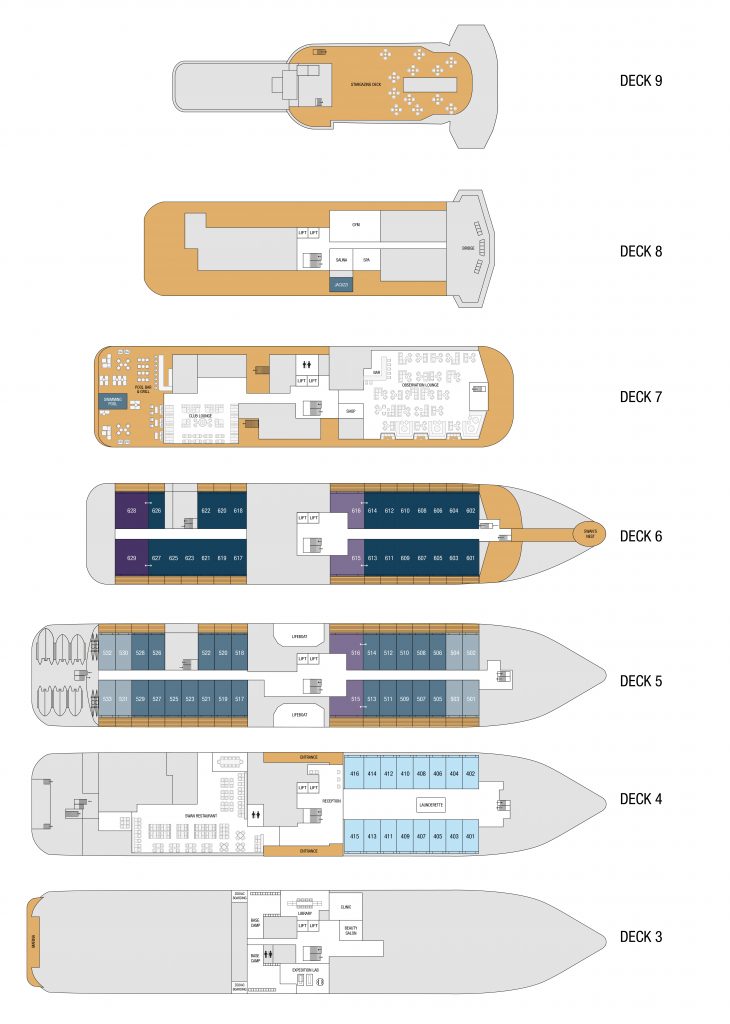
Deck plan of SH Minerva cruise ship, detailing layouts from Deck 3 to Deck 9, including cabins, lounges, dining, and spa areas
Arriving in November 2021, the 5 star elegant Scandi-design boutique ship offers you an intimate setting from which you will be fully immersed in all the sights and scenery of your voyage.

Cabins & Amenities

  • Staterooms: Our 76 stateroom including 6 suites have all the amenities you will need to feel comfortable including dressing gowns, hairdryers, personal safes and minibars.Our stylish stateroom all have desks, a dressing area and comfy seating. En suite bathrooms all feature glass-enclosed rain showers.
  • Sauna with a view: Head to Deck 8 for the best view in the world. After a work out in our state-of-the-art-gym, relax in our sauna or  jacuzzi and take those breathtaking vistas along the way.
  • The Swan Restaurant: As the main venue for breakfast, lunch and dinner, our 152-seat restaurant serves international and local cuisine focused on quality regional ingredients from the unique destination we visit.
  • Alfresco Dining & Heated Outdoor pool: On Deck 7 you´ll find a heated outside pool along with pool side seating from where you can enjoy stunning scenery.
  • The Observation Lounge: After a day of exploration, where better to relax than in the Observation Lounge. Sit back, savor your favorite tipple whilst getting to know you fellow guests:
  • The Club Lounge: Vibrant and welcoming , The Club Lounge acts as a hub , combining 24 hours tapas inspired dining with panoramic views of the ocean glittering below.

INCLUDED in all voyages:

  • Room service 24 hours a day
  • Coffee, tea, soft drinks & select alcoholic beverages 24 hours a day
  • Lecture programmes by our experienced expedition team and guest speakers
  • Standard WIFI inclusion
  • Onboard gratuities & port taxes
  • One shore excursion per port of call
  • Use of Rubber boots for shore landings
  • Branded Swan Hellenic expedition parker


Adventure activities: One-time kayaking $250/trip.

Nov 12, 2025 -
Nov 22, 2025

Price

$6,790.00 -
 $12,490.00

Price

$10,900.00 -
 $15,800.00

Price

$33,395.00 -
 $54,495.00

Adventure Options

Price

$10,999.00 -
 $20,999.00

Adventure Options

Price

$15,580.00 -
 $30,980.00

Adventure Options

Search Freestyle

ANTARCTICA AWAITS!

Our office is open, and new last-minute deals are landing every week!

Join our mailing list and stay one step ahead.