

When it comes to polar exploration, the eternal question arises: where is the North Pole and how does it compare to the South Pole? These two frozen frontiers couldn’t be more different, offering unique adventures for intrepid travelers seeking the ultimate polar experience.

The Great Polar Divide: Land vs. Sea
The most fundamental difference between these polar opposites lies in their very nature. Antarctica is a massive continent surrounded by water, a solid landmass covered with ice and encircled by the Southern Ocean. The South Pole Antarctica sits firmly on solid ground, making it a true terrestrial destination.
In stark contrast, the North Pole is located in the middle of the Arctic Ocean, surrounded by landmasses. This means when you reach the North Pole, you’re literally standing on frozen ocean water! The Arctic represents the world’s smallest ocean, completely opposite to Antarctica’s continental structure.
Wildlife Worlds Apart
One of the most enchanting aspects of polar travel is the wildlife encounters, but here’s where these regions truly diverge. Antarctica South Pole expeditions offer incredible penguin colonies, seals, and coastal seabirds. These charming tuxedo-clad creatures never venture beyond the Southern Hemisphere, they simply cannot cross the equator.
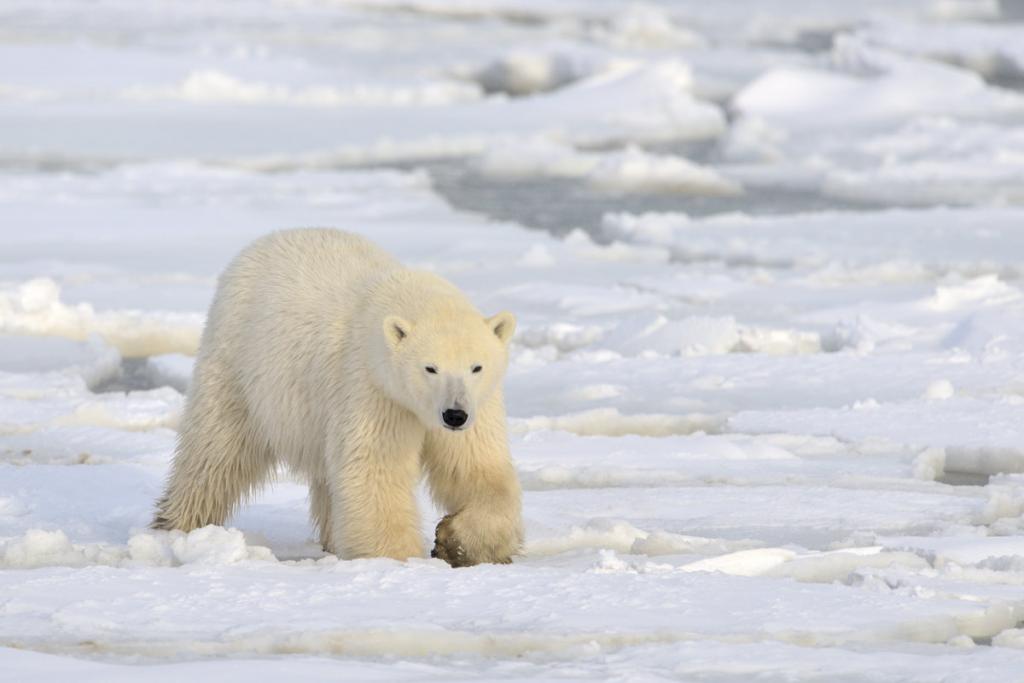
Meanwhile, Arctic adventures feature the iconic polar bear, Arctic foxes, reindeer, walruses, and whales. The well-developed tundra supports diverse mammalian life that thrives in this harsh environment. Polar bears and penguins will never meet naturally, they inhabit completely different worlds separated by thousands of miles.

Historical Discovery Timeline
The polar regions have vastly different discovery histories. Ancient civilizations discussed Arctic territories as early as 325 BC, with various accounts of the mysterious northern “Thule Territory.” However, Antarctica remained hidden from human knowledge until 1820, when multiple expeditions simultaneously discovered this frozen continent.
This 2,000-year gap in discovery highlights how much more accessible the Arctic has been throughout human history, while Antarctica remained Earth’s last major continental discovery.
Temperature Extremes
Antarctica claims the title of Earth’s coldest continent, with average temperatures ranging from -76°F to +14°F. The South Pole experiences some of the most extreme cold conditions on the planet, with virtually no terrestrial mammals surviving except for bacteria.
The Arctic, while brutally cold, offers more moderate temperatures ranging from -34.6°F to +50°F. This temperature difference allows for more diverse ecosystems and seasonal variations that support Arctic wildlife.
Travel Experiences: Antarctica Cruise vs. Arctic Expeditions
Modern polar tourism offers incredible opportunities to visit both regions. Antarctica cruise adventures provide intimate encounters with pristine wilderness, where small, agile expedition vessels are exclusively designed for intrepid exploration, built to withstand the most extreme environs. These Antarctic cruises typically feature zodiac landings, wildlife photography, and educational lectures. Check our blog “What is a day like in Antarctica?” to learn more!
Antarctica expeditions focus on the continent’s scientific research stations, including the famous Amundsen-Scott Station at the South Pole and other potential landings. To get the full experience and make the most of wildlife sightings, landings and activities, join one of our expedition ships with less than 200 passengers for a more personal adventure.
Arctic expeditions offer a different experience entirely. The number of cruise passengers to the Arctic increased from about 50,000 to 80,000 – or 60 percent – from 2005 to 2016, with popular destinations including Svalbard, Greenland, and Franz Josef Land. Many travelers find themselves overcome with emotion when reaching the North Pole, celebrating this incredible achievement on the frozen Arctic Ocean.


Living at the Poles
Human habitation differs dramatically between these regions. Antarctica hosts the Amundsen-Scott research station at the South Pole, where scientists conduct vital climate and atmospheric research. However, the North Pole remains uninhabitable due to its location on shifting sea ice, making permanent settlement impossible.
The Arctic regions surrounding the North Pole do support indigenous communities who have adapted to this harsh environment over millennia, creating rich cultural experiences for travelers.

Planning Your Polar Adventure
Whether you choose an Antarctic expedition ship to witness penguin colonies and pristine wilderness, or an Arctic expedition to spot polar bears and experience indigenous cultures, both destinations offer life-changing adventures. Antarctica expeditions provide scientific insights and pristine natural beauty, while North Pole expeditions offer the thrill of reaching the planet’s northernmost point.
The choice between these polar opposites ultimately depends on your adventure preferences: Do you seek the scientific wonder and wildlife spectacle of Antarctica South Pole, or the cultural richness and Arctic Ocean adventure of the North Pole? Both destinations promise unforgettable memories and the ultimate polar expedition experience.
Ready to explore these frozen frontiers with Freestyle Adventure Travel? Start by joining our mailing list to receive incredible last-minute deals & let’s start planning your polar adventure!
FAQ
Can I visit both the North and South Poles on the same trip?
No. Due to their extreme distance and different logistics, the North and South Poles are visited on separate expeditions. Most travelers choose one per season, depending on what kind of adventure they’re looking for.
Which destination is better for wildlife? The Arctic or Antarctica?
It depends!
Antarctica is ideal for penguin lovers, seabirds, and seals.
The Arctic is home to polar bears, reindeer, Arctic foxes, walruses, and whales.
Each region offers unforgettable wildlife encounters unique to its ecosystem.
How do I actually reach the North or South Pole?
• The South Pole is only accessible by expedition cruise ship, or by taking a charter flight across the Drake Passage. Crossing by cruise ship is by far the most popular way to travel to Antarctica, with the most variety of voyage options.
• The North Pole can be reached via Arctic expedition cruises that travel through the Arctic Ocean, sometimes even including helicopter-assisted landings.
When is the best time to visit Antarctica or the Arctic?
• Antarctica: November to March (Southern Hemisphere summer)
• Arctic: June to September (Northern Hemisphere summer)
These are the only windows when sea ice allows ship access and wildlife is most active
What kind of ships take travelers to the poles?
Freestyle works with small expedition vessels (typically under 200 passengers), designed for polar navigation and ice conditions. These ships offer Zodiac excursions, expert-led lectures, and a more intimate experience than larger cruise liners.
Can I travel solo to the poles?
Absolutely! Many of our guests are solo travelers. You can share a cabin to reduce costs, and you’ll quickly bond with fellow adventurers onboard.
What’s the biggest difference between an Antarctica cruise and an Arctic expedition?
> Antarctica feels like visiting another planet, pristine, silent, and full of wildlife.
> The Arctic includes not only wilderness, but also remote villages, indigenous cultures, and a wider range of wildlife.
Choose based on whether you want more scientific solitude or cultural contrast alongside your wildlife and landscapes.


