

When people imagine seals in Antarctica, they often picture peaceful, sleepy animals basking on the ice. The sea leopard, better known as the leopard seal (Hydrurga leptonyx), shatters that image. This remarkable marine mammal is one of the most feared antarctica predators, ranking just below orcas in the antarctic food chain. Sleek, powerful, and highly adaptable, it is both a guardian of ecological balance and a thrilling highlight for travelers on an antarctica expedition wildlife cruise.
Physical characteristics and adaptations for survival
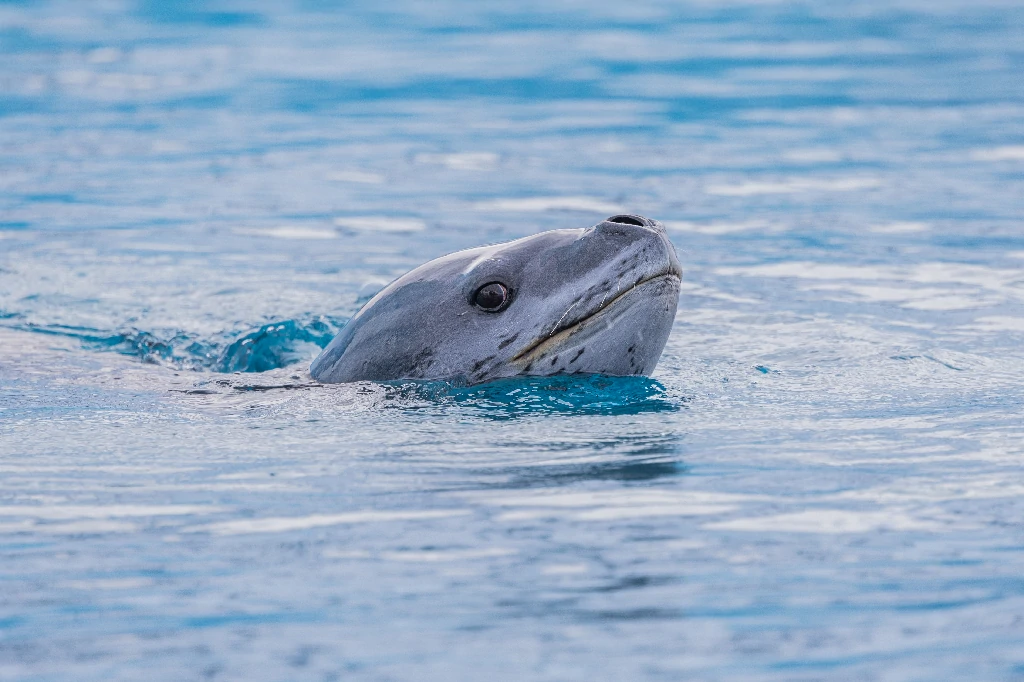
Among all antarctic seals, the leopard seal is the largest and one of the most easily recognized. Adults typically measure between 2.5 and 3.5 meters in length and weigh 200–600 kilograms, with females often surpassing males in size. Their elongated, serpent-like bodies, muscular build, and wide jaws lined with sharp canines make them formidable hunters. Their spotted gray coat gives them the appearance of their namesake, the leopard. These physical traits underline the species’ role as an antarctic apex predator.

Unique hunting adaptations for icy waters
The sea leopard is a master of the Southern Ocean. With the ability to swim up to 37 km/h and dive for more than 30 minutes, it thrives in extreme conditions. Its specialized teeth are a marvel of evolution: the interlocking molars filter krill antarctica, while powerful canines shred penguins or fish. Coupled with acute underwater vision and sensitive whiskers that detect subtle movements, these adaptations make the leopard seal a versatile predator capable of switching between large prey and tiny crustaceans.
Habitat and distribution in Antarctica
Where leopard seals are most commonly spotted
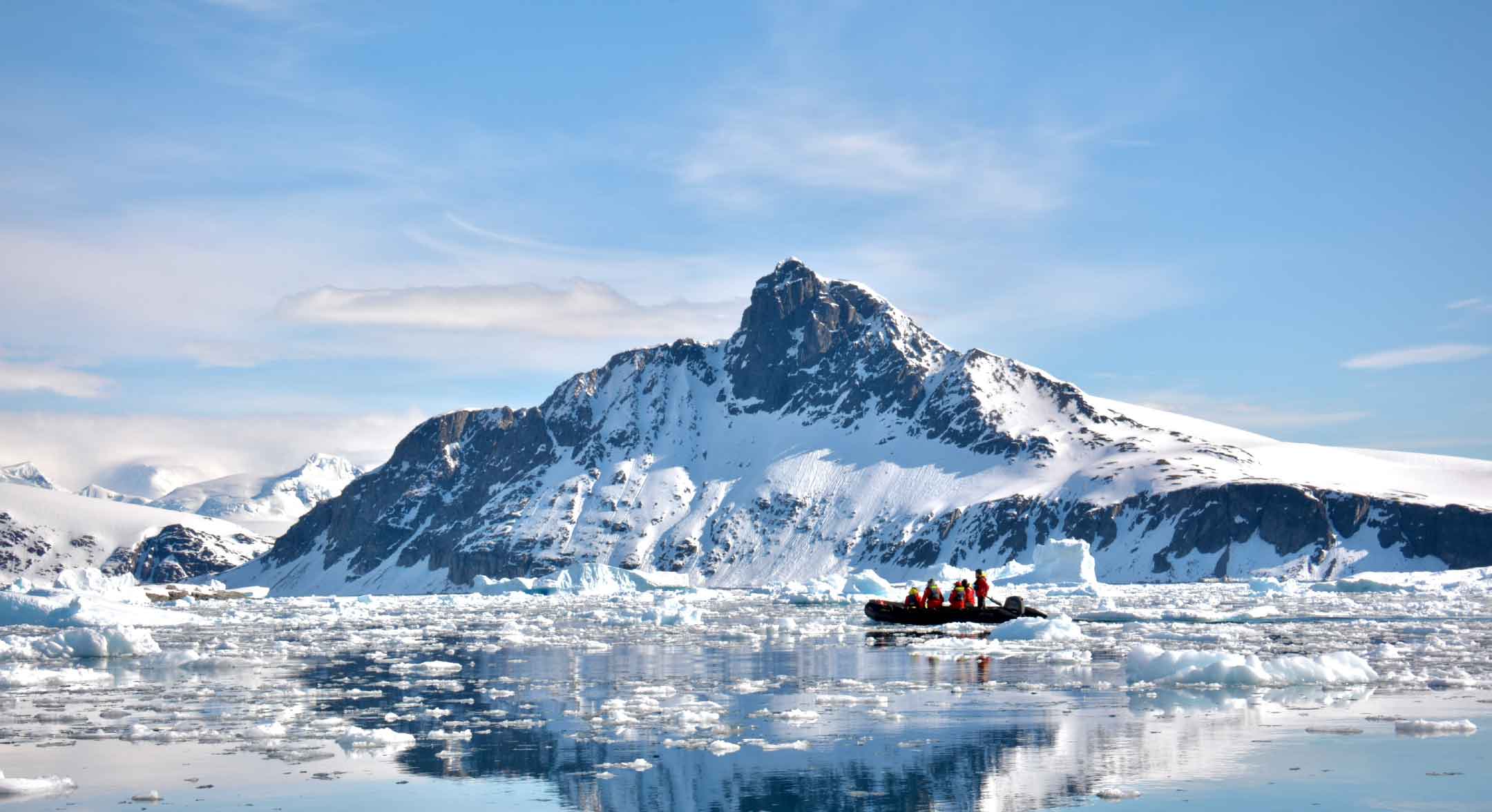
Leopard seals have a circumpolar distribution, closely tied to pack ice. During the austral summer, they concentrate around the Antarctic Peninsula, Weddell Sea, and Ross Sea, where melting ice opens access to antarctica wildlife colonies. Travelers on an antarctica cruise wildlife encounters itinerary are most likely to spot them lounging on drifting ice floes near penguin rookeries.
Seasonal movements and feeding grounds
While adults often remain in Antarctic waters year-round, younger individuals disperse north during winter to sub-Antarctic islands and even as far as South America, South Africa, and New Zealand. These seasonal shifts reflect the movement of prey species and demonstrate the seal’s adaptability within the antarctica marine life ecosystem.
Behavior and diet: life at the top of the Antarctic food chain
Leopard seals are solitary and aggressive hunters, relying on stealth and sudden bursts of speed. They stalk penguins at the water’s edge, ambushing them as they leap in. Their menu includes crabeater seal pups, fur seal juveniles, squid, and fish, but also smaller prey filtered directly from the water. This opportunism cements their reputation as a versatile predator in the antarctic food chain.
Interaction with penguins and other seals
For many visitors, the drama of penguins antarctica facing the threat of a leopard seal is an unforgettable wildlife spectacle. These predators not only regulate penguin populations but also prey on young seals, leaving scars that mark survivors for life. Such interactions highlight their importance in controlling the abundance of other species within antarctica predators networks.
The role of krill in their diet
Despite their fierce image, nearly half of a leopard seal’s diet is made up of krill antarctica. By filtering these shrimp-like creatures in massive numbers, leopard seals link the tiniest prey with higher predators like whales and penguins, playing a crucial role in sustaining the balance of antarctica marine life.
Encounters during your Antarctic cruise
When and where you’re most likely to see them
The best time to observe leopard seals is between November and March, the austral summer. This is when ice retreats and both seals and penguins are highly active. Travelers should keep their eyes on ice floes near penguin colonies—prime hunting and resting spots.
Safety guidelines for observing leopard seals
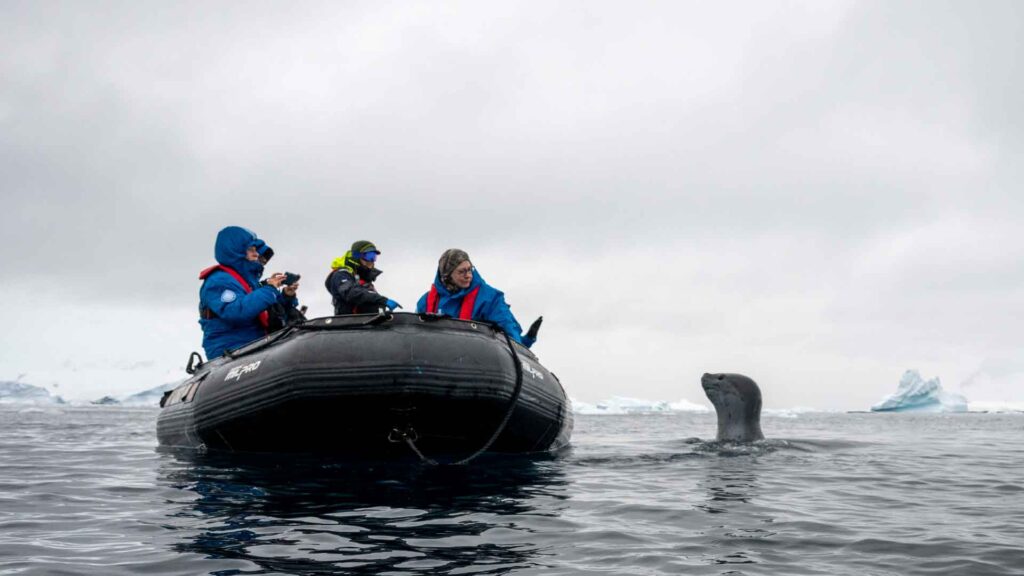
Although attacks on humans are extremely rare, leopard seals’ size and leopard seal behavior demand caution. International tour operators under IAATO enforce strict rules: keep a safe distance, never approach seals on ice, and avoid startling them in the water. Respectful observation ensures both your safety and minimal disturbance to seals in antarctica.
Photographic tips for capturing the moment
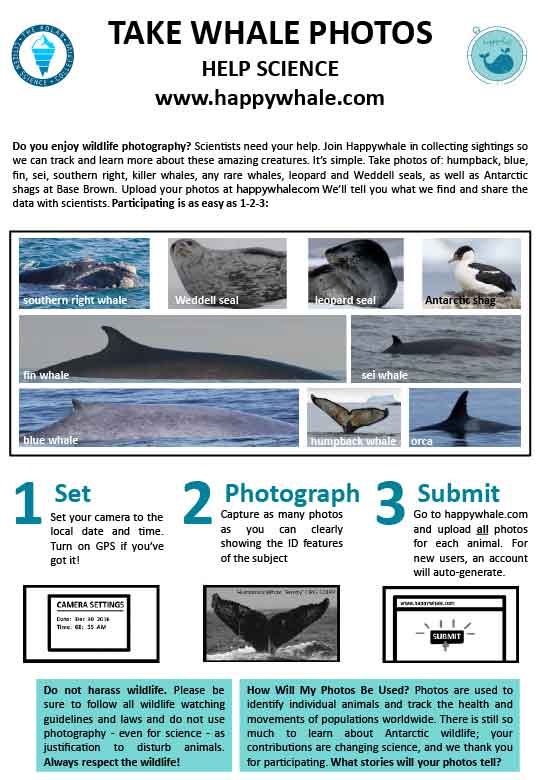
For those passionate about antarctica photography tips, patience and preparation are key. Long lenses allow you to capture close-up details without disturbing the animals. Early morning or late evening light enhances the dramatic contrast of their spotted coats against the ice. Remember: always prioritize the welfare of wildlife over the perfect shot.
Happy Whale needs our help in collecting sightings so they can track and learn more about Leopard Seals!
Importance of the leopard seal in Antarctic ecosystems
As an apex predator, the leopard seal regulates populations of penguins, fish, and smaller seals. Without this natural control, prey species could overpopulate and destabilize the delicate antarctica expedition wildlife balance. Their role as predators ensures diversity and resilience within the ecosystem.
Scientists consider leopard seals to be key indicators of the Southern Ocean’s health. Shifts in leopard seal diet—whether toward krill, fish, or penguins—reflect broader changes in prey availability, often linked to climate change and fishing pressure. The discovery of microplastics in leopard seal feces is an alarming reminder of how human impact reaches even the most remote antarctica marine life.
Conservation status and human impact
Currently listed as “Least Concern” by the IUCN, leopard seals face increasing risks. Melting ice affects both their habitat and the survival of krill antarctica, their primary food source. Overfishing of krill and pollution, including plastic debris, threaten the future of these iconic antarctic seals.
Since 1972, leopard seals have been protected under the Convention for the Conservation of Antarctic Seals, part of the broader Antarctic Treaty System. Today, responsible tourism and research help safeguard them. Supporting operators who adhere to strict conservation guidelines ensures that travelers enjoy ethical antarctica cruise wildlife encounters while minimizing ecological impact.
An unforgettable wildlife encounter
Encountering a leopard seal during an Antarctic voyage is a moment few forget. As the sea leopard surfaces near your Zodiac or sprawls across an ice floe, its presence is both intimidating and awe-inspiring. These encounters remind us of the fragile balance within antarctica wildlife, where every predator and prey plays a vital role. By observing responsibly and supporting conservation, travelers help ensure that future generations can witness the power and beauty of this antarctic apex predator in its icy domain.