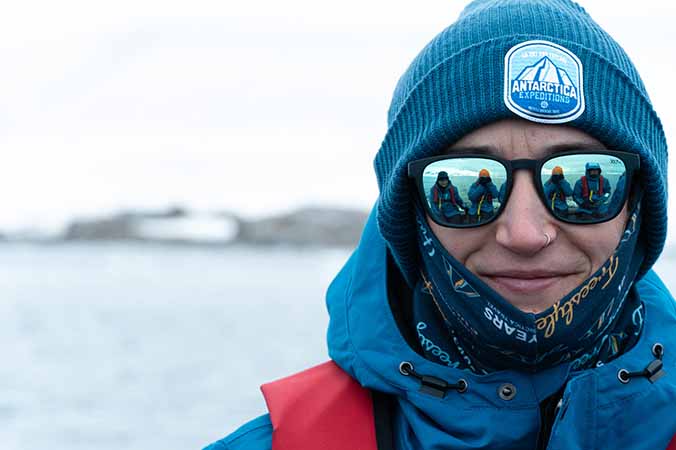

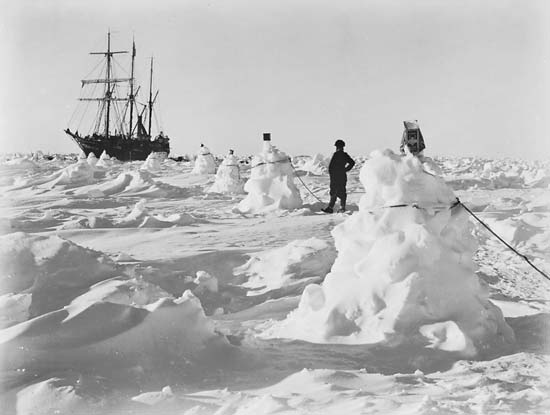
If you are thinking about Antarctica as your next destination, you will find that the options are varied, and there are different kinds of trips in many different types of vessels: a luxury ship, with a 5 star hotel and fancy restaurants, an ex-Russian icebreaker, or a small sailing boat for those adventurers who want to feel the Drake Passage crossing at its best.
As you are embarking on a unique trip where you will spend most of the time in Antarctic waters, you will discover a whole new world, where you will need to go back to your old dictionary or research on the net (for those with better internet skills) to find the meaning of words like zodiac, Drake, Dramamine, krill, breach, fluke, and you are also going to find that there is a specific name (with an explanation) for every place you land on the White Continent.
We will use this blog to give you some information about the captain of one of the greatest tales of survival in expedition history and epic stories of the 7th continent, Sir Ernest Shackleton.
His most famous expedition is used by many Antarctica companies to offer travelers the chance to travel back in time and explore the places Shackleton walked on one hundred years ago.
About Him
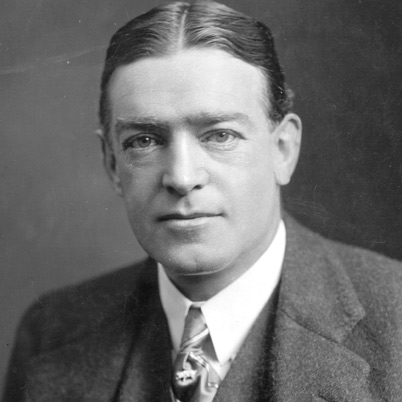
Sir Ernest Henry Shackleton, (February 15, 1874 – January 5, 1922) was a polar explorer who led three British expeditions to the Antarctic Continent.
He was born in County Kildare, Ireland, and moved to England at the age of 10. From early childhood, Shackleton was a voracious reader, a pursuit which sparked a passion for adventure.
He joined the merchant navy when he was 16 and worked on many different ships before becoming a polar explorer.
Antarctic Expeditions:
1) Discovery Expedition (1903 – 07), lead by Robert Falcon Scott. Shackleton’s particular duties were listed as: “In charge of seawater analysis. Ward-room caterer. In charge of holds, stores and provisions […] He also arranges the entertainments.”
2) Nimrod Expedition (1907 – 09), otherwise known as the Nimrod Expedition, was the first of three expeditions to the Antarctic led by Ernest Shackleton.
3) The Imperial Trans-Antarctic Expedition (1914–17), also known as the Endurance Expedition, is considered the last major expedition of the Heroic Age of Antarctic Exploration. Conceived by Sir Ernest Shackleton, the expedition was an attempt to make the first land crossing of the Antarctic continent.
I’ll take a break here and try to be a little bit more thorough about Shackleton and the Endurance Expedition.
The Endurance Expedition
Shackleton wanted to be the first explorer to cross the entire Antarctic Continent. In his risky plan, he decided to use two different ships. The Endurance carried the main party into the Weddell Sea to begin the overland expedition across Antarctica.
The second vessel, Aurora, with a separate crew, sailed to other side of the continent to leave supply depots of food and fuel for the Endurance men to use as they made their final push across.
In December 1914, Shackleton set sail with his 27-man crew, many of whom, it is said, had responded to the following recruitment notice: “Men wanted for hazardous journey. Small wages. Bitter cold. Long months of complete darkness. Constant danger. Safe return doubtful. Honour and recognition in case of success. —Ernest Shackleton.”
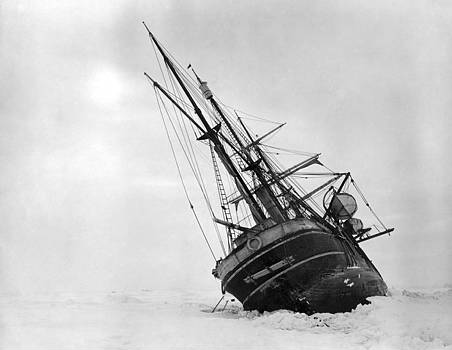
The expedition doesn’t go as planned from the beginning. Upon arrival to Antarctic waters, the explorers find much more pack ice than expected, but they continue on determinedly.
On 19 January 1915, Endurance became locked in the ice of the Weddell Sea. The only option the crew has is to wait for the ice to break up and save their ship.
Over the course of the next nine months, the ship was gradually crushed until water began pouring in on October 24th.
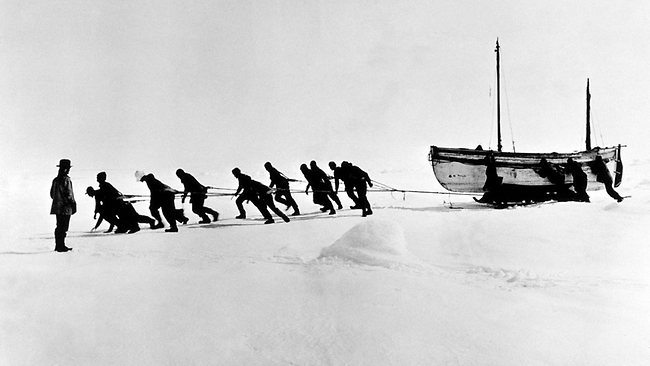
When the men realized that the ship was about to go down, they abandoned ship and made camp on the ice floes, hoping to drift north.
After months on the ice, Shackleton realized they weren’t going to make it to their destination and launched three life boats. After five days in dangerous conditions, they managed to reach Elephant Island. This rocky and barren island was still more than 800 miles from the nearest inhabited land with people who could help them.
As food and fuel ran low, Shackleton decided he had to leave most of the party behind in an attempt to save their lives. He set off in one of the smalls boats, the “James Caird” with five others to try and reach South Georgia, the nearest inhabited island, 800 miles away.
He knew that he would find help there, at the Norwegian whaling stations on the north side of the island. When the six set sail, the rest of the group were left behind to make camp on Elephant Island.
After 15 exhausting days at sea in the barely sea-worthy boat, they finally sighted South Georgia. They arrived to the uninhabited south side of the island, at a place call King Haakon Bay.
To reach the whaling stations for help, someone had to cross the unmapped island to the other side. This would mean climbing high mountains that had never been crossed before.
So, the Captain decided to take two of the sailors, the ones who where in best physical conditions (after more than 14 months living on the ice), and led them to other side of the island, crossing mountains more than 3,000 feet tall, without a tent and with just the necessary food to accomplish the mission.
After 36 hours and 40 miles of almost constant march, they heard the steam-whistle of the Stromness whaling station, signaling the start of another days work at 7 a.m.
Every single man from the Endurance expedition was rescued. Those on Elephant Island had to wait a bit longer, as Shackleton’s first three attempts to rescue them failed. He finally arrived on August 30, 1916 aboard a Chilean navy tug to find all of his men alive. The men later said that they believed their survival was due largely to Shackleton’s tremendous leadership. Many would have believed it impossible to bring all of these men home with no lives lost.
Special expeditions today aim to follow Shackleton’s footsteps to South Georgia, Elephant Island and parts of the Weddell Sea.
These trips carry specialized historians, who share the detailed histories aboard the ship and lead passengers to explore these places. Check out the Falklands, South Georgia & Antarctica itineraries to see the general expedition plan and contact us for more detailed information about these expeditions.
Reading Recommendations:
- The Endurance: Shackleton’s Legendary Antarctic Expedition, By Caroline Alexander, Frank Hurley (Photographer)
- South: The Endurance Expedition, By Ernest Shackleton