
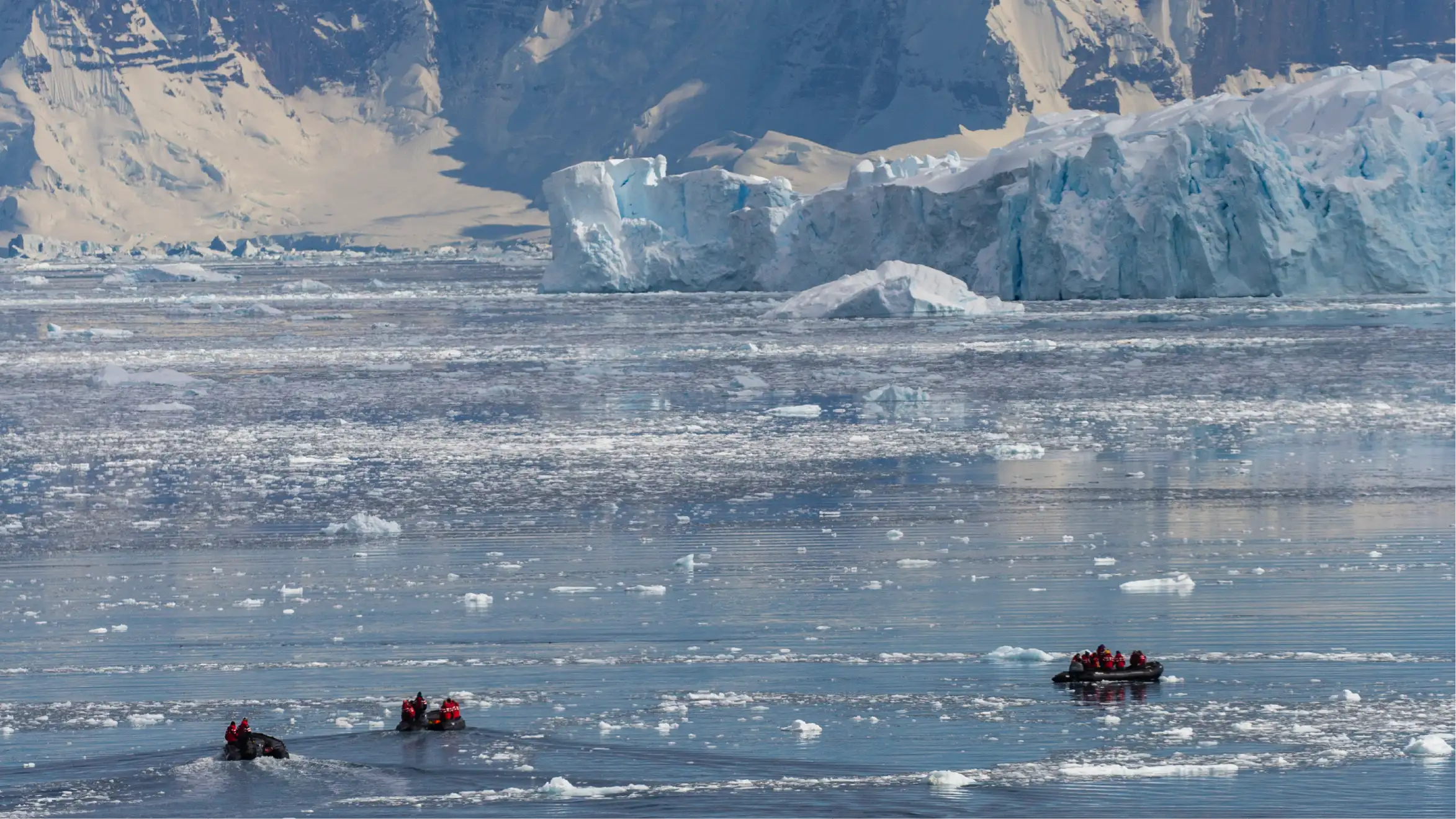
The Antarctic Sound is one of the most dramatic gateways to the Antarctic Peninsula.
It’s an area known for towering tabular icebergs, historic sites, and incredible wildlife encounters.
If you’re planning an Antarctic cruise and are comparing itineraries, understanding where the Antarctic Sound is and which trips go here is helpful when choosing your expedition.
Where is the Antarctic Sound?
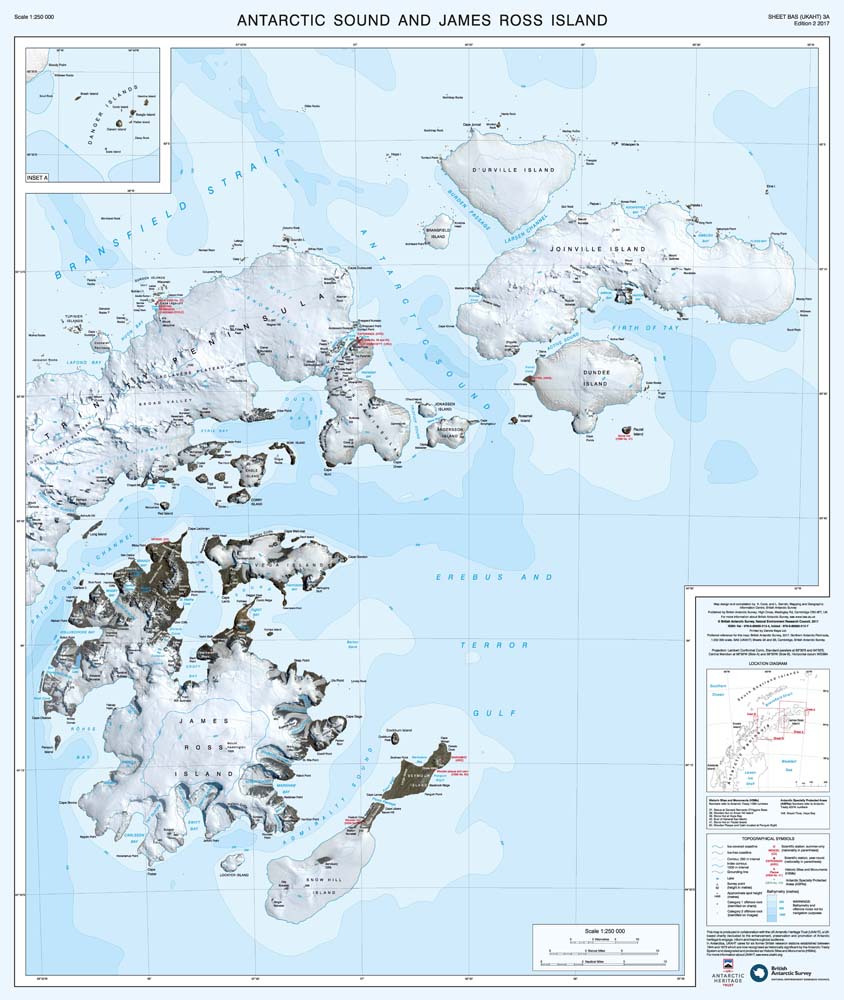
The Antarctic Sound sits at the northern tip of the Antarctic Peninsula, between the peninsula itself and the Joinville Island group.
It connects the Bransfield Strait to the Weddell Sea, creating a natural corridor that many expedition ships navigate early in their voyage.
For travelers, the Antarctic Sound is often the first true introduction to the region’s dramatic landscapes:
- Massive tabular icebergs drifting from the Weddell Sea
- Wide, open channels surrounded by snow-covered mountains
- Large penguin colonies in some of the most remote parts of Antarctica
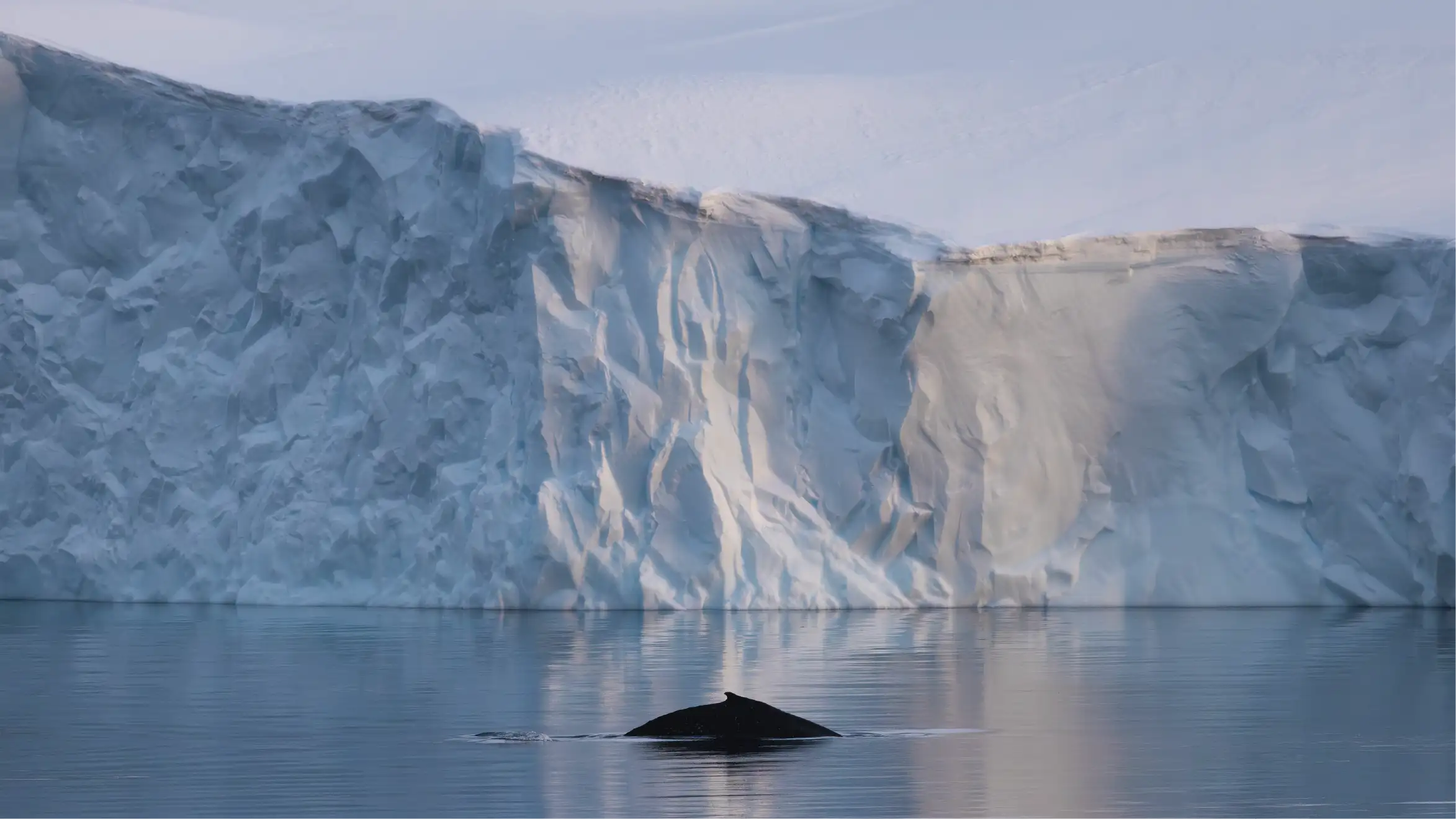
Because of its position, the Antarctic Sound acts as a gateway between two very different environments: the ice-heavy Weddell Sea and the milder, wildlife-rich western side of the peninsula.
Why the Antarctic Sound is special
The Antarctic Sound is famous for its impressive ice.
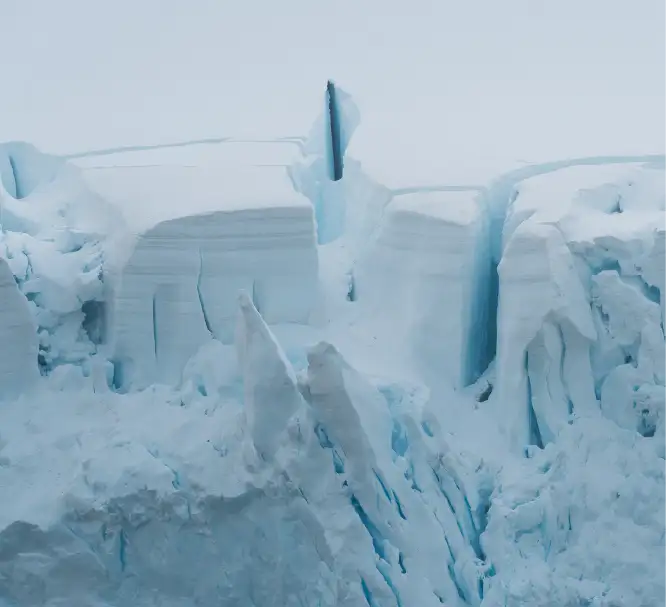
Nicknamed “Iceberg Alley,” it’s one of the best places to see enormous, flat-topped tabular icebergs that can stretch for hundreds of meters.
Some highlights that make this area so iconic include:
- Unforgettable iceberg scenery
Tabular bergs from the Weddell Sea drift through the sound, creating a landscape that feels almost otherworldly.
Your ship may navigate between ice giants as you stand on deck watching seals haul out on ice floes.
2. Historic sites of early Antarctic exploration
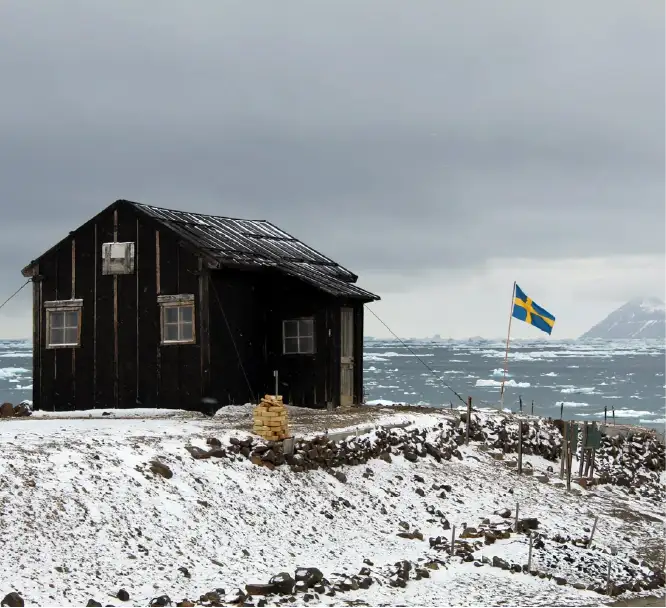
The Antarctic Sound played a key role in early expeditions, including the Swedish Antarctic Expedition led by Otto Nordenskjöld (1901–1904).
Remnants of this history remain on several landing sites today.

3. Penguin colonies and wildlife encounters
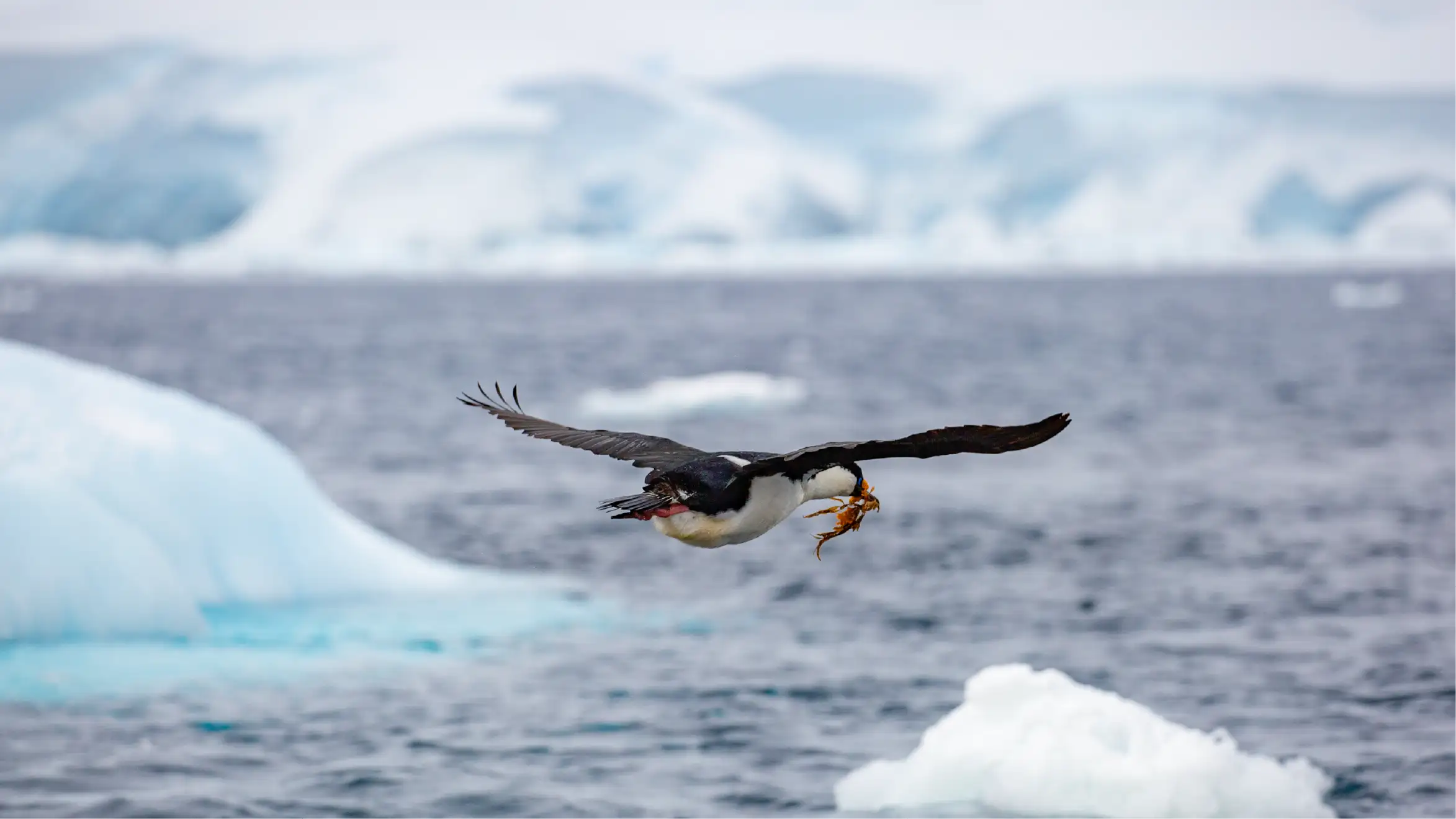
The region is home to large Adelie penguin colonies and often offers sightings of:
- Adelie and Gentoo penguins
- Weddell, Crabeater, and Leopard seals
- Orcas and humpback whales, especially later in the season
Top landing sites near the Antarctic Sound
Conditions and ice levels determine what’s possible, but expedition vessels commonly attempt landings in this region. Depending on your itinerary and weather, you may visit:
Brown Bluff
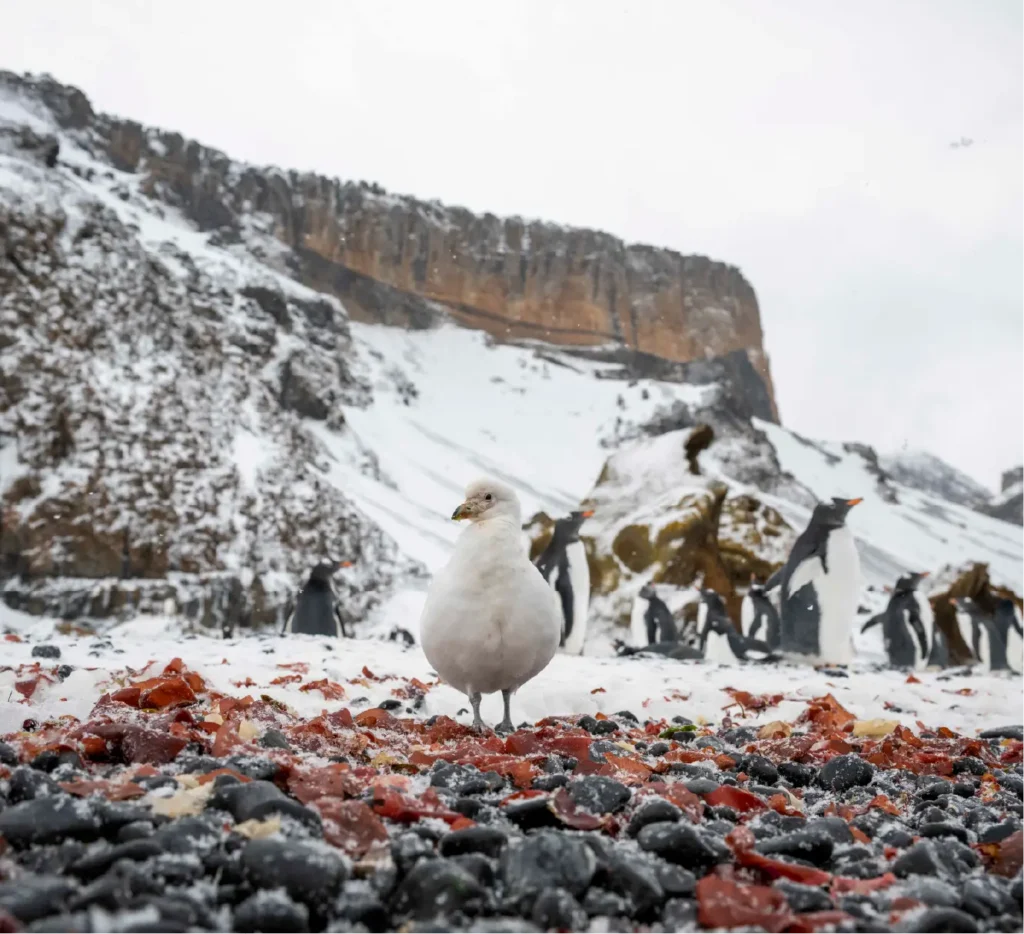
One of the best-known sites in the Antarctic Sound, Brown Bluff offers:
- A huge Adelie penguin colony
- Orange volcanic cliffs
- A wide beach ideal for Zodiac operations
It’s a beautiful landing and often a traveler favorite.
Paulet Island
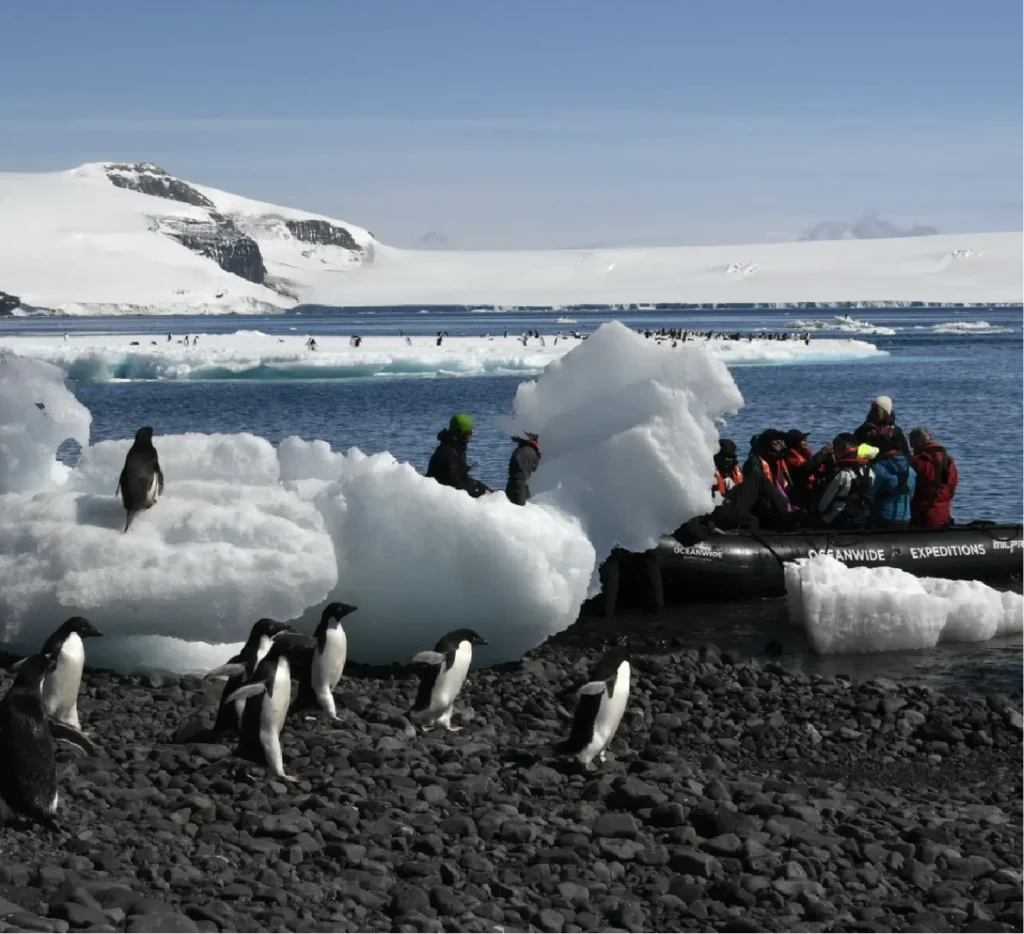
A historic site featuring:
- The remains of a stone hut built by shipwrecked explorers from the Swedish Antarctic Expedition
- 100,000+ pairs of Adelie penguins.
- Incredible photographic opportunities.
Danger Islands
Remote, difficult to access, and home to one of the world’s largest Adelie penguin supercolonies.
The Danger Islands are spectacular when conditions allow.
When to visit the Antarctic Sound
The Antarctic season runs from late October to March, but the experience changes throughout the months:
| Early Season (November – December) | Mid-season (December–January) | Late season (February–March) |
| 1. The Sound often has more sea ice 2. Best time for dramatic iceberg scenery 3. Adelie penguins are returning to nests | 1. A good balance of wildlife and accessible landing sites 2. Warmest weather and more stable conditions 3. Excellent for penguin chicks | 1. Some itineraries can push deeper into the Weddell Sea 2. Peak whale-watching 3. Chicks becoming more active |
Each period offers something unique, and the Antarctic Sound can be a highlight at any time of the season.
How to choose the right cruise if you want to visit the Antarctic Sound
Because weather and ice determine access, no operator can guarantee a visit. However, you can improve your chances with:
- Longer itineraries (10–14 days or more)
- Ships with strong ice capabilities
- Voyages to Malvinas / Falklands and South Georgia usually visit the Antarctic Sound as they arrive to Antarctica
- Expedition operators with experience in the Weddell Sea region
- Flexible itineraries that adapt to conditions
An experienced expedition team is especially important here.
They evaluate ice, identify wildlife opportunities, and adjust the route to give travelers the best experience possible.
Why the Antarctic Sound belongs on your must-see list
For many travelers, the Antarctic Sound becomes one of the most memorable moments of their voyage.
Between the history, towering icebergs, and thriving wildlife, it offers the perfect blend of everything that makes Antarctica so special.
If you’re comparing itineraries or deciding which cruise is right for you, choosing one that includes the Antarctic Sound can open the door to an extraordinary part of the White Continent.