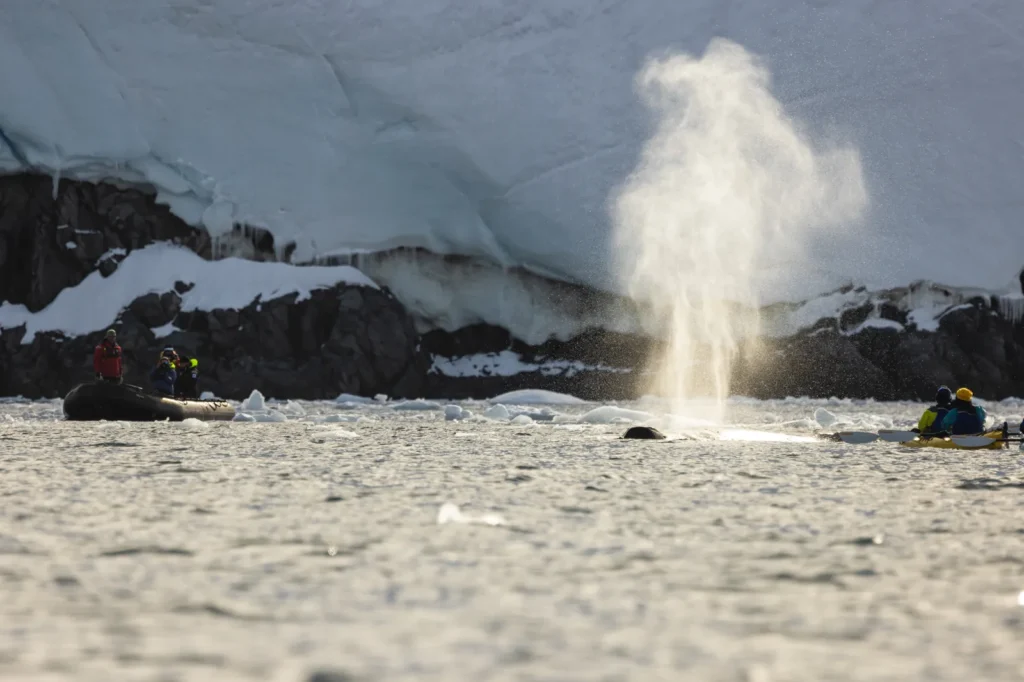

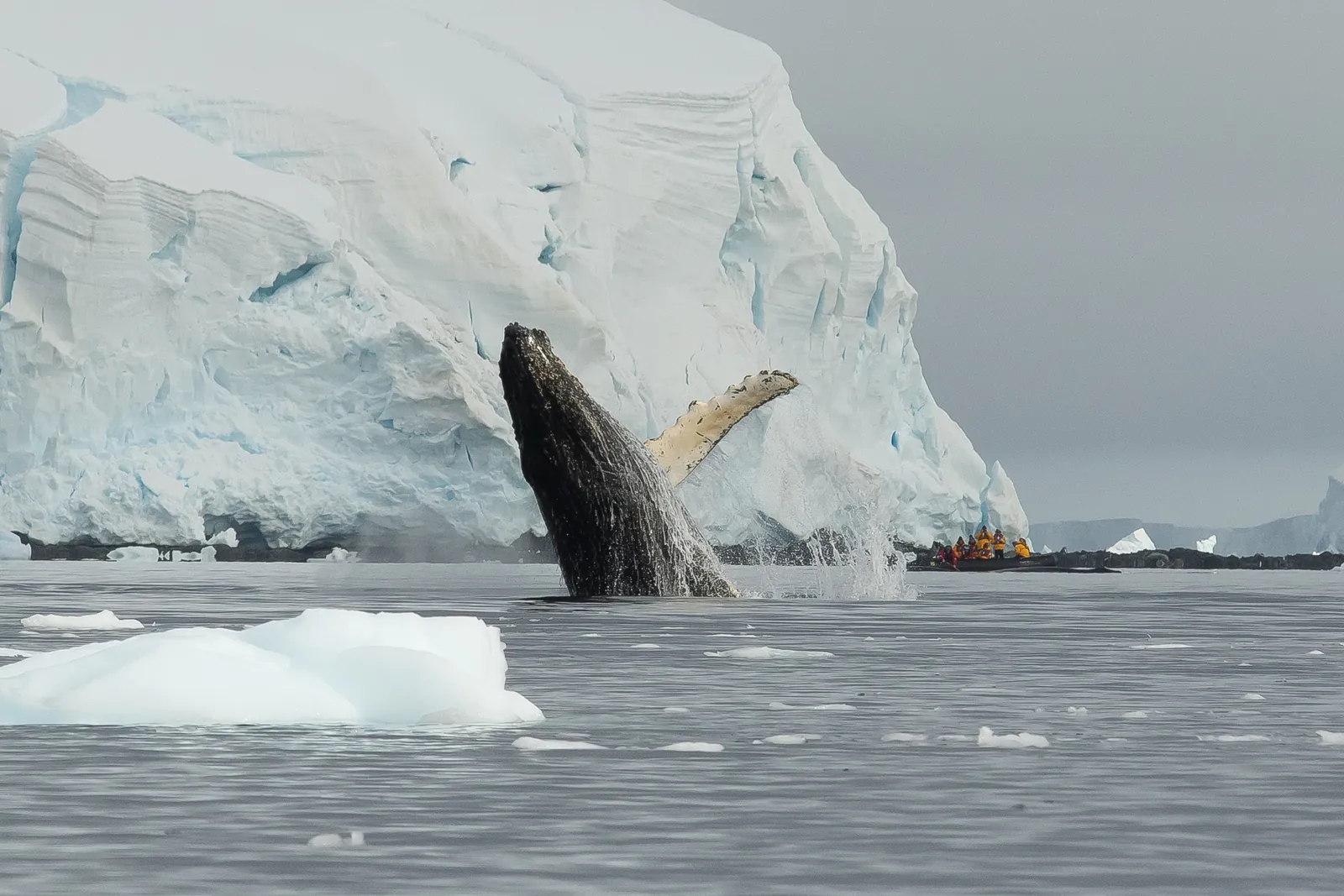
Imagine standing on the deck of an expedition ship, surrounded by towering icebergs and snow-covered mountains, when suddenly a humpback whale breaks the surface. Moments later, its enormous tail rises above the water before disappearing into the depths of the Southern Ocean.
Whale watching in Antarctica is one of the most extraordinary wildlife experiences on the planet. Every austral summer, nutrient-rich waters attract magnificent marine mammals, including humpback whales, orcas and Antarctic minke whales.
But when is the best time to see them, and which itineraries offer the greatest opportunities? Understanding Antarctica’s whale-watching season and the different expedition routes will help you make the most of this remarkable wildlife experience.
Whale watching in Antarctica at a glance
- Best months: February and March
- Main species: humpback whales, orcas and Antarctic minke whales
- Top spots: Wilhelmina Bay, the Gerlache Strait, Charlotte Bay and the South Shetland Islands
- How you’ll see them: from the ship’s outdoor decks and on Zodiac cruises
- Good to know: sightings are never guaranteed, every voyage is shaped by nature
When is the best time for whale watching in Antarctica?
February and March are generally considered the best months for whale watching in Antarctica, particularly around the Antarctic Peninsula.
As the Antarctic summer progresses, whales gather in productive feeding areas to take advantage of abundant Antarctic krill, a small crustacean that plays a vital role in the Southern Ocean’s food web.
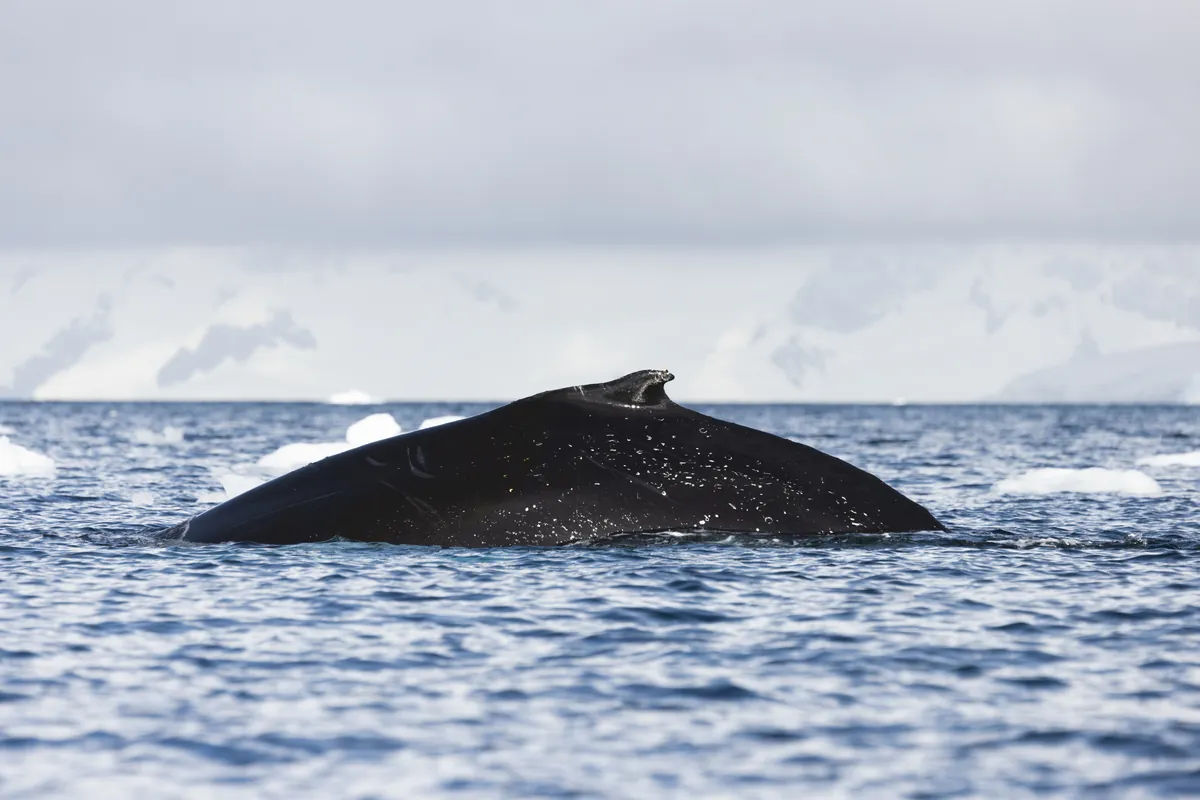
Although sightings are possible throughout the expedition season, encounters with feeding humpback whales tend to become more frequent later in the summer.
Whale watching in Antarctica: month by month
| Month | What to expect | Whale-watching outlook |
|---|---|---|
| November | Early-season sightings are possible, although many migratory humpbacks are still arriving. Known for pristine snowy landscapes. | Possible |
| December | Whale activity gradually increases, alongside long daylight hours and active penguin colonies. | Growing |
| January | Excellent opportunities to encounter humpbacks and minke whales as feeding activity increases. | Very good |
| February | One of the best months, especially for humpbacks feeding in the bays and channels of the Antarctic Peninsula. | Excellent |
| March | Excellent late-season opportunities, although departures become less frequent as the season ends. | Excellent |
If whales are high on your list, mid-February through March is an especially rewarding period, although sightings of specific species can never be guaranteed.
Which whale species can you see in Antarctica?
Several whale species inhabit Antarctic waters, but humpbacks, orcas and Antarctic minke whales are among the most fascinating to encounter during an expedition.
| Species | How to recognize them | Best time |
|---|---|---|
| Humpback whale | Long pectoral fins and distinctive tail flukes raised before a dive | January to March, especially February and March |
| Orca (killer whale) | Black-and-white pattern and a tall dorsal fin, often traveling in pods | Possible throughout the season |
| Antarctic minke whale | Smaller and elusive, surfacing briefly near the sea ice | Throughout the austral summer |
Humpback whales: the stars of Antarctic whale watching
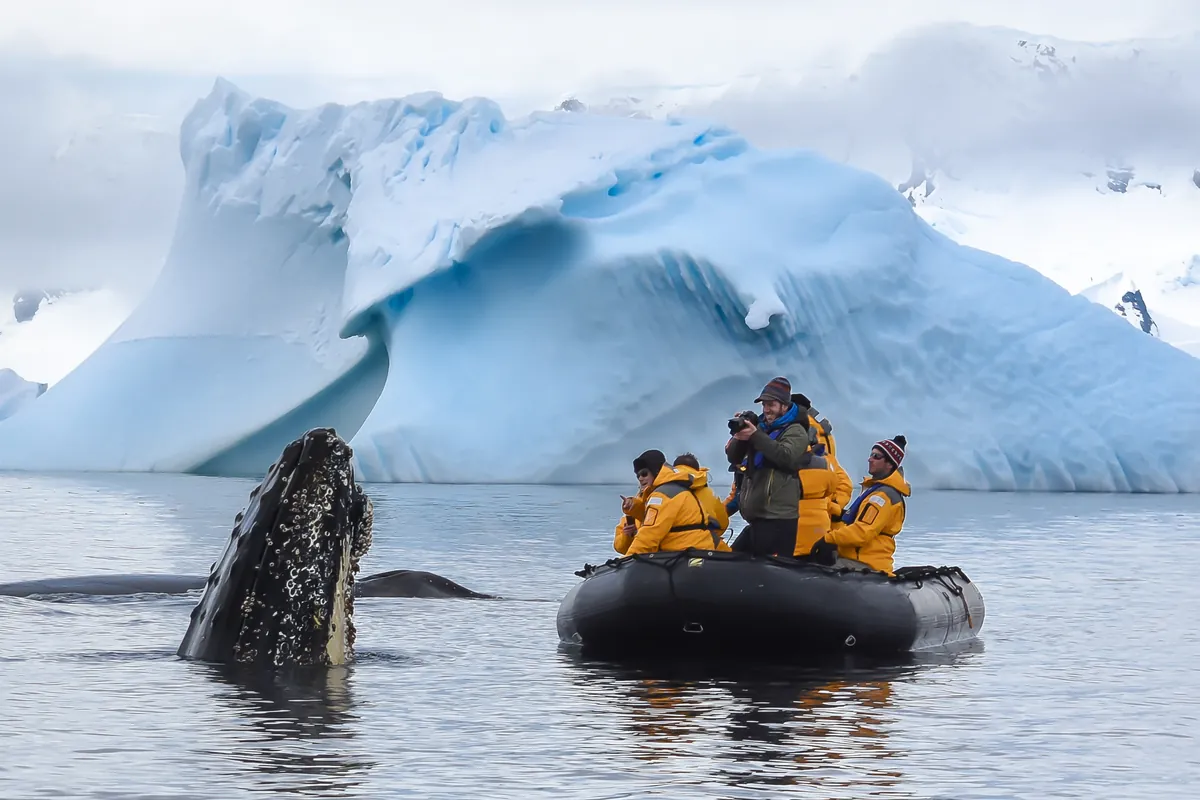
Humpback whales are among the most frequently encountered large whales around the Antarctic Peninsula.
These impressive marine mammals migrate thousands of kilometers from warmer breeding grounds to feed in Antarctica during the austral summer.
You may see humpbacks surfacing near the ship, raising their tails before diving or, occasionally, breaching completely out of the water.
Best time: January through March, with particularly strong opportunities in February and March.
Orcas: Antarctica’s apex predators
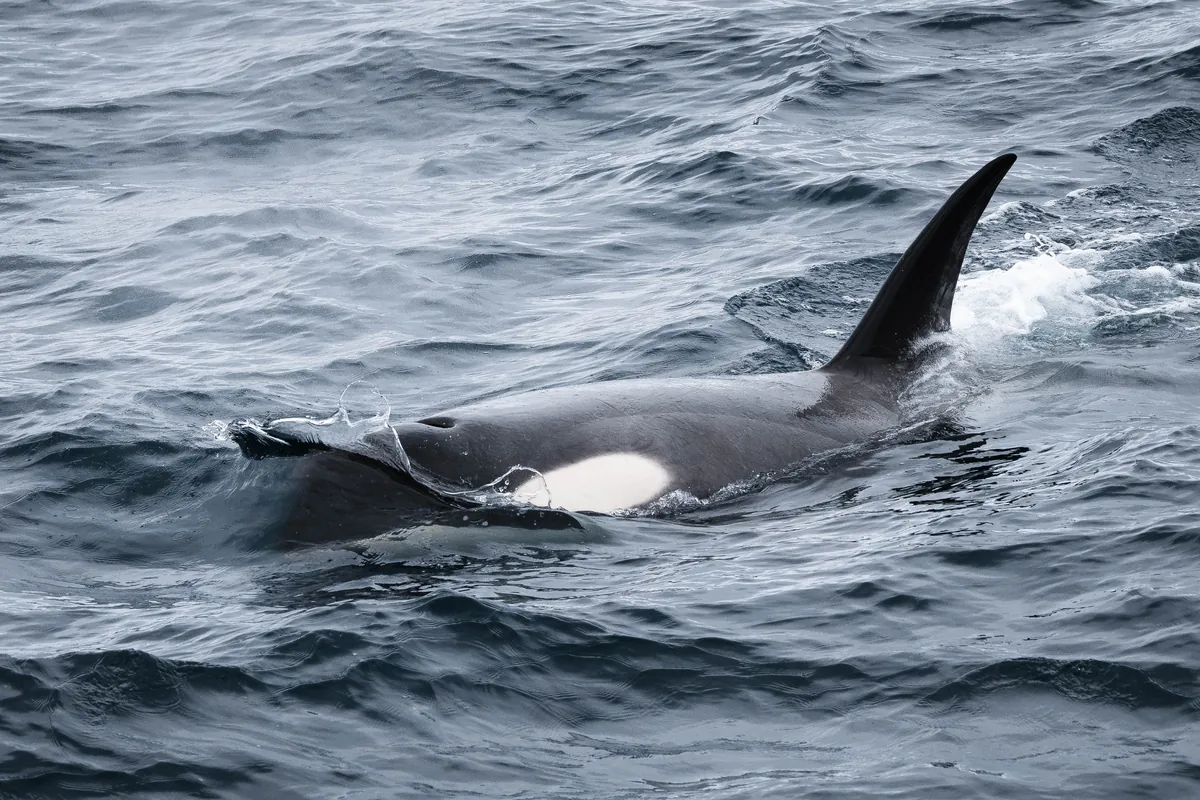
Orcas, also known as killer whales, are among the Southern Ocean’s most powerful marine predators.
Different populations have specialized feeding habits, hunting fish, seals, penguins and occasionally other whales. Some Antarctic orcas are known for cooperative hunting techniques, including creating waves to wash seals off floating ice.
Watching a pod of orcas travel through Antarctic waters is unforgettable, although encounters are generally less predictable than those with humpbacks.
Best time: possible throughout the Antarctic expedition season, depending on location and wildlife movements.
Antarctic minke whales: small but fascinating
Antarctic minke whales are smaller and more elusive than humpbacks. They are frequently associated with sea-ice environments and may surface briefly before disappearing beneath the water.
Their quick movements make them a challenge to photograph, but they are regularly encountered in Antarctic waters during the summer.
Best time: throughout the austral summer, depending on sea-ice conditions and feeding activity.
Other species, including fin whales and the much rarer blue whales, may also be encountered in the Southern Ocean.
Best Antarctica itineraries for whale watching
Choosing an itinerary is an important part of planning a whale-watching expedition. While no route guarantees sightings, certain voyages explore areas known for their productive marine ecosystems.
| Itinerary | Route | Ideal for |
|---|---|---|
| Classic Antarctic Peninsula | Ushuaia, Drake Passage, South Shetland Islands and the western Antarctic Peninsula | First-time visitors looking for a well-rounded wildlife experience |
| Antarctic Circle | Farther south along the Peninsula, crossing 66°33′ S when sea ice allows | Travelers seeking a longer expedition and remote landscapes |
| Antarctica, South Georgia and the Falklands | Falkland Islands (Malvinas), South Georgia and the Antarctic Peninsula | Wildlife enthusiasts and photographers |
Classic Antarctic Peninsula expeditions
For most travelers, a classic Antarctic Peninsula cruise offers an excellent combination of whale watching, spectacular landscapes, penguin colonies and Zodiac excursions. These voyages typically depart from Ushuaia, Argentina, crossing the Drake Passage before exploring the South Shetland Islands and the western Antarctic Peninsula.
Areas such as Wilhelmina Bay and the Gerlache Strait are particularly well known for humpback whale encounters during the summer feeding season.
Antarctic Circle expeditions
Antarctic Circle voyages venture farther south when sea-ice conditions allow, providing additional opportunities to explore remote waters and observe marine wildlife. They generally spend more time around the Antarctic Peninsula and may cross the Antarctic Circle at approximately 66°33′ South. Not sure which one suits you? Compare them in our guide to Antarctica Classic vs. Crossing the Circle.
Traveling farther south does not necessarily mean more whale sightings, but these itineraries offer a broader exploration of Antarctic environments.
Antarctica, South Georgia and the Falkland Islands
Extended expeditions combining the Antarctic Peninsula, South Georgia and the Falkland Islands offer an extraordinary diversity of wildlife. Alongside whales, you may see enormous king penguin colonies, elephant seals, fur seals and numerous seabird species.
These itineraries provide a comprehensive Southern Ocean experience, although they do not automatically guarantee more whale sightings than a shorter Peninsula-focused voyage.
Where are the best places to see whales in Antarctica?
Several areas around the western Antarctic Peninsula are particularly well known for whale encounters:
- Wilhelmina Bay: often nicknamed “Whale-mina Bay”, this spectacular location is famous for humpbacks feeding among towering glaciers and icebergs.
- Gerlache Strait: one of the Peninsula’s most scenic waterways, with productive feeding areas that attract humpbacks and other whales during the summer.
- Charlotte Bay and surrounding channels: marine mammal habitats explored on specialized whale-watching expeditions.
- South Shetland Islands: frequently visited on Antarctic Peninsula cruises, with opportunities to see whales, seals and penguins.
Because Antarctic expedition routes depend on weather, sea ice and local conditions, visiting specific locations cannot be guaranteed.
Whale watching from expedition ships and Zodiacs
One of the most remarkable aspects of Antarctic expedition cruising is the chance to observe whales in their natural environment.
Whales can be spotted directly from the ship’s outdoor observation decks, sometimes surfacing near the vessel or displaying behaviors such as tail fluking and breaching.
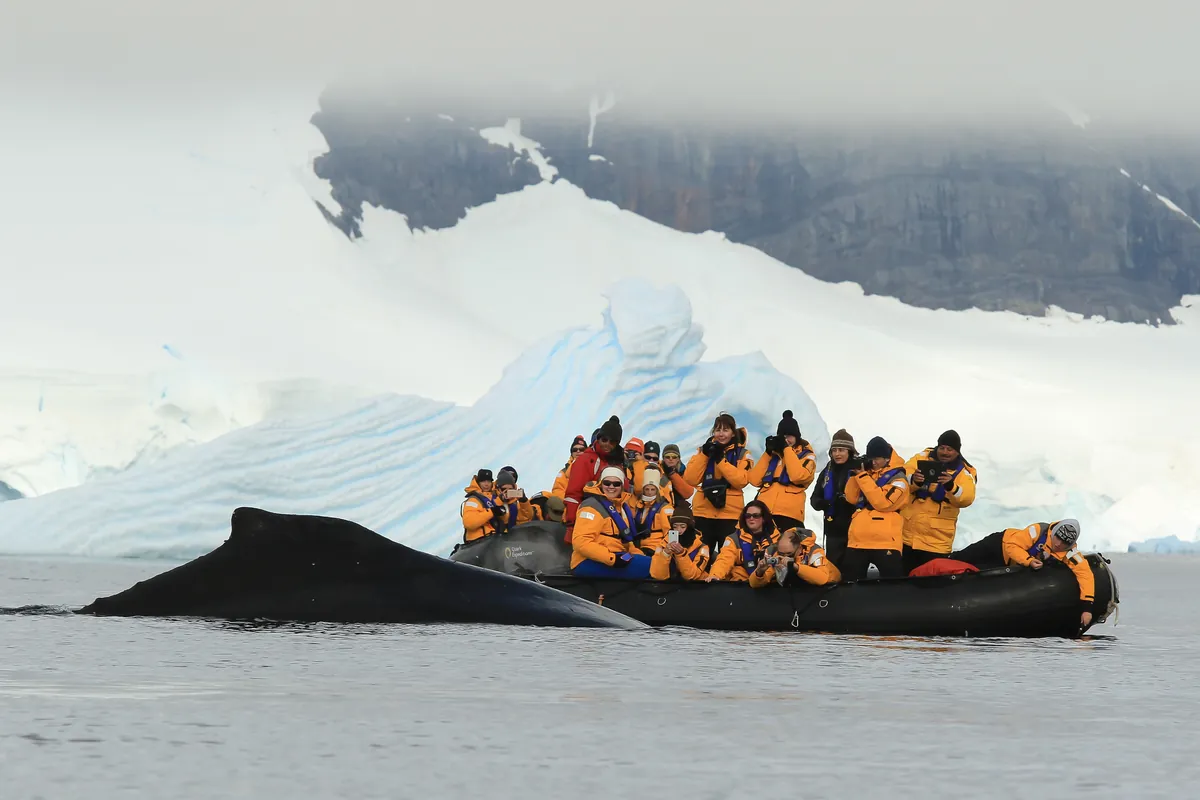
Zodiac excursions offer another perspective, letting you explore sheltered bays and ice-filled channels. Occasionally, whales may approach these small boats naturally, creating unforgettable encounters.
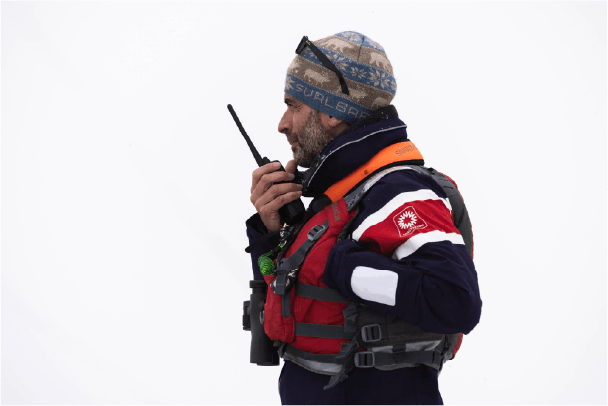
Responsible wildlife observation is essential. Expedition teams follow strict guidelines designed to minimize disturbance, keeping appropriate distances and letting animals move freely.
An unforgettable Antarctic wildlife experience
From humpbacks feeding among icebergs to orcas navigating icy channels and elusive minke whales surfacing near the sea ice, Antarctica offers extraordinary opportunities to observe marine mammals in one of the world’s last great wilderness areas.
While February and March generally provide the strongest whale-watching opportunities, every Antarctic expedition is shaped by nature. Weather, sea ice, food availability and wildlife movements make each voyage unique.
The magic of whale watching in Antarctica lies in its unpredictability: remarkable wildlife encounters against one of the most spectacular landscapes on Earth.
Want to time your trip for the whales? Our polar experts can help you compare departures, ships and itineraries for the best whale-watching season. Fill the form and our expert team will be contacting you.
Frequently asked questions
February and March are generally the best months for whale watching in Antarctica. By then, humpback whales are feeding intensively on krill in the bays and channels of the Antarctic Peninsula. January can also be very good, and sightings are possible throughout the season, from November to March.
Yes, sightings are possible early in the season, although many migratory humpbacks are still arriving in Antarctic waters. Whale activity gradually increases through December, while November and December reward travelers with pristine snowy landscapes, long daylight hours and very active penguin colonies.
The species most often seen in Antarctica are humpback whales, orcas (killer whales) and Antarctic minke whales. Fin whales may also be encountered in the Southern Ocean, and blue whales are seen only rarely. Which species you see depends on the season, your route and the conditions during your voyage.
Wilhelmina Bay, often nicknamed “Whale-mina Bay”, and the Gerlache Strait on the western Antarctic Peninsula are famous for feeding humpback whales. Charlotte Bay and the South Shetland Islands also offer good opportunities. Exact landing and cruising sites always depend on weather and ice conditions.
No. Whales are wild animals and sightings can never be guaranteed. That said, whale encounters are common during the Antarctic summer, especially from January to March, and expedition teams keep a constant lookout so travelers can enjoy sightings from the ship’s decks and from Zodiacs.